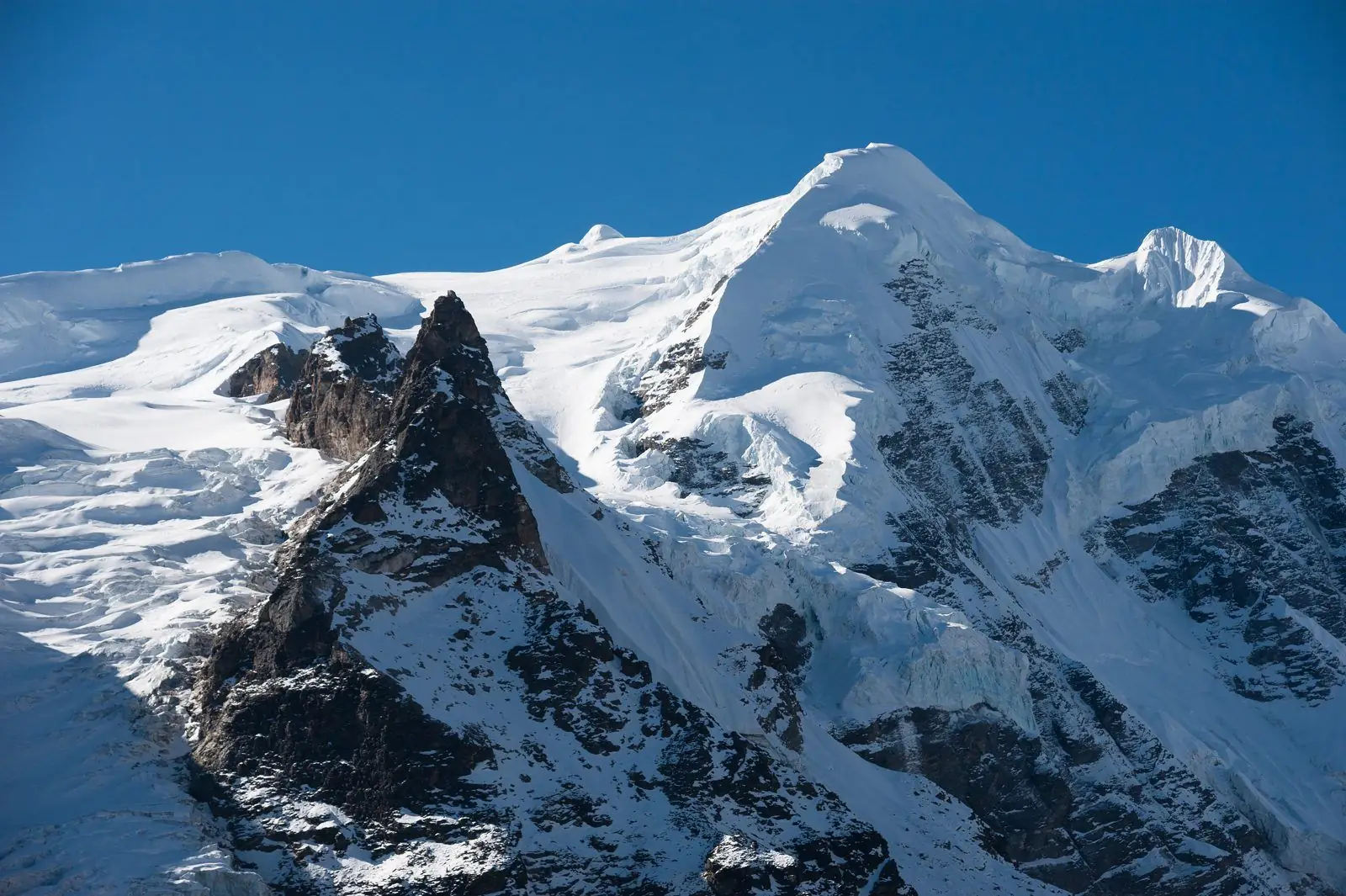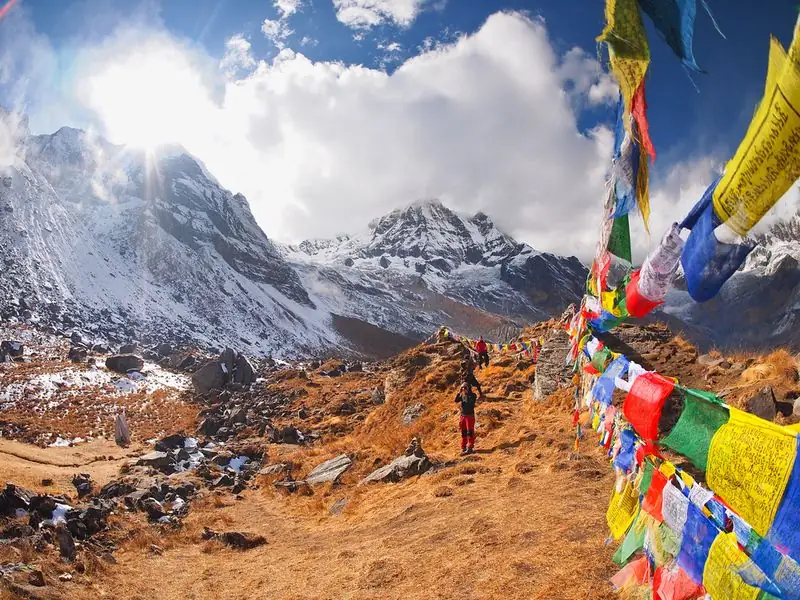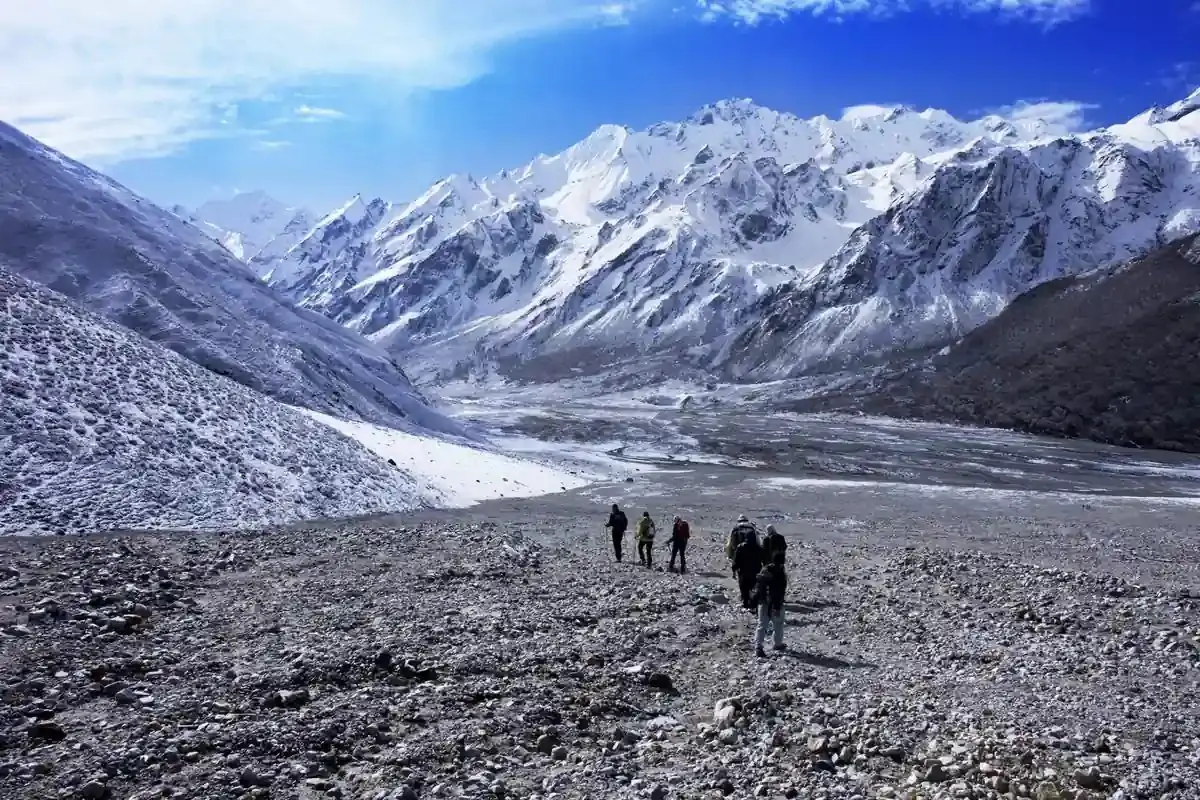
Langtang Village is a rebuilt settlement in the upper valley, with lodges, a school and views of Langtang Lirung. It sits at about 3,450 m on the trek between Lama Hotel and Kyanjin Gompa. Many trekkers sleep here on their second night. Check details with your guide before you travel.
Altitude: about 3,450 m. Heights quoted for villages and camps vary by source, so treat this as a guide.
Where Langtang Village is and why trekkers stop
Langtang Village lies in the upper valley, after Lama Hotel and before Kyanjin Gompa. Our stage pages list Syabrubesi to Langtang Village, Lama Hotel to Langtang Village, Langtang Village to Kyanjin Gompa and Langtang Village to Tserko Ri. It is the standard second night on the Langtang route, and the sleeping altitude here is a sensible step up from the forest. The name in this guide refers to the trekking settlement only. Stop to look around now and then, because the trail rewards a slower pace.
What to expect at Langtang Village
Expect stone and wood lodges, a school, open yak pastures and a big mountain backdrop led by Langtang Lirung. The settlement was rebuilt, and that shapes its look, with newer buildings than you may expect. Evenings are cold, with a stove in the dining room. Walking from Lama Hotel takes a good part of the day, and times vary with pace and trail conditions. Dry socks at the end of the day make a real difference to comfort and warmth.
Altitude and how you may feel
At about 3,450 m, many people feel the altitude, with light headaches, shallow sleep or a dry mouth. Keep hydrated, avoid alcohol and walk slowly. The next stop, Kyanjin Gompa, is higher, so do not ignore symptoms now. Watch yourself and others for altitude illness. Pack a few spare plastic bags for wet clothes and rubbish you carry out. Eat even when appetite is low, because the body needs fuel to keep adjusting.
Lodging, food and practical tips
Lodges are simple but usually warm in the dining room. Dal bhat, noodles, soup, potatoes and tea are standard, and prices rise with height. Bring a warm sleeping bag, hat and gloves. Carry your park permit and trekker registration papers. Charging often costs extra and may be limited at cloudy times. Be respectful when photographing homes and people, and ask first before taking pictures. Sunscreen and lip balm matter more than most first time trekkers expect.
Stage guides that pass through Langtang Village
These day-by-day guides start or end at Langtang Village, with walking times, ascent and where to sleep.
- Syabrubesi to Langtang Village trek: stages, altitude and time
- Langtang Village to Kyanjin Gompa trek: altitude, time and route
- Lama Hotel to Langtang Village trek: altitude, time and route
- Langtang Village to Tserko Ri trek: stages, altitude and time
- Kathmandu to Langtang Village trek: stages, altitude and time
Common questions
Why is Langtang Village called rebuilt?
Our guides describe it as a rebuilt settlement in the upper valley, with lodges, a school and views of Langtang Lirung. The lodges you see are newer than the older valley architecture.
How high is Langtang Village?
It is at about 3,450 m. That is higher than Lama Hotel, so mild altitude symptoms are possible. Descend if they worsen. Conditions can change by season. Ask your agency for the latest advice.
What comes after Langtang Village?
Most trekkers continue to Kyanjin Gompa, and some add Tserko Ri from there or from here. Our stage pages show the options and altitude changes. Plans can vary with weather.