Upper Mustang is a trek of 10 to 14 days to the walled town of Lo Manthang, at about 3,800 m, with lodges all the way and a jeep road alongside. Dolpo is far wilder: Lower Dolpo takes about 16 to 18 days and Upper Dolpo 22 to 26, with passes above 5,000 m and camping on most of the route. Choose Mustang for culture with comfort; choose Dolpo for true wilderness.
Upper Mustang and Dolpo at a glance
- Days. Upper Mustang: 10 to 14. Dolpo: 16 to 18 for Lower Dolpo; 22 to 26 for Upper Dolpo.
- Highest point. Upper Mustang: passes of about 4,000 to 4,300 m. Dolpo: passes of 5,000 to 5,300 m.
- Lodging. Upper Mustang: lodges throughout. Dolpo: camping on most of the route; lodges near Phoksundo and Dunai.
- Access. Upper Mustang: flight or road to Jomsom. Dolpo: flights to Nepalgunj and Juphal.
- Permit. Upper Mustang: restricted area permit, USD 500 for the first 10 days. Dolpo: Upper Dolpo has a similar high fee; Lower Dolpo is much cheaper.
- Grade. Upper Mustang: moderate. Dolpo: hard to very hard.
What they share
Both lie north of the main Himalaya, in the rain shadow, so they are dry, treeless and at their best when the rest of Nepal is under monsoon cloud. Both are culturally Tibetan, with monasteries, chortens, mani walls and people who farm barley and keep yaks. Both were closed to foreigners until the early 1990s and still require special permits, a licensed guide and at least two trekkers.
Upper Mustang
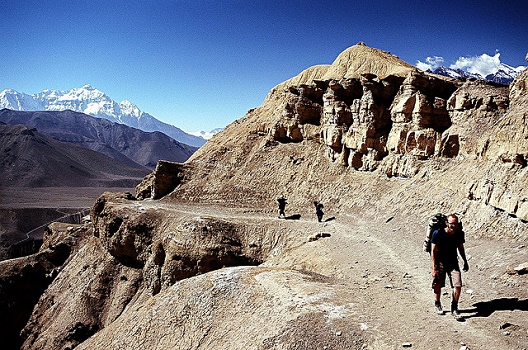
Mustang was a small kingdom, Lo, until 2008. The trek follows the upper Kali Gandaki north from Kagbeni through a landscape of eroded cliffs striped in red, ochre and grey, past cave dwellings cut high into the rock, to Lo Manthang, a walled town with a palace and several important monasteries. Lodges are comfortable by remote standards. A rough road now runs to the border, which some regret and which also makes a jeep tour possible. See the Upper Mustang guides.
Dolpo
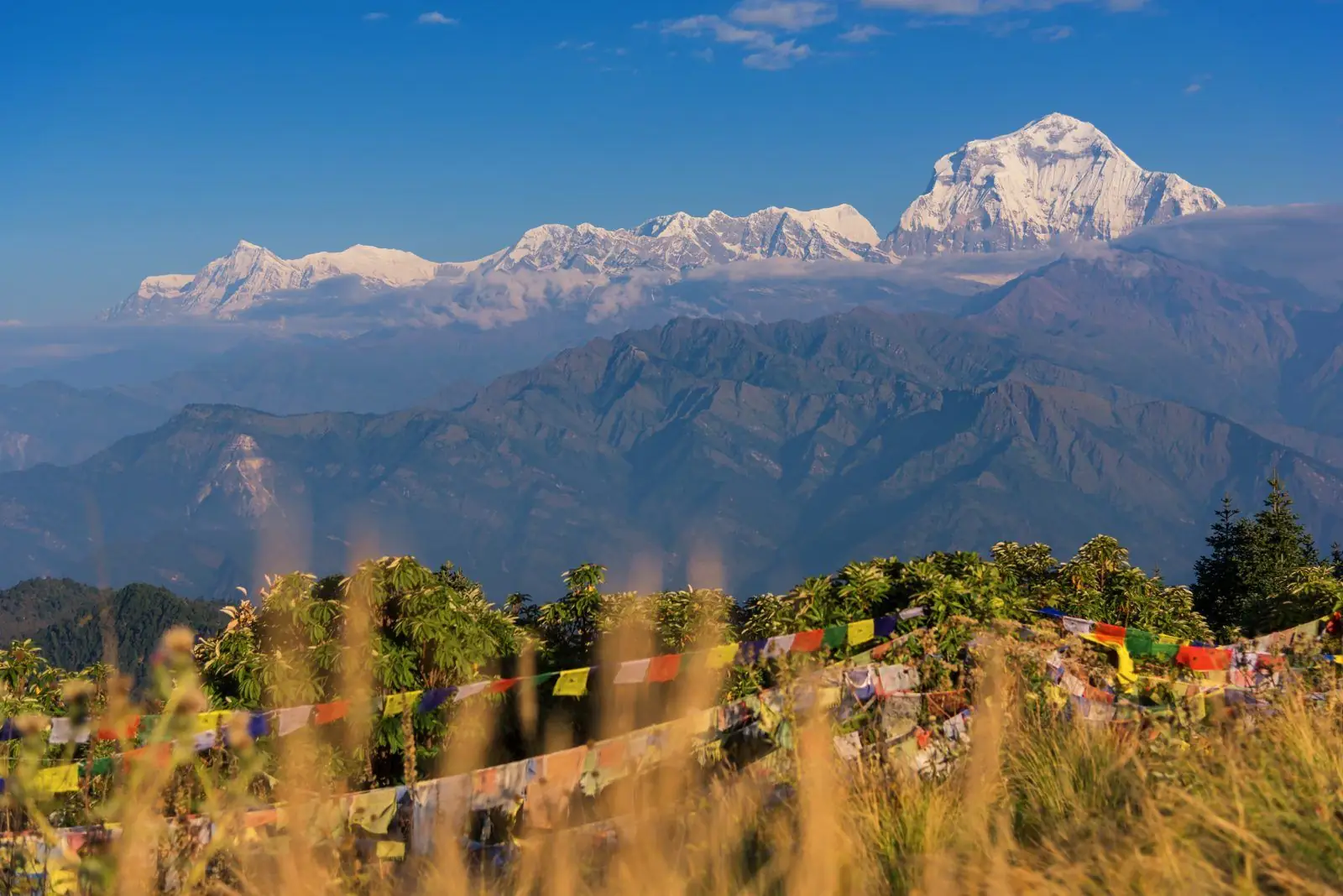
Dolpo is larger, higher and emptier. Lower Dolpo circuits cross the Numa La (about 5,190 m) and Baga La (about 5,070 m) to reach Phoksundo Lake. Upper Dolpo continues north over the Kang La, at about 5,150 m, to Shey Gompa and the Crystal Mountain, through country made famous by the book The Snow Leopard. There are no roads, few villages and long days between them. See the Upper Dolpo guides and Lower Dolpo.
Difficulty
Mustang is moderate. Daily stages are five to seven hours, the altitude is manageable and the main discomfort is the strong afternoon wind and dust. Dolpo is a serious undertaking: repeated high passes, many nights above 4,000 m, cold camps and no easy exit if someone falls ill.
Cost
Both are expensive by Nepali standards because of the permits. Dolpo costs considerably more overall, since it needs flights to Juphal, a camping crew with cook and pack animals, and twice the days.
Season
May to October is the main season for both, with June to September workable because of the rain shadow. Mustang's Tiji festival usually falls in May. Dolpo's passes are closed by snow from about November to April.
Getting there
Mustang starts with a short flight or a long road journey from Pokhara to Jomsom. Dolpo needs a flight from Kathmandu to Nepalgunj on the plains and another to the airstrip at Juphal. Both are weather dependent, so keep spare days.
A typical day in each
In Mustang you leave a lodge after breakfast, walk three hours over a windy pass to a village with a tea house for lunch, and reach the next lodge by mid-afternoon, with time to visit a monastery or cave. In Dolpo you strike camp at dawn, walk six to eight hours with a packed lunch and no village on the way, and reach a campsite by a river where the crew pitches tents and cooks. The first is a journey between places; the second is a journey through emptiness.
Food and water
Mustang's lodges serve dal bhat, Tibetan bread, noodles, local buckwheat and apple dishes from the orchards of the lower valley. In Dolpo the camp cook provides three meals a day from supplies carried in, supplemented by potatoes and tsampa bought from villages. In both regions water must be treated, and in Dolpo campsites are chosen for their streams.
Which should come first?
Almost everyone should do Mustang first. It teaches you how you cope with a dry, high, windy landscape, and it is forgiving. Dolpo is a trip to plan for after two or three other treks, when you know you enjoy long days and nights in a tent.
Choose Upper Mustang if
- You have about two weeks.
- You want lodges and moderate days.
- You are most interested in history, monasteries and architecture.
- You want a restricted region without expedition-style logistics.
Choose Dolpo if
- You have three weeks or more.
- You have crossed high passes before.
- You want to camp in places with almost no visitors.
- You want Phoksundo Lake or Shey Gompa.
Plan it
Ask us for costed itineraries for Upper Mustang, Lower Dolpo and Upper Dolpo, so you can compare days and price.
Common questions
Which is harder, Mustang or Dolpo?
Dolpo, by a wide margin.
Which is more expensive?
Upper Dolpo is the most expensive, then Upper Mustang, then Lower Dolpo.
Can either be done solo?
No. Both need at least two trekkers and a licensed guide.
Which is better in the monsoon?
Both work. Mustang is easier to reach then.
Heights, days, fees and rules are approximate and can change, so confirm the current details with us before you book.