Frequently Asked Questions
About the 14-day Everest Base Camp trek
What does the 14-day itinerary look like?
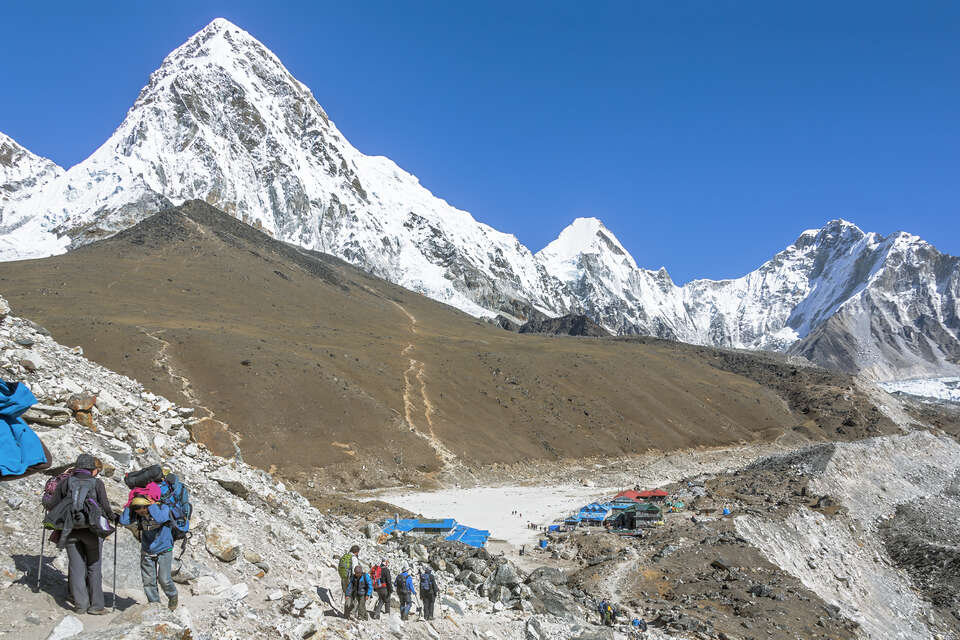
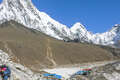
You arrive in Kathmandu on Day 1, fly to Lukla on Day 2 and walk to Phakding, then follow the Dudh Kosi valley to Namche Bazaar (3,440m). After a rest day you continue through Deboche and Dingboche (4,400m), take a second rest day, and climb via Lobuche (4,900m) to Gorakshep and Everest Base Camp (5,364m). Kala Patthar (5,545m) is the sunrise viewpoint on Day 10, followed by the walk back down to Lukla and the flight to Kathmandu.
Do we actually see Everest from Base Camp?
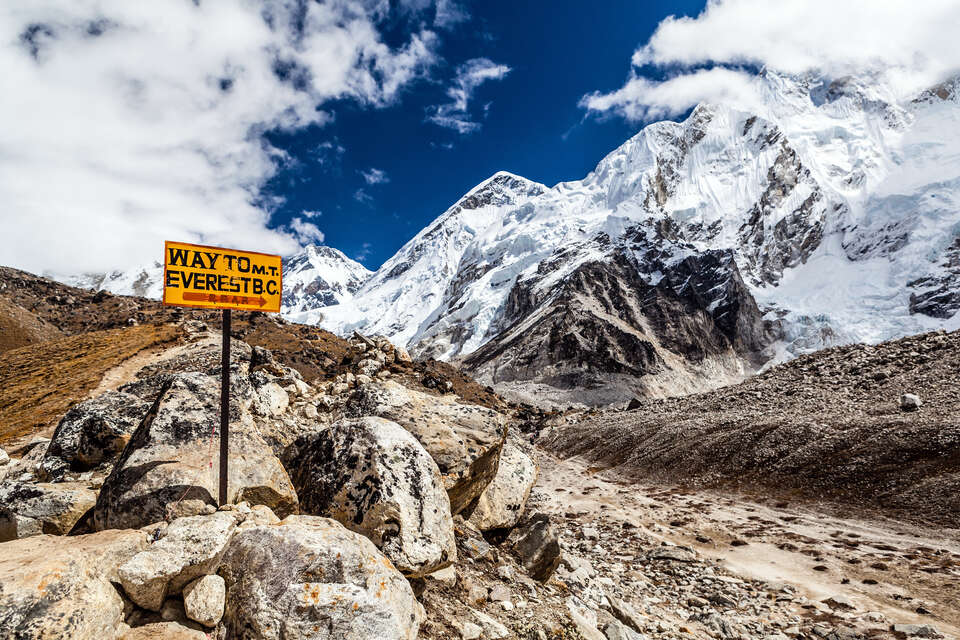
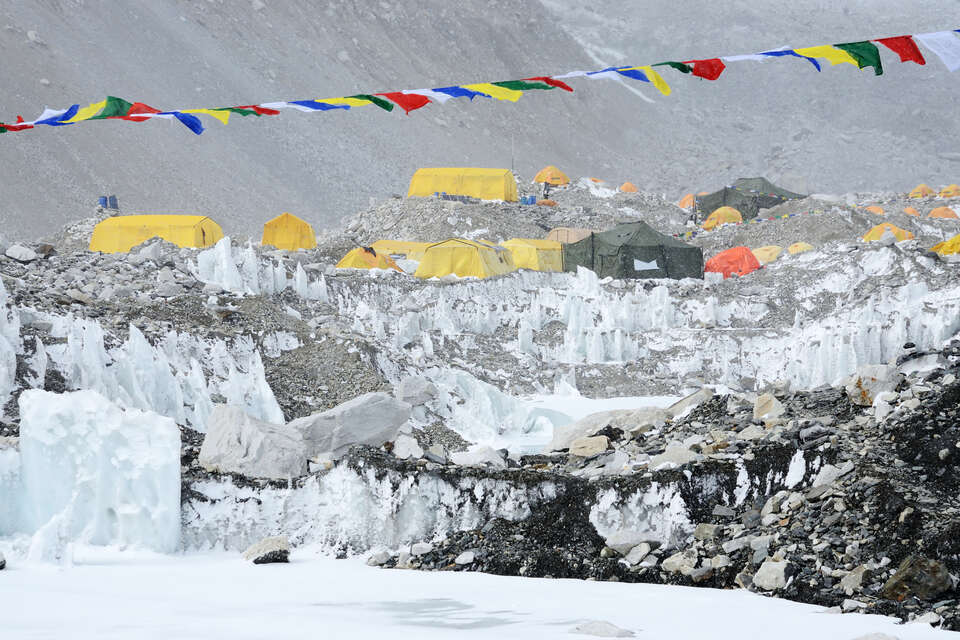
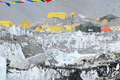
Not really. Base Camp sits in a glacial hollow beneath the Khumbu Icefall, and Everest's summit is hidden behind Nuptse. The classic view of the summit is from Kala Patthar, which is why the sunrise climb on Day 10 is the highlight for most trekkers.
What makes this trek different from other Himalayan treks?
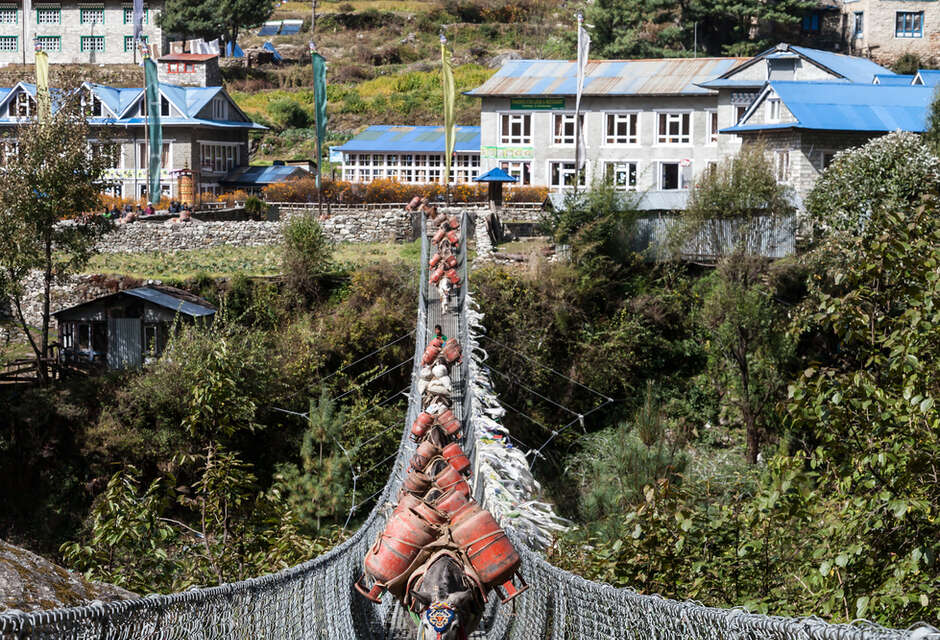
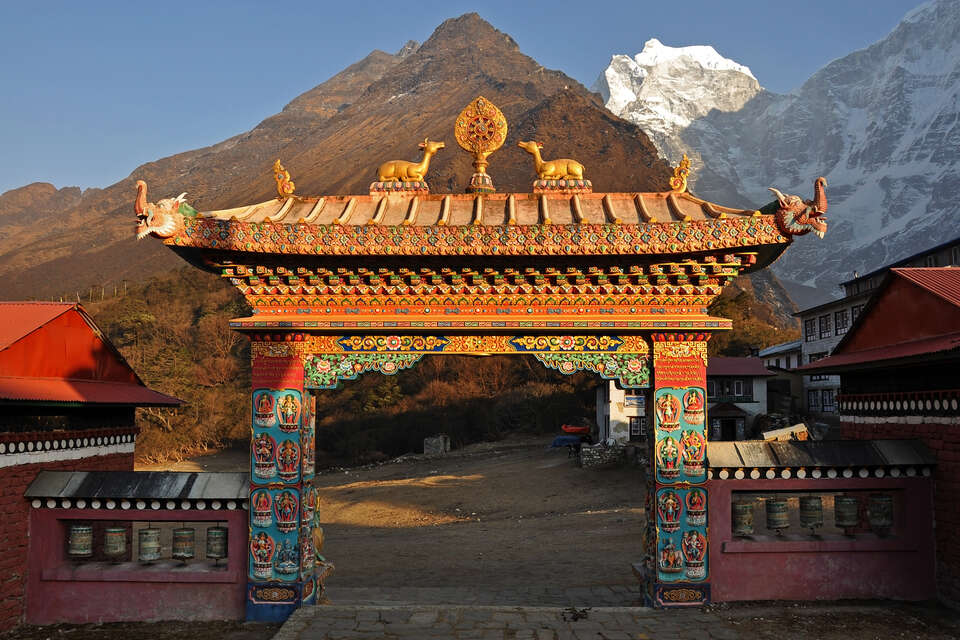
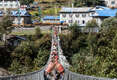
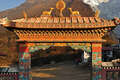
It combines Sherpa culture, monasteries such as Tengboche, suspension bridges over the Dudh Kosi and a big mountain atmosphere without technical climbing. The route is lodge-based, so you do not carry camping gear, and the infrastructure is the most developed in the Himalaya.
Is the trek really only 14 days?
Yes, door to door. That works because the itinerary includes two acclimatisation days and keeps the final descent fast, but it leaves no slack for weather. Lukla flights are often delayed, so we strongly recommend adding two to four days at the end of your trip.
Flights, Lukla and Ramechhap
Why do some flights leave from Ramechhap instead of Kathmandu?
Lukla flights depart from and return to Ramechhap instead of Kathmandu, mainly in peak season. The drive from Kathmandu to Ramechhap takes about 5 to 6 hours, depending on road conditions, and usually starts in the middle of the night. Transport to and from Ramechhap is included at no extra cost.
When do you book my Lukla flight?
As soon as we receive your deposit and a scan of your passport, the Kathmandu team books your Lukla ticket and aims for the first flight of the day, when the weather is generally most stable. Early slots sell out months ahead, so send your passport details promptly.
What happens if my Lukla flight is cancelled?
We rebook you on the next available day. In peak season rebooked passengers are often placed on later flights. There is no service fee for changing a Lukla reservation. Extra hotel nights and meals in Kathmandu or Lukla are your cost.
What does a helicopter alternative cost?
If flights are grounded we can try to arrange a chartered helicopter. Plan on USD 600 or more per person (INR 65,000 or more), depending on demand. If you take the helicopter instead of your scheduled flight we refund USD 150 of the flight fare (INR 10,000 for Indian nationals), collected at our Kathmandu office.
How many spare days should I add?
We recommend two extra days if you start between September 10 and May 10, three days from May 10 to June 1 and September 1 to 10, and four days from June 1 to 15 and August 10 to 30. Always add them at the end of the trek, never at the start.
What are the luggage limits for the Lukla flight?
Baggage allowance is 15 kg (33 lbs) per person in total. On the Lukla flight this is 10 kg (22 lbs) checked baggage plus 5 kg (11 lbs) hand baggage. We give you a duffel bag in Kathmandu for the porters to carry, and you leave the rest of your luggage at the hotel.
What if my bag does not arrive in Kathmandu?
File a lost-luggage report before leaving the airport, keep the receipt and give us written authorisation to collect it. We will send a representative, forward it on the next Lukla flight and hire a porter to bring it to you. Extra fees apply and depend on where you are on the trail. This is a courtesy service, and we are not responsible for airline handling.
Altitude, fitness and safety
How hard is Everest Base Camp?
It is a strenuous trek rather than a technical one. Expect 5 to 8 hours of walking a day, starting around 8am and reaching the next teahouse by about 4pm. Steady fitness matters more than speed, and most healthy people succeed with training.
How does the schedule protect me from altitude sickness?
We average about 300m of sleeping height gain per day and include acclimatisation days at Namche and Dingboche. Your guide carries a pulse oximeter and checks your oxygen saturation and symptoms daily. Moving slowly (bistari, bistari) is the best prevention.
What if I feel unwell?
Report every symptom to your guide immediately, including headache, nausea, dizziness or poor sleep, even if you think it is minor. The guide decides whether you carry on, rest or descend, and that decision is final. If you rest, you can often join a later group in peak season. Extra days on the mountain cost INR 6,000 per day, which covers your stay and three meals.
Are your guides first-aid trained?
Yes, our guides have Wilderness First Aid training and a course on acclimatisation, and they carry a first-aid kit. They are not doctors and do not diagnose or treat illness. Coordination in an emergency is run by the Himalayan Wonders Adventure Pvt. Ltd. team in Kathmandu.
How do I train for the trek?
Do cardio work such as running, cycling or stair climbing three to four times a week for two months, plus long weekend hikes with a loaded pack. Include some downhill practice for the knees. Check any health conditions with a doctor before booking.
Do I need to worry about the cold?
Lukla and Phakding are warm in the main seasons, but Dingboche, Lobuche and Gorakshep are cold year-round, with night temperatures below freezing and down to about minus 25°C in winter. Bring layers, a good down jacket and a warm sleeping bag.
How safe is the food and water?
Eat freshly cooked vegetarian food, because meat on the trail is not reliably refrigerated. Treat all water with tablets or a filter, or buy bottled water. Skip salads and uncooked vegetables.
Insurance and emergencies
What insurance do I need?
Insurance is mandatory. It must cover trekking to at least 5,545m (our terms require cover up to 6,000m), emergency medical treatment and helicopter evacuation. Email us your policy before you arrive. Details are in the insurance section of our terms.
Which insurers do people use?
Travellers from outside India often use Global Rescue, WorldNomads, Allianz, Bigcat or Squaremouth. From India, ASEGO and Adventure Sports Cover (ASC360) are options. We do not endorse any insurer, so confirm the altitude and activity limits with them.
Who pays for a helicopter rescue?
You do, through your insurer. A rescue helicopter can cost USD 5,000 or more. Some insurers reimburse afterwards, so keep enough funds available. Emergency descent or evacuation is never delayed because of payment.
Teahouses, food and daily costs
What are the teahouses like?
Simple lodges with twin-share rooms, thin walls and a communal dining room heated by a stove in the evening. At busy high stops such as Lobuche and Gorak Shep, rooms can be shared by up to four guests, depending on the crowd. Bathrooms are usually shared, with cold running water and Western toilets at lower levels and basic Asian toilets higher up. Rooms are rarely heated.
Can I get a private room?
In Kathmandu, rooms are twin-sharing by gender, and you get a single room if no one of your gender is booked. On the trail, rooms are twin-sharing by gender and private rooms are not available. At busy high stops such as Lobuche and Gorak Shep, a room may be shared by up to four guests.
What food will I eat?
Dal bhat is unlimited and the safest choice. Menus also list noodle soup, fried rice, momos, pasta, eggs and potatoes. Vegetarian and special diets are fine; tell us before you go.
How much do extras cost on the trail?
Bottled water is about INR 100 to 300 per bottle, hot showers INR 200 to 300, charging INR 200 to 400 for a power bank and about INR 100 for a phone, and Wi-Fi INR 300 to 500 per hour in some teahouses. Prices rise with altitude. At Gorakshep even toilet paper can cost INR 500.
How much cash should I carry?
Budget about USD 300 to 400 (INR 25,000 to 40,000) for extras and tips, plus emergency funds. Only Kathmandu has reliable ATMs. Charges and daily limits apply, so withdraw what you need before flying to Lukla.
Gear and packing
Can I rent a sleeping bag or down jacket?
Yes. Indian guests pay INR 1,200 for a sleeping bag and INR 1,200 for a down jacket. Other guests pay USD 20 for a sleeping bag and USD 15 for a down jacket. Collect them at the briefing before your Lukla flight.
How big should my day pack be?
A pack of about 40 litres is right for your layers, water, camera and daily essentials. Porters often walk ahead with your duffel, so carry what you need for the day, including medicine and documents.
What footwear works best?
Broken-in waterproof boots with ankle support and thick soles. Also bring warm socks and sandals for teahouses. Cover hot spots immediately with tape or moleskin.
Payments, visas and booking terms
What does the visa cost?
Indian nationals need no visa. Other guests buy a visa on arrival, which is not included in the trek price: USD 30 for 15 days, USD 50 for 30 days and USD 125 for 90 days. Pay in cash, preferably USD, and check the immigration website because fees change. Your passport must be valid for six months.
How do I pay for the trek?
A deposit is due before you arrive. Indian guests pay by bank transfer or UPI. Guests outside India can pay by transfer or online card (4.5% processing fee). The balance is paid at our Kathmandu office on arrival in INR, USD, EUR, GBP or another major currency, at the NPR conversion rate on the date of payment (local conversion charges apply); cards used in Nepal carry a 13% fee.
Is the deposit refundable?
50% of your deposit is refundable for 30 days from booking, and after that it is not. The deposit stays valid for 365 days for any trek we operate. If you do not contact us and do not show up, it is forfeited.
Can I change my date?
Yes. It is free of charge and as often as you like with at least 6 weeks' notice. With 2 to 6 weeks' notice a fee of INR 5,000 (Indian guests) or USD 100 (other guests) applies, and any change needs at least 14 days' notice. You pay any price increase between the original booking and the new date.
Is a solo traveller charged extra?
There is no single supplement. Rooms are shared by gender, and couples, families and friends share together. In Kathmandu you share a twin room, or get a single room at no charge if no one of your gender is booked on your dates. On the trek, rooms are twin-sharing, and at busy high stops such as Lobuche and Gorak Shep they can be shared by up to four guests. If you are the only person booked on a fixed departure, or you are not joining a group, a Solo Support Fee of INR 1,500 per trekking day covers a dedicated porter. If the fee is not paid and you are the only person booked on your dates, there is no separate licensed trek guide, and a porter-cum-guide leads the trek. We tell you at booking, or as soon as it arises.
Who will be with me on the trek?
Your guide and porters are employed by Himalayan Wonders Adventure Pvt. Ltd., our licensed operator in Nepal. See the team page. Ask us about the group's nationalities and age range; we never share personal data.
Do you provide Kathmandu hotels?
Most packages include two nights at Hotel The Address Kathmandu in Thamel. Extra nights can be added: INR 3,000 single, INR 3,500 double and INR 4,500 triple, paid directly to the hotel. If we make the booking, we can shift or cancel it when flights change.
 Most popularEverest Base CampThe classic trek to the foot of Everest

 Not sure which trek suits you?Free, no-obligation advice from Nishes and Anand.+91 932 595 1234 WhatsApp Send an enquiry →
 Most popularIsland PeakA classic first 6,000 m climb
 Short on time?Everest View Heli Trek7 days, trek up and fly back