Annapurna treks vary a lot in how high they go, so the altitude risk depends on the route. Some stay mostly below 3,500 m, while others climb above 5,000 m. This page gives general information, and anyone with a medical condition should ask a doctor before travelling.
Key altitudes
- Poon Hill: about 3,210 m, a short trek with a low risk for most people.
- Annapurna Base Camp: about 4,130 m, with the lower camp at about 3,700 m.
- Manang: about 3,540 m on the Circuit, the main acclimatisation stop.
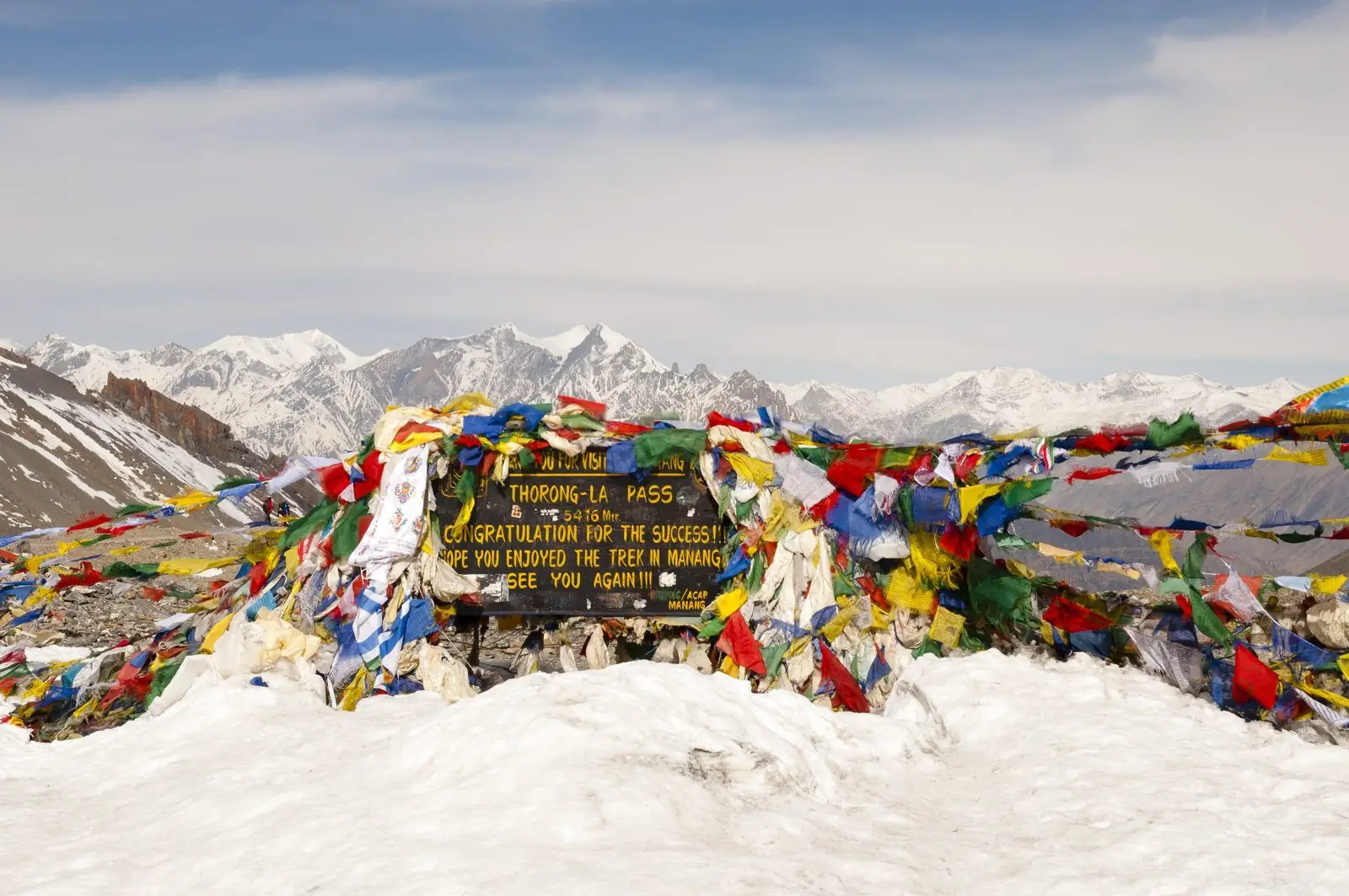
- Thorong La: about 5,416 m, the highest point on the Circuit.
- Tilicho Lake: about 4,919 m, a popular side trip.
Where problems occur
On the Base Camp route, the sanctuary stage is the main concern, particularly if you reach it in a short time. On the Circuit, the climb from Manang to Thorong Phedi and High Camp is where many trekkers feel symptoms, and the pass day pushes the body hardest.
Warning signs
Headache, nausea, dizziness, unusual tiredness and poor sleep are early signs. Worsening headache, repeated vomiting, loss of balance, confusion, or breathlessness at rest are danger signs that mean you should descend and seek help.
Simple rules
- Increase your sleeping altitude gradually, roughly 300 to 500 m a day above 3,000 m.
- Take rest days, such as the one at Manang.
- Drink plenty of fluids and avoid alcohol.
- Do not climb higher while you have symptoms.
- Descend if symptoms worsen.
Road travel and altitude
Using vehicles to reach higher starting points on the Circuit means your body does not have time to adjust. If you take a jeep to a high village, treat the first night there as a rest day and keep your pace slow.
Insurance and rescue
Choose insurance that covers trekking to the altitudes you plan to reach, including helicopter evacuation. Rescue flights operate from Pokhara and Kathmandu when the weather allows.
Differences between routes
A Poon Hill trek stays well below altitudes where serious illness is common, though some people still feel headaches at the viewpoint. Mardi Himal and Annapurna Base Camp reach moderate heights and require care in the final stages. The Circuit and Tilicho Lake treks go much higher and call for careful acclimatisation, rest days and sensible pacing. Choosing a route that matches your experience and time is the first safety decision.
Rate of ascent
The speed at which you gain height is more important than the altitude itself. A good rule is not to increase your sleeping altitude too quickly once you are above about 3,000 m, and to include rest days regularly. Road travel can carry you rapidly to high points, so be careful if you use vehicles to jump to a high village, and give your body a chance to adjust before climbing further.
Looking after yourself and others
Keep a simple routine of fluids, food, warm clothing and rest. Check how you feel each evening, and tell your guide about any symptoms. Watch your companions for signs of trouble, such as unusual quietness or clumsiness. If someone is unwell, stay with them and arrange a descent. Always carry insurance that covers evacuation from high altitude.
Simple reminders
- Do not ascend with a worsening headache.
- Avoid alcohol and sleeping tablets at altitude unless your doctor advises otherwise.
- Descend if symptoms persist or worsen.
What our guests say
Excerpts from guest reviews of Himalayan Wonders, our parent company, on Tripadvisor.
“They took utmost care of our group of 5 friends from Kathmandu airport upto the completion of the trek”