




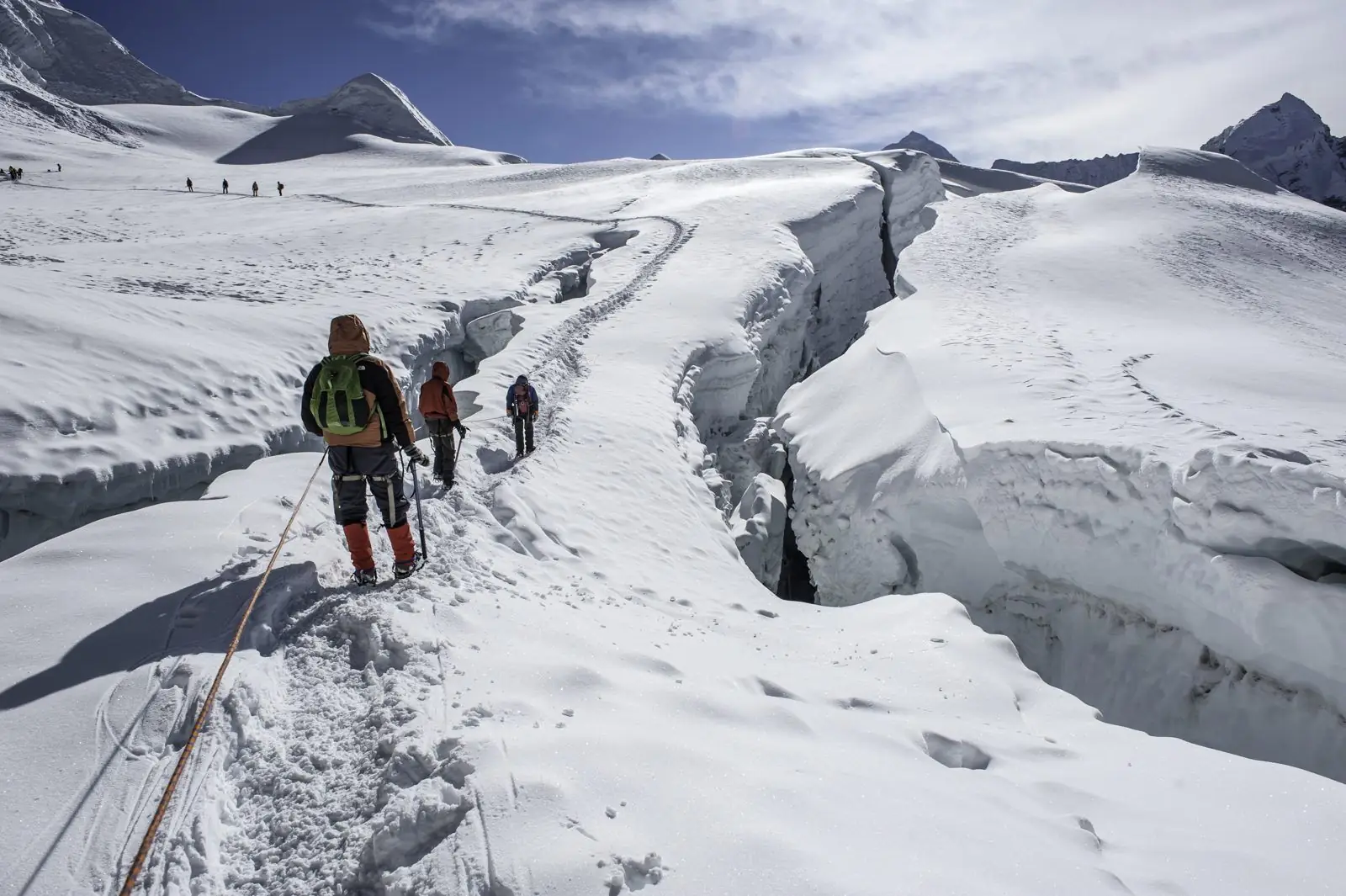
A Chulu climb needs mountaineering boots, crampons, a harness, an ice axe, warm clothes and a licensed guide. Many items can be rented in Kathmandu or Pokhara, but boots and gloves should fit well.
Technical kit
You will need a helmet, harness, ice axe, crampons, ascender and carabiners. The agency usually provides the group ropes. Bring your own boots if you can, because fit matters most.
Clothing
A system of layers works best: base layers, fleece, a down jacket, a windproof shell and insulated trousers. Spare gloves and a warm hat are essential.
Sleeping and camp
You will sleep in tents at base camp and at high camp. A sleeping bag rated for deep cold, an insulated mat and a pee bottle for the night are sensible.
Guides and Sherpas
A licensed climbing guide leads the group and fixes ropes where needed. The ratio of guides to climbers affects safety and cost. Ask about it before you book.
Renting and buying
Rental shops stock boots, crampons and jackets, but condition varies, so check everything. See the Island Peak gear list for a similar kit list.
Insurance
Your policy must cover climbing to at least 6,600 m and helicopter evacuation. Read permits and best time for more.
What to buy and what to rent
Buy things that touch your body: boots (if you can), gloves, base layers, socks and a hat. Rent bulky items such as down jackets and sleeping bags if you do not own them. Test the zips, seams and warmth in Kathmandu before you leave.
Group size and support
Smaller groups move faster and are easier to manage, but they cost more per person. Ask how many guides, climbing Sherpas and porters are on the team, and who carries the group equipment. A good ratio makes the summit day safer.
Food and camp life
Base camp meals are cooked by the team. Expect plenty of rice, noodles, soup and eggs. Tell the agency about food allergies or diet needs before you book.
Plan it
Start with what the Chulu peaks are and the itinerary.


