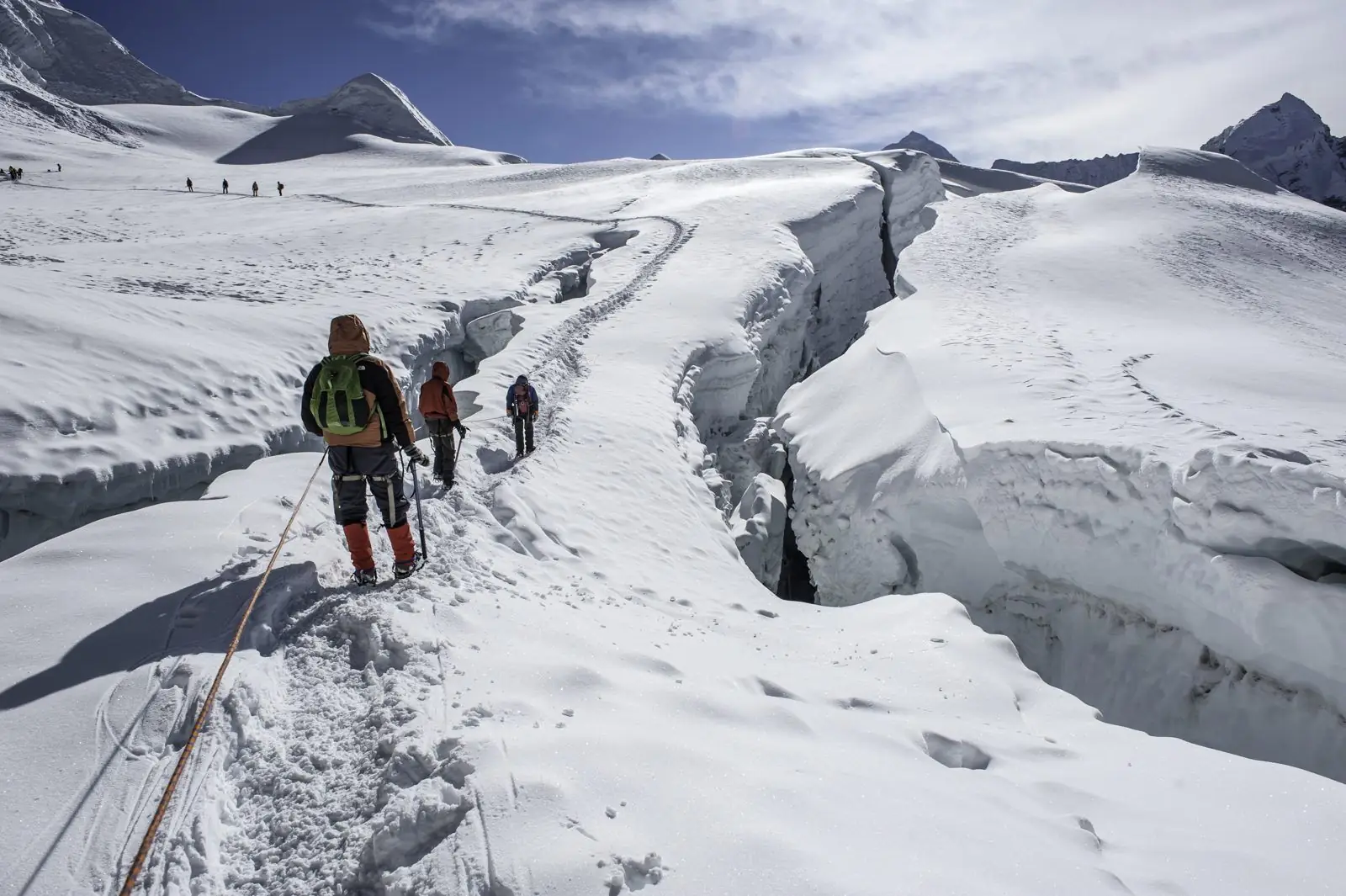
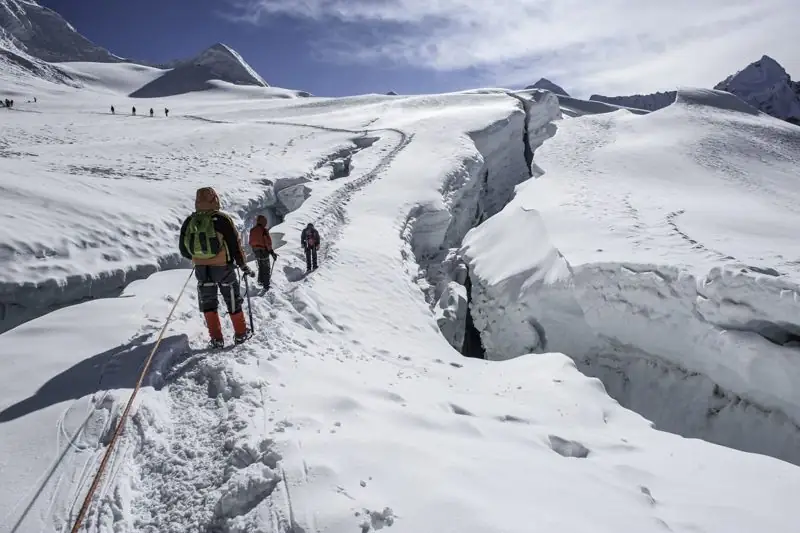
Island Peak cannot be climbed safely alone. A registered guide and a team structure are expected, and a small group of two to six climbers works well.
Why not solo
The summit involves glacier travel, a fixed rope on the headwall and an exposed ridge. Weather and altitude can change conditions quickly. The permit system also expects a registered agency and guide.
Climbing with a partner
Two climbers with a guide can move quickly and flexibly. Partners should agree on turnaround times and watch each other for altitude illness. A partner who is not feeling well should say so early rather than push on.
Group climbs
Group climbs share costs and make logistics easier. Check the guide-to-climber ratio and whether the itinerary has enough acclimatisation. A good ratio keeps summit day safe and the pace reasonable.
What the guide does
The guide fixes ropes, chooses the start time, checks gear and monitors the team. Sherpa guides know the route and its hazards. Follow instructions strictly on summit day.
Choosing a team
Look for a team led by a certified Sherpa guide with Island Peak experience and a clear policy on turning back. Ask about the ratio of guides to climbers on summit day, who carries the rope and what happens if a climber is too slow. A transparent operator will answer clearly.
Splitting cost sensibly
Costs per person fall as the group grows because guide, permit and camp expenses are shared. But a group larger than six can slow summit day. A group of four climbers with two guides is a good balance for many teams.
Our advice
Train well, climb with a registered team and choose a trusted operator. See how hard the climb is and training for Island Peak.
Matching pace in a group
Choose a group whose pace is similar to yours. Mismatched pace creates stress and risk on summit day.
What to ask the operator
Ask about guide ratios, climbing experience and emergency plans. A clear answer shows a well-run team.
How the climb is organised
Island Peak, about 6,165 m, is climbed from a base camp near 5,100 m beyond Chhukhung, with a high camp or an early start for the summit day. Guides fix ropes on the headwall, which is steep snow and ice, and every client is clipped in. This works best with small teams where each climber is watched closely.