A Mera Peak climb combines two kinds of accommodation. The approach uses lodges in small villages, and the final stages use tents on the glacier.
Lodges on the approach
Lodges in the Hinku valley are simpler than those in the busy Everest region. Rooms are basic, usually with thin mattresses and no heating. A warm sleeping bag is essential. Dining rooms are the warm place, and meals are cooked on a stove.
Tents at camp
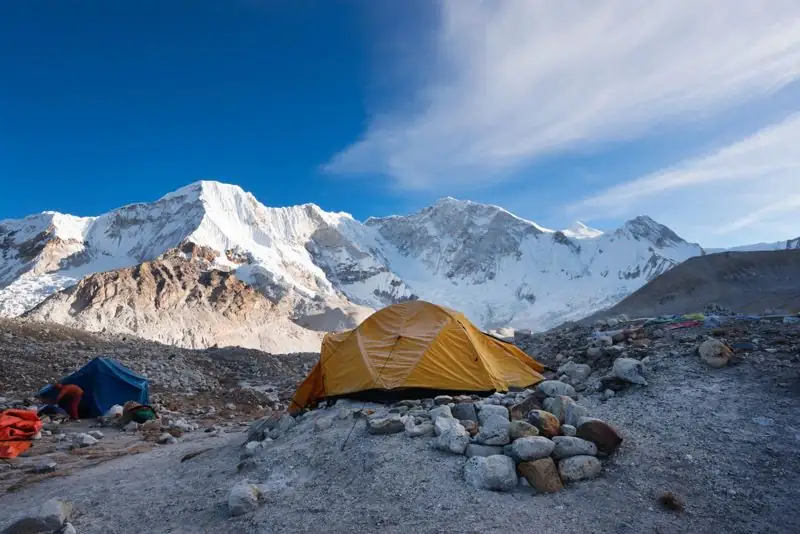
At base camp and high camp, your team sets up tents and a cooking tent. You usually share a tent with another climber. The camps are cold, and nights can be restless due to altitude. Mats and a warm sleeping bag help.
Food
Meals are hot and simple: soup, rice, noodles, potatoes, eggs, porridge and tea. Lodges offer dal bhat on the approach. At altitude, appetite often falls, but it is important to eat and drink. Bring snacks that you enjoy.
Water
Water is boiled or treated. Carry insulated bottles on summit day to stop them freezing.
Washing
Showers are rare. Wet wipes and a small towel are enough for most. At camp, there are no bathrooms, and you follow the leave-no-trace rules set by your team.
Power and signal
Charging is limited and may cost extra. Signal is poor, so inform family that contact will be limited.
Staff
- Guides and kitchen staff look after the camps.
- Tipping at the end of the trip is customary.
How the nights change
Lower on the trail you stay in teahouses with beds and shared toilets. Higher up, the lodges become more basic, then you move to tents at base camp and high camp. Each step up brings colder nights, less sleep and simpler food, so a good sleeping bag and warm clothing are important.
Staying comfortable
Use a sleeping bag liner, wear dry clothes to bed, and keep a water bottle with hot water inside your sleeping bag. Keep electronics warm so batteries do not fail. Earplugs help with noise in shared lodges.
Small kindnesses
Lodge owners and staff work hard in difficult conditions. A polite greeting, patience when service is slow and a fair tip at the end are appreciated and go a long way.
Sleeping arrangements in more detail
On the lower sections you stay in simple lodges with shared rooms and toilets. Closer to base camp, accommodation may be in tents, where the crew sets up sleeping tents and a dining tent. Expect cold nights, basic toilets and limited privacy. A good sleeping mat adds comfort.
Dining and routines
Meals are simple, fresh and prepared by the crew. Mornings begin with tea and breakfast, followed by a briefing. Evening meals are served early, and trekkers go to bed early. The routine is steady and comforting after long days.
Keeping spirits up
Carry small luxuries such as chocolate, a book or music. A positive attitude helps in cold, remote conditions. Staff often sing or tell stories in the evenings, and joining in builds memories.