




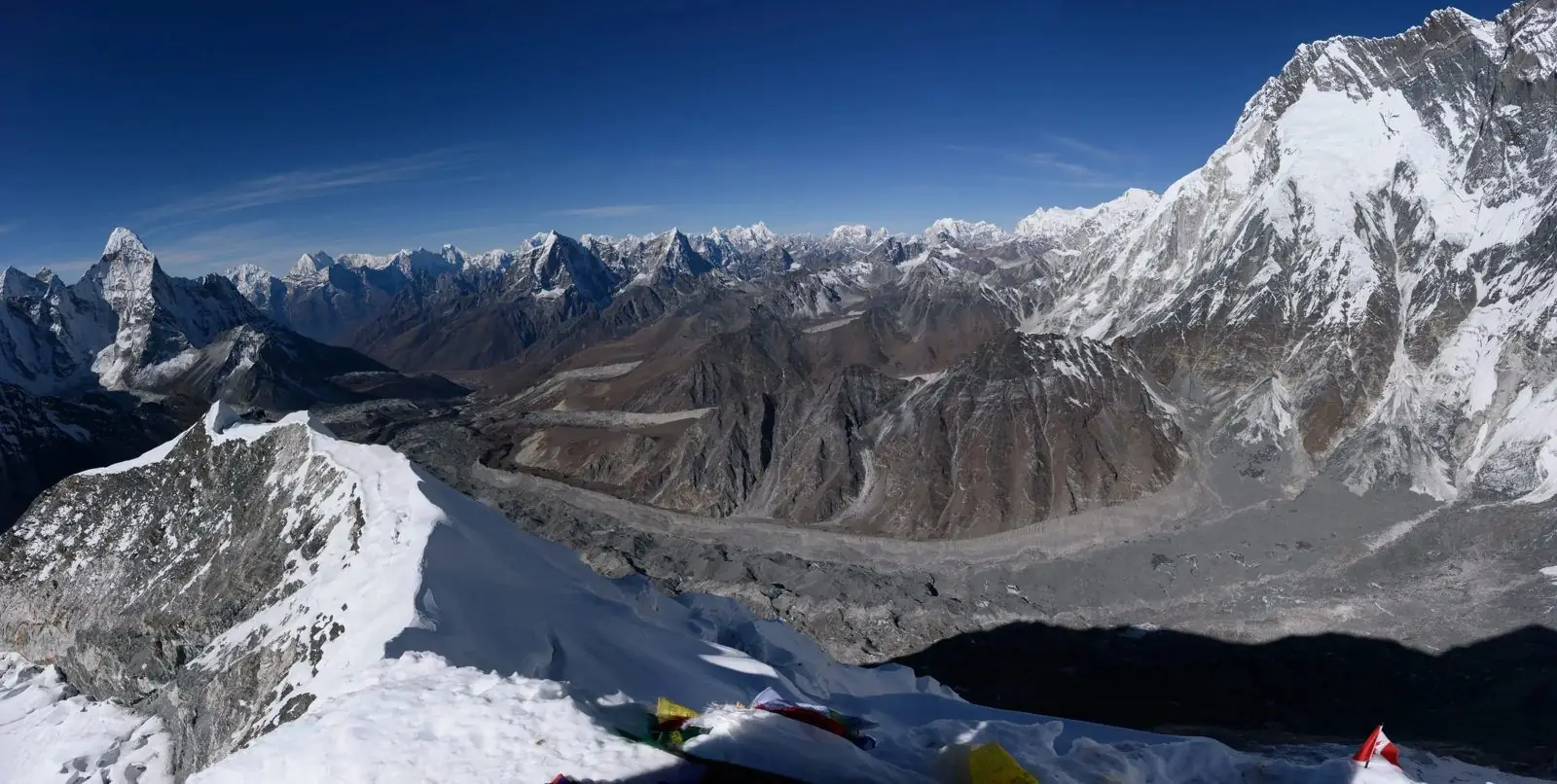
On the summit of Everest the air pressure is about one third of that at sea level, so each breath holds far less oxygen. Winds are often around 160 km/h, and winter minimum temperatures average about minus 36 degrees Celsius in January.
Thin air
Above about 8,000 m the body cannot recover, which is why climbers call it the death zone. Most expeditions use bottled oxygen and spend as little time as possible high up.
Wind
Winds commonly reach 160 km/h on the summit. A gust of 280 km/h was recorded in February 2004.
Cold
Mean minimum temperatures on the summit are about minus 36 degrees Celsius in January and minus 18 degrees Celsius in July. See Mount Everest temperature.
What trekkers face
Trekkers at Everest Base Camp (5,364 m) do not enter the death zone, but the same lack of oxygen can cause altitude sickness. Climb slowly and rest. See the weather by month.
Questions people ask
- Where does the death zone start? Above about 8,000 m, in the usual definition.
- Do trekkers need oxygen? No, not at Everest Base Camp. But rest days and slow climbing matter.
- How strong is the wind? Commonly 160 km/h on the summit.
Plan it


