




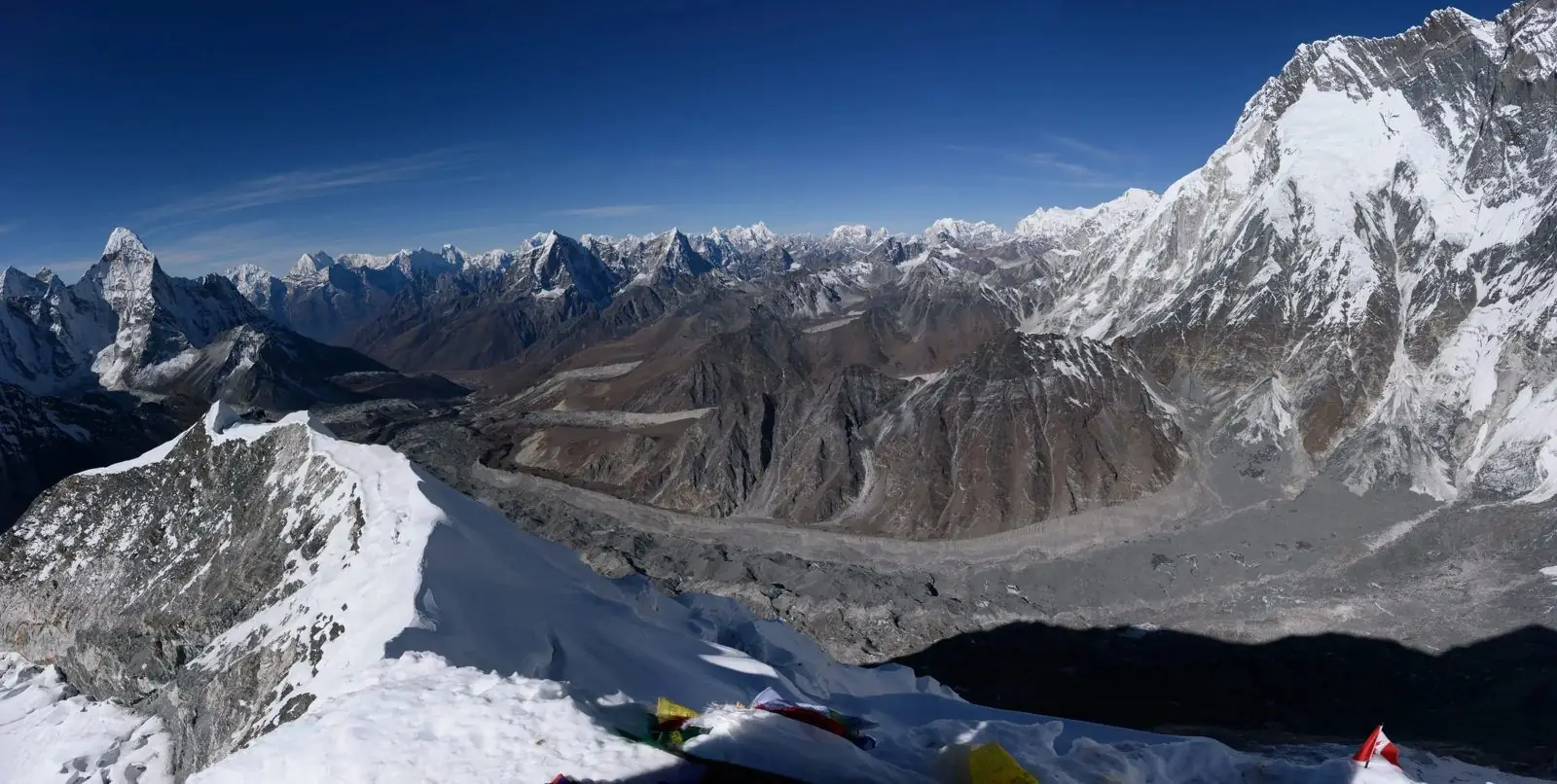
Mount Everest was pushed up by the collision of the Indian and Asian plates, which is still raising the Himalaya today. Its summit is not granite but limestone of the Qomolangma Formation, which holds fossil fragments of trilobites and crinoids from an ancient sea.
The collision
The Indian plate moved north and ran into Asia. The land between them was crushed and lifted, and the range is still rising slowly.
Sea fossils at the top
The summit rock is limestone of the Qomolangma Formation. It contains fragments of trilobites and crinoids, which are sea creatures. That means the top of the world was once on a sea floor.
Why it matters for visitors
On the trek you see mostly granite and gneiss on the lower slopes and the pale summit pyramid far above. The black and yellow bands of rock seen on the mountain are different layers of the same collision.
Questions people ask
- Is the summit rock granite? No. It is limestone of the Qomolangma Formation.
- Why are there sea fossils? The rock formed on an ancient sea floor before being lifted.
- Is Everest still growing? The collision that built the Himalaya is still going on.
Plan it
Read where Everest is or Everest fun facts.


