




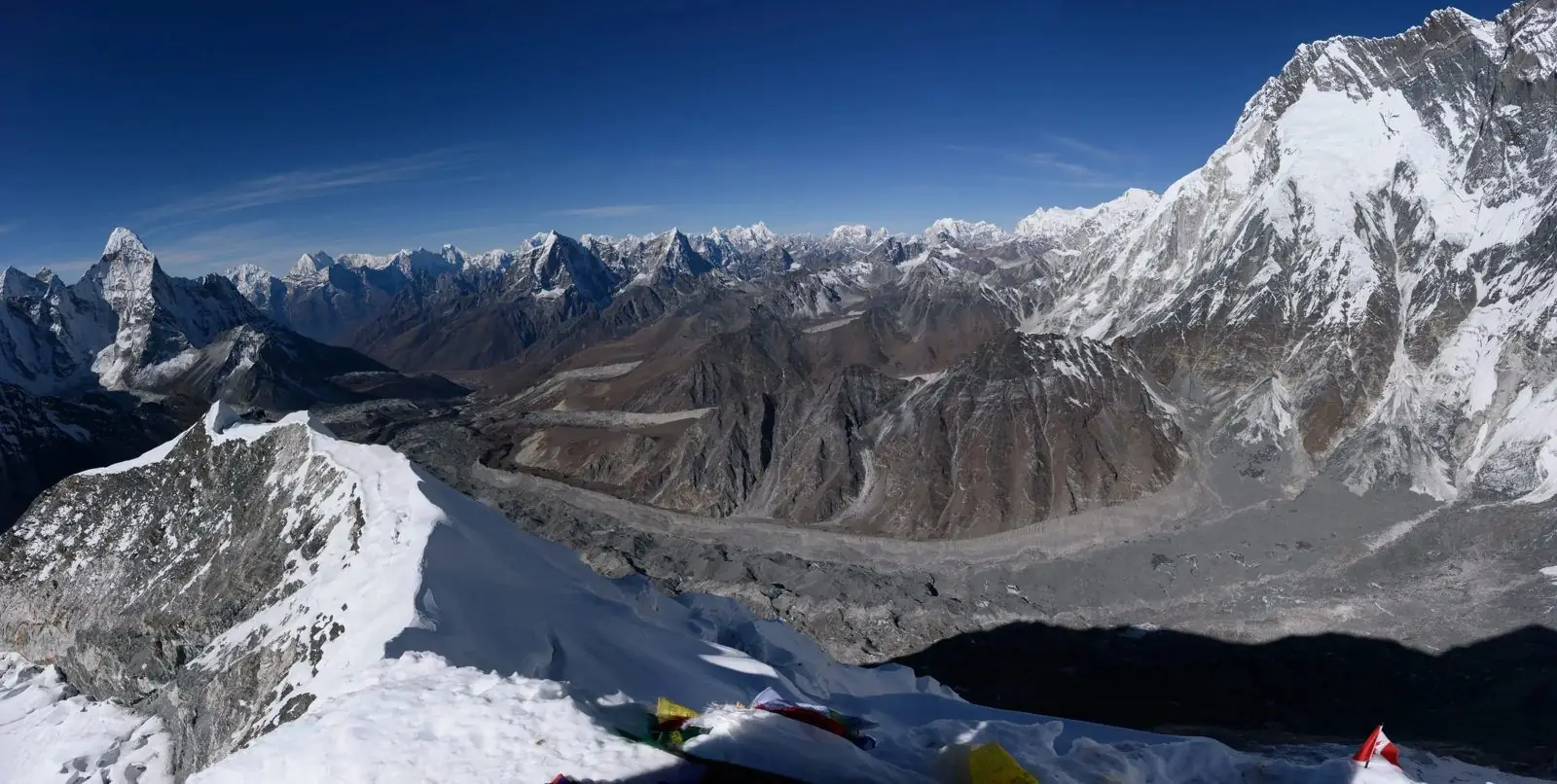
Nirekha Peak is a 6,069 m mountain in the Khumbu, a few hours from Lobuche. It is usually described as one of the more demanding trekking peaks, meaning that a permit is simpler than for an expedition peak but the climbing still needs skill, fitness and a good guide.
Where it is
Nirekha lies in the Barun Mahalangur part of the Khumbu, in the high country above Lobuche and near the route that leads towards the Khumbu glacier. It is a quieter objective than Island Peak or Lobuche Peak, and you will often have the base camp almost to yourself.
Height and class
The usual height given is 6,069 m (19,911 ft). It is classed as a trekking peak, which is an official category in Nepal for peaks that are lower than 6,500 m and have a simplified permit process. That class does not mean easy. Trekking peaks vary from gentle snow slopes to steep ice, and Nirekha sits at the harder end.
What the climb is like
Expect a rocky approach, a glacier section and a steep snow or ice finish. You will use a harness, crampons and an ice axe, and you will be roped for the glacier. The top is a small summit with wide views over the Khumbu. Weather decides the day, and a flexible plan with spare days is wise.
Who it suits
The peak suits people who have already climbed a basic peak, who are comfortable on steep ground in crampons and who have trekked in the Everest region at altitude. Beginners are better off starting with Island Peak or Lobuche Peak, then stepping up.
Acclimatisation
Climbers normally walk up from Namche Bazaar, with rest days at Namche and Dingboche, and then continue to Lobuche before moving to base camp. Do not rush. A few extra nights at 4,500 m make a real difference to how you feel higher up.
Permits and rules
A climbing permit is needed, and it must be arranged through a registered agency together with the usual national park and local fees. Rules and fees change, so ask for the current position before you set dates. We handle the paperwork for you.
Season
Spring (April and May) and autumn (October and November) are the main windows. Autumn tends to be clearer and colder, while spring is warmer with more afternoon cloud. See the Everest Base Camp guides for general weather by month.
Common questions
Is Nirekha near Everest Base Camp? It is in the same wider area, reached from Lobuche. Is it the same as Lobuche Peak? No, they are different mountains. Do I need a guide? Yes, with a licensed climbing guide.
A quieter alternative
Because Island Peak and Lobuche Peak attract crowds in season, some climbers look for a quieter option. Nirekha can offer solitude, but it also offers fewer ready-made routes and facilities. Plan on being more self-sufficient, with an experienced guide and your own camp support. That shapes the cost and the logistics.
The skills you will use
The key skills are moving in crampons on steep snow and ice, using an ice axe for balance and self-arrest, and working safely on a rope team. If any of these feel unfamiliar, take a short course in Kathmandu or at home before you come. A day of practice on an ice slope is worth more than a week of extra fitness work.
Gear
You will need mountaineering boots, a harness, helmet, crampons, ice axe, warm down clothing, gloves in layers and a good sleeping bag. Most of this can be rented in Kathmandu or Namche, but check the fit and condition before you leave. Ask us for the current kit list.
Safety and decision-making
Weather, snow condition and the fitness of the team decide whether you go to the top. A good guide will turn the team around if the risk is too high, and that decision should be accepted without argument. The summit is optional, and getting back is mandatory.
Combining with a trek
The approach goes through the same villages as the Everest Base Camp trek, so it is easy to combine both in one trip. You can visit Gorak Shep and Kala Patthar before or after your climb if time and conditions allow.


