




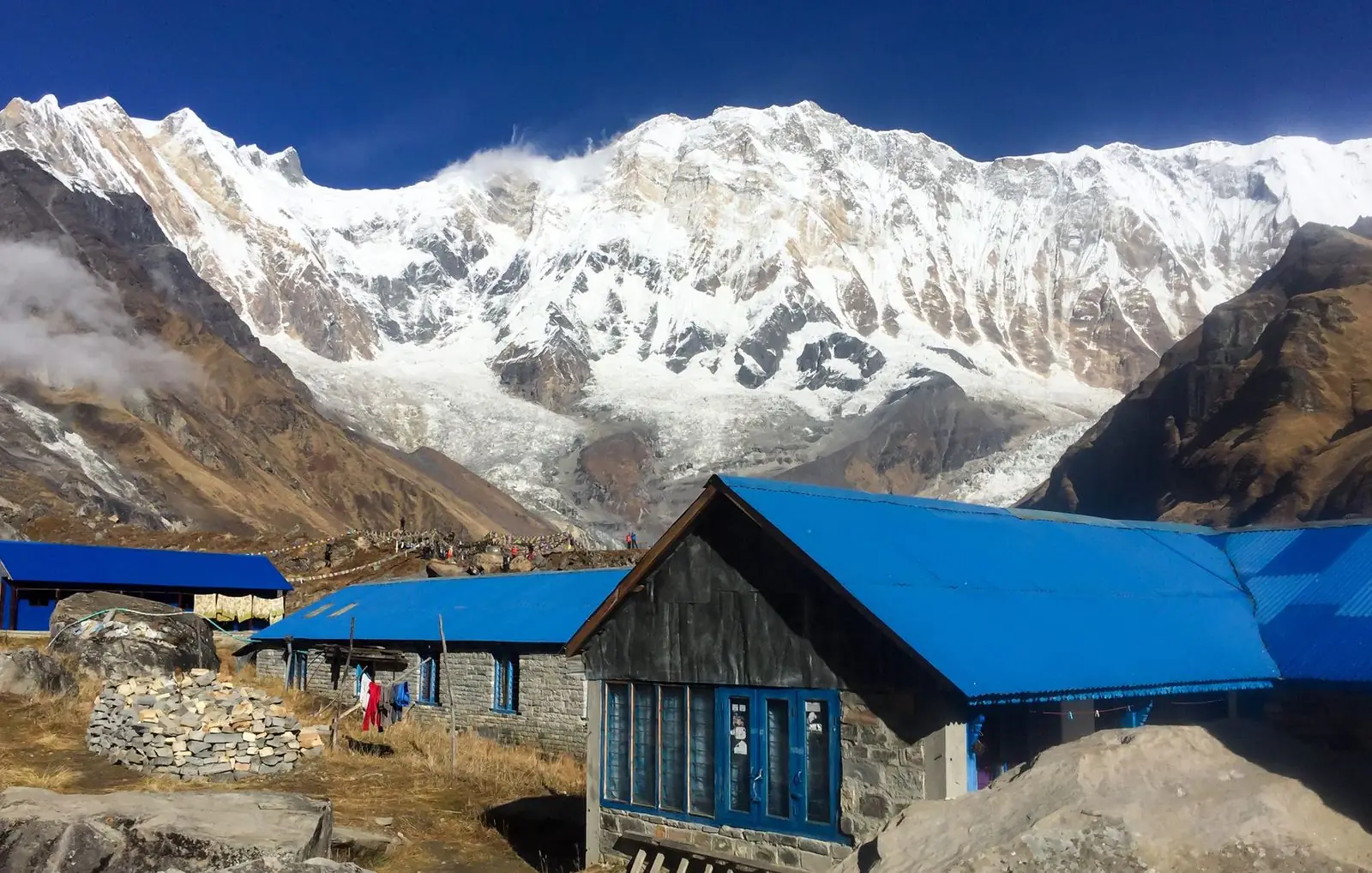
Your first trek in Nepal is usually a series of steady walking days, several hours on the trail, with tea breaks, a simple lunch and a night in a family run teahouse. You carry a small daypack while porters take the main bag. Choose a route that matches your fitness, walk slowly, and allow time for the altitude.
What a typical trekking day looks like
Most days start early, with breakfast around sunrise and a pack check before you set off. You walk through the morning, when skies are usually clearest, stop for lunch at a village, then continue for a shorter afternoon stretch. You usually reach the next lodge by mid afternoon, leaving time to wash, rest and drink tea.
Walking time varies with pace, route and trail conditions, but many days fall somewhere between four and seven hours with breaks. Dinner is early, often around six or seven, and most people are asleep by nine. The rhythm feels demanding on day one and comfortable by day four.
What to expect from teahouses
Teahouses are small lodges run by local families. Rooms are simple, usually two single beds with a mattress and blankets, and the walls can be thin. Bathrooms are often shared, and hot showers may be limited or cost extra at higher stops.
The dining room is the warm spot, often with a stove in the middle at higher stops, and everyone eats there together. Menus are long but the kitchen is busy, so dal bhat, noodles, soup and eggs arrive fastest. Bring a sleeping bag liner, warm layers for the evening, and patience for slow charging and weak signal.
Pace, rest and altitude for beginners
The most useful habit for a beginner is walking slower than feels necessary. Talk while you walk; if you cannot speak in short sentences, ease off. Drink water steadily through the day and take short breaks before you feel tired.
On higher routes your itinerary should include acclimatisation days, where you rest or take a short walk without sleeping higher. Learn the early signs of altitude illness, such as headache, nausea and unusual tiredness, and tell your guide at once. If symptoms get worse, descending is the right response. This is general information, not medical advice.
Common first timer mistakes
A few errors cause most of the avoidable trouble on first treks:
- Starting in new boots that have never been worn on a long walk.
- Packing too much, then struggling with weight limits on the mountain flight.
- Rushing the early days because you feel strong.
- Skipping meals or fluids when your appetite drops.
- Booking a high route with no spare day for weather or illness.
Most of these are fixed before you leave. Break in your footwear, weigh your duffel at home, and ask for a plan that includes rest days. If you are unsure, we can add a spare day to your itinerary.
Which first treks to consider
For a first trek, a shorter route with moderate altitude is often the wiser choice. Poon Hill, our 9 day trek, gives mountain views with modest daily effort. Mardi Himal, at 11 days, is a little more demanding but still approachable for regular walkers. Annapurna Base Camp comes in 10 or 14 day versions, and the longer one allows a gentler climb.
Everest Base Camp, which we run as a 14 day trek, is possible for a fit first timer who trains and takes acclimatisation seriously. Tell us your fitness, your age and your available days, and we can suggest a route and itinerary.
Common questions
Do I need trekking experience for my first Nepal trek?
No, but you need basic fitness and the habit of walking for several hours. Many first timers choose shorter, lower routes. Training for a couple of months, with some hills and stairs, makes the first days far easier.
Do I need a guide on my first trek?
Rules differ by area and change over time, so confirm before you travel. For a first trek a guide is strongly advised anyway, because they handle navigation, pacing, lodging and early altitude warning signs for you.
How much should I carry myself?
Usually just a daypack with water, a rain layer, sun protection, snacks, camera and a warm layer. Porters carry the main bag, which is limited by weight, so check the current allowance before you pack.


