




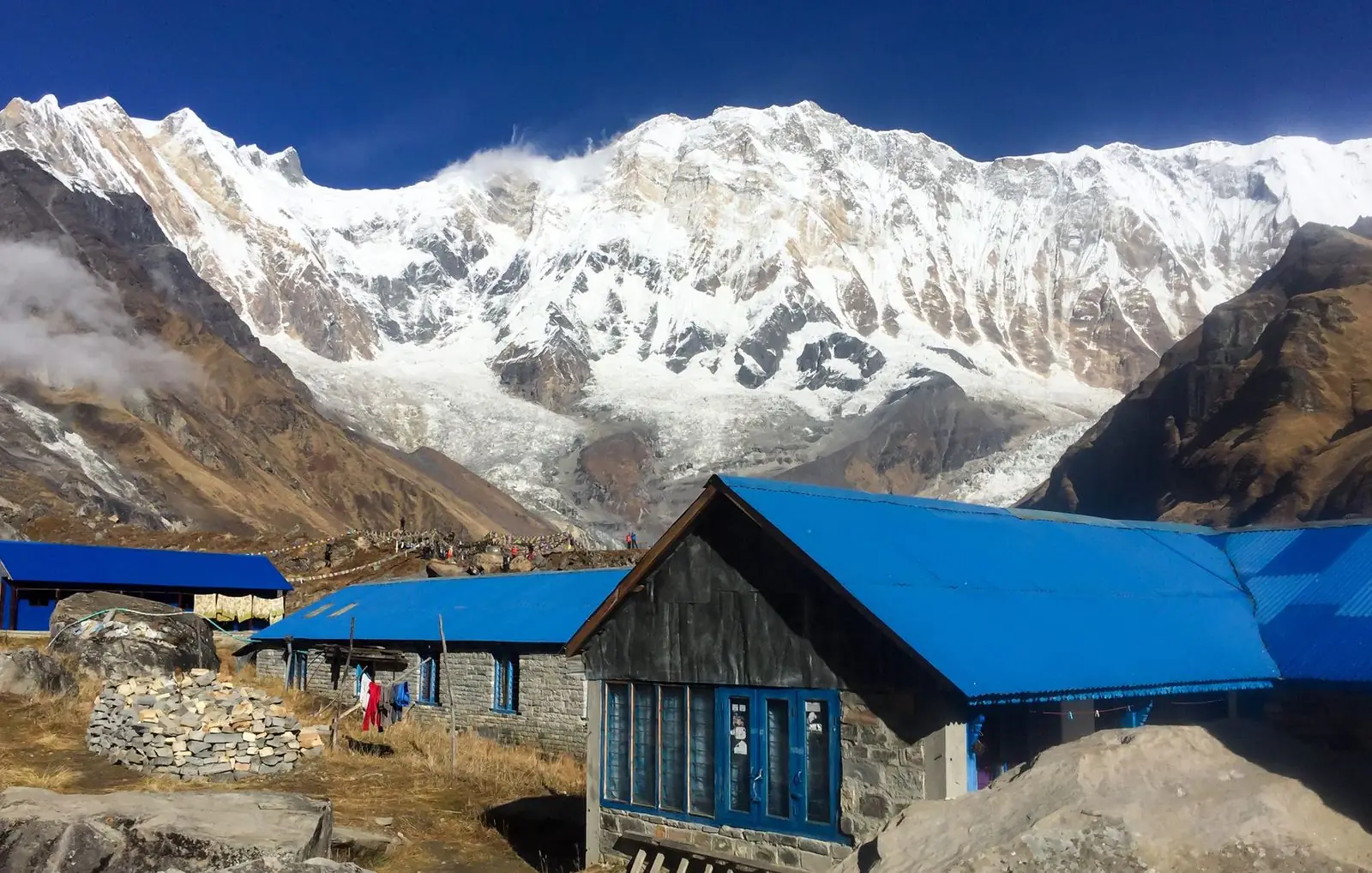
A teahouse trek means sleeping and eating in village lodges along the trail, and a camping trek means sleeping in tents carried and set up by a support crew. Teahouses are simpler, lighter and the norm on popular routes. Camping suits remote areas with few or no lodges, and it needs a larger team.
What a teahouse trek means
You walk from lodge to lodge, carrying only a daypack. Each night you get a basic room, usually with two beds, plus meals in a shared dining room. Teahouses are run by local families, and the money you spend stays in the village economy.
The style is flexible. If you are slow, you can stop early at a nearer village, and if the weather turns you can wait a day. The trade-offs are shared bathrooms, thin walls, limited hot water and crowded dining rooms in peak season. Higher lodges are cold at night, so a proper sleeping bag matters. Menus are fixed by what can be carried up the trail.
What a camping trek means
A camping crew brings tents for sleeping and dining, a kitchen tent, stoves, food and a cook. Porters or animals carry the load, and the team sets up camp each afternoon in a chosen site. You walk, arrive, and find the camp ready.
Camping gives privacy, control over meals and freedom to stop in places without lodges. The downsides are cold mornings, damp tents in wet weather and a larger team, which changes the logistics. Campsites may need permission, and what is allowed depends on the area. Rules change, so confirm before you travel. Camping is not simply a luxury option; it is mostly a practical answer to remote terrain.
Comfort, privacy and flexibility compared
Neither style is automatically more comfortable. In a lodge you get a roof, a stove in the dining room and company, but little privacy. In camp you get your own tent and a hot meal served on schedule, but the ground is hard and the cold is closer.
- Teahouse: lighter logistics, social, fewer people needed, easy to adjust the day.
- Camping: private, self contained, works anywhere with a flat site.
- Both: need warm layers and a good sleeping bag.
If you value hot meals indoors and a social evening, choose a teahouse route. If you want solitude and control, and the route allows it, camping may fit.
What drives the cost difference
We do not quote figures here, because fees change and you should confirm the current figure with us before you book. In general terms, the cost of a camping trek rises with the size of the support team, including cook, helpers and porters, plus tents, kitchen equipment, food supplies, transport of all that gear and campsite arrangements.
A teahouse trek has fewer of those layers because food and beds are provided by lodges. Remote routes cost more either way because supplies must travel further and trips take longer. Group size changes the picture too, since fixed costs get shared. Ask for a written list of what is included so you can compare like with like.
Which regions need camping or are lodge based
Popular routes such as Everest Base Camp, Annapurna Base Camp, Annapurna Circuit, Langtang and Poon Hill are lodge based. Some restricted or remote areas, including parts of Dolpo, Humla, Limi, Nar-Phu, Tsum and Kanchenjunga, have limited lodging, so camping is more common there. Manaslu and Upper Mustang have lodges on much of the route, though conditions vary.
Restricted areas need a special permit and a licensed guide through a registered agency. Lodge availability changes over time, so confirm the current situation with us before you travel. Our standard treks, including Manaslu Circuit at 15 days and Upper Mustang at 18 days, include permits, a licensed guide, porters and transfers.
Common questions
Is a teahouse trek cheaper than camping?
Generally a teahouse trek needs a smaller support team, so it often costs less, but fees change and remote routes cost more either way. Confirm the current figure with us before you book.
Are tents ever needed on popular routes?
Rarely. Everest Base Camp, Annapurna routes, Langtang and Poon Hill have lodges throughout. Camping may be used on side trips or in unusually busy or disrupted conditions, but it is not the normal way to trek them.
Which is warmer, a lodge or a tent?
Lodge bedrooms are normally unheated, while the dining room is the warm place. Tents are colder and damper. In either case bring a sleeping bag suited to the lowest temperatures expected.
Can I choose camping on any route?
Not always. Rules and campsite permission depend on the area and change over time, so confirm before you travel. Some routes also have limited campsites because the terrain is steep or protected.


