




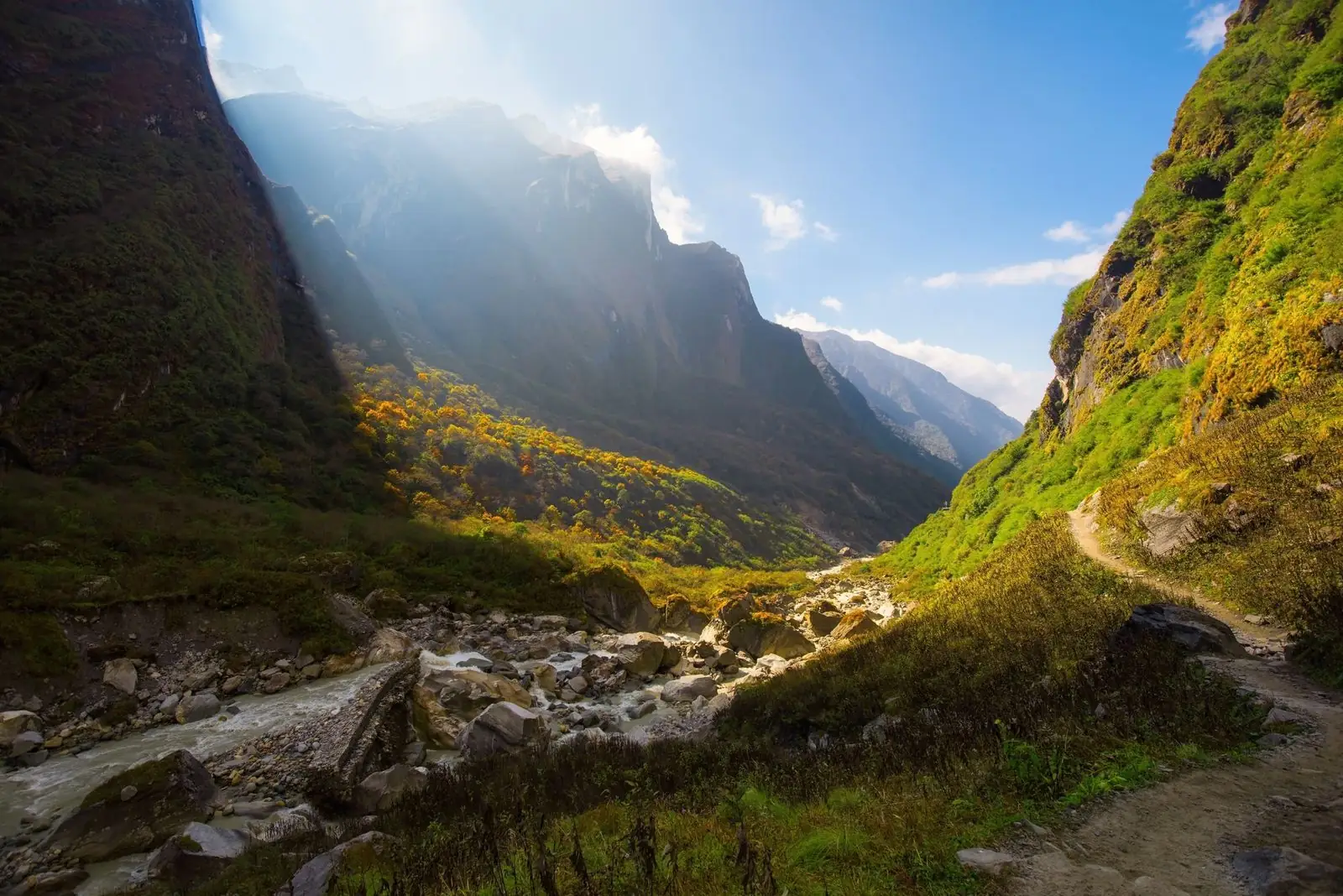
Bamboo is a lodge stop in the Annapurna Base Camp and Poon Hill region, named for the thick bamboo forest around it. It sits between Sinuwa and Dovan on the sanctuary trail, and it works either as a lunch halt or a night on the way up to Annapurna Base Camp.
Altitude: about 2,310 m. Heights quoted for villages and camps vary by source, so treat this as a guide.
Where Bamboo is and why trekkers stop
Bamboo lies on the trail beyond Sinuwa as the valley closes in. Our route pages show it linked with Sinuwa, Dovan, Deurali, Himalaya and Machhapuchhre Base Camp, so it is a useful marker for planning. Trekkers stop here for tea, lunch or a night, depending on how the days are split. On the descent, many people come from Annapurna Base Camp to Bamboo or Chhomrong in one or two days, using it as a convenient place to rest.
What to expect at Bamboo
Expect a handful of lodges in tall bamboo and forest, with the Modi Khola noisy somewhere below. Light is often dim under the trees, and mornings can feel damp. There are few views compared with ridge villages, but the forest itself is the main interest, with mossy trunks and birds in the canopy. The trail nearby can be slippery after rain. Services are simple, and rooms are small, so the dining room tends to become the gathering place.
Altitude and how you may feel
Bamboo is at about 2,310 m, lower than Dovan and Himalaya, so sleeping altitude rises as you continue upward. Most trekkers feel normal here. Altitude illness can still appear on this route, particularly if you ascend quickly, so drink plenty, eat well and report headache, nausea or breathlessness to your guide. If symptoms worsen, descend. The forest air is humid, and temperatures drop after sunset, so layers matter even at this moderate height.
Lodging, food and practical tips
Meals follow the usual trekking pattern of dal bhat, noodles, soup and eggs, and ordering early keeps the wait short. Carry cash and charge devices when power is offered. Leeches and wet leaves may be an issue in monsoon months, so wear suitable footwear and gaiters if you walk then. Keep a headlamp for early starts, and store your valuables safely in the room. If you plan a long upward day, leave at first light for good weather.
Stage guides that pass through Bamboo
These day-by-day guides start or end at Bamboo, with walking times, ascent and where to sleep.
- Bamboo to Machhapuchhre Base Camp trek: stages, altitude and time
- Sinuwa to Bamboo trek: altitude, time and route
- Ghandruk to Bamboo trek: stages, altitude and time
- Nayapul to Bamboo trek: stages, altitude and time
- Bamboo to Himalaya trek: stages, altitude and time
- Bamboo to Deurali trek: stages, altitude and time
- Chhomrong to Bamboo trek: stages, altitude and time
- Bamboo to Dovan trek: altitude, time and route
Common questions
Why is it called Bamboo?
The settlement is named for the thick bamboo forest around it. The name describes the surroundings rather than a village, and the area is a forested stretch of the sanctuary trail.
What comes after Bamboo on the way up?
Dovan is the next lodge settlement, followed by Himalaya and Deurali, with Machhapuchhre Base Camp and Annapurna Base Camp beyond. Timings vary with pace and trail conditions.
Is Bamboo good for resting on the descent?
Yes. Most trekkers descend from Annapurna Base Camp to Bamboo or Chhomrong in one or two days. The lower sleeping altitude and available lodges make it a comfortable stop.


