




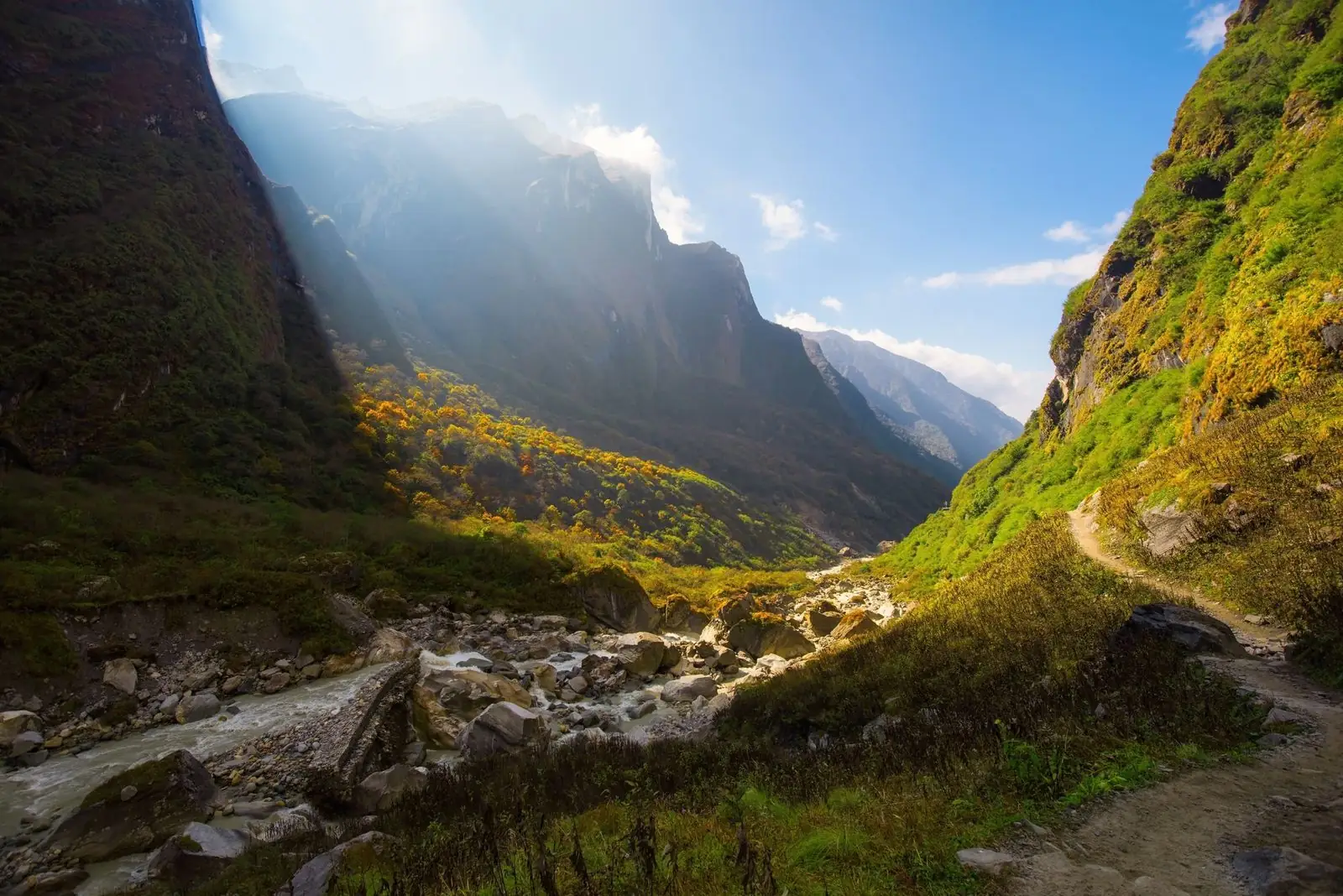
Chhomrong is the last big village on the Annapurna Sanctuary route, about 2,170 m up in the Annapurna Base Camp and Poon Hill region. It is built on steep stairs with views of Annapurna South and Fishtail. Trekkers use it to rest, restock and prepare for the quieter, higher stretch toward Annapurna Base Camp.
Altitude: about 2,170 m. Heights quoted for villages and camps vary by source, so treat this as a guide.
Where Chhomrong is and why trekkers stop
Chhomrong sits on the hillside above the Modi Khola, between Ghandruk and Sinuwa. It is the last sizeable village before the trail enters the upper valley, which is why most itineraries sleep here. Our route pages link it with Ghandruk, Sinuwa, Bamboo, Dovan and Annapurna Base Camp. Trekkers also stop to arrange last supplies, charge devices and check weather before heading up. Because services thin out above, it is the sensible place to sort out gear, cash and plans.
What to expect at Chhomrong
Expect a village laid out along steep stone stairs, with lodges, small shops and tea rooms on different levels. Going between your room and the dining area often means climbing steps, which adds to the day's effort. Views of Annapurna South and Fishtail open from many terraces, especially in the early morning. The village is busy in peak seasons and quieter outside them. Descending toward Sinuwa starts with a long stone staircase down and a climb back up on the far side, so save energy.
Altitude and how you may feel
Chhomrong is at about 2,170 m, which is higher than Ghandruk and lower than Sinuwa, Bamboo and Dovan. Most healthy trekkers feel fine here, though the steps are tiring. Altitude illness can strike as you go higher, so use Chhomrong to establish a steady pace, drink plenty of water and sleep well. Tell your guide about persistent headache, nausea or breathlessness. If symptoms worsen, descend. Many trekkers descend from Annapurna Base Camp to Bamboo or Chhomrong in one or two days.
Lodging, food and practical tips
Lodges serve typical trekking meals such as dal bhat, noodles and soup, and rooms are simple. Book ahead in busy periods if your dates are fixed, and carry enough cash for the days above, since facilities are fewer higher up. Sort out any laundry, battery charging and snacks here. Wear boots with good grip for stone steps, and keep a warm layer ready for evenings. Pack rubbish out where you can, and respect the quiet that lodges keep after dark.
Stage guides that pass through Chhomrong
These day-by-day guides start or end at Chhomrong, with walking times, ascent and where to sleep.
- Chhomrong to Annapurna Base Camp trek: altitude, time and route
- Chhomrong to Himalaya trek: stages, altitude and time
- Chhomrong to Bamboo trek: stages, altitude and time
- Chhomrong to Dovan trek: altitude, time and route
- Nayapul to Chhomrong trek: stages, altitude and time
- Chhomrong to Sinuwa trek: altitude, time and route
- Pokhara to Chhomrong trek: stages, altitude and time
- Ghandruk to Chhomrong trek: altitude, time and route
Common questions
What is Chhomrong known for?
It is the last big village on the Annapurna Sanctuary route, built on steep stairs with views of Annapurna South and Fishtail. Many treks to Annapurna Base Camp spend a night here.
What is the next stop after Chhomrong?
Sinuwa is the next lodge settlement, at the start of the upper Modi Khola valley. From there the trail continues through Bamboo, Dovan and Himalaya toward Annapurna Base Camp.
Is Chhomrong a good place to rest on the way down?
Yes. Many trekkers descend from Annapurna Base Camp to Bamboo or Chhomrong in one or two days. Lodges, food and a lower sleeping altitude make it a comfortable stop.


