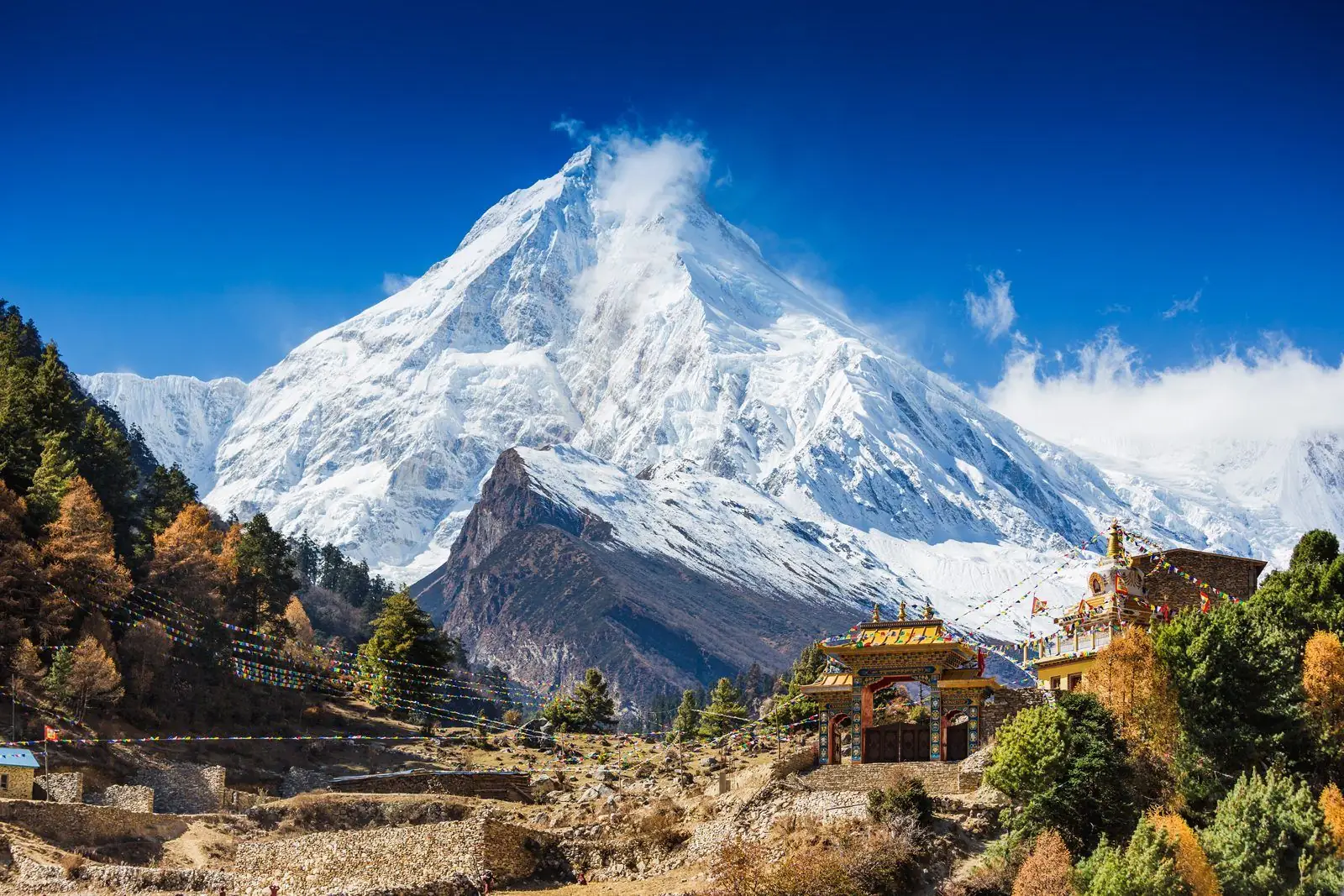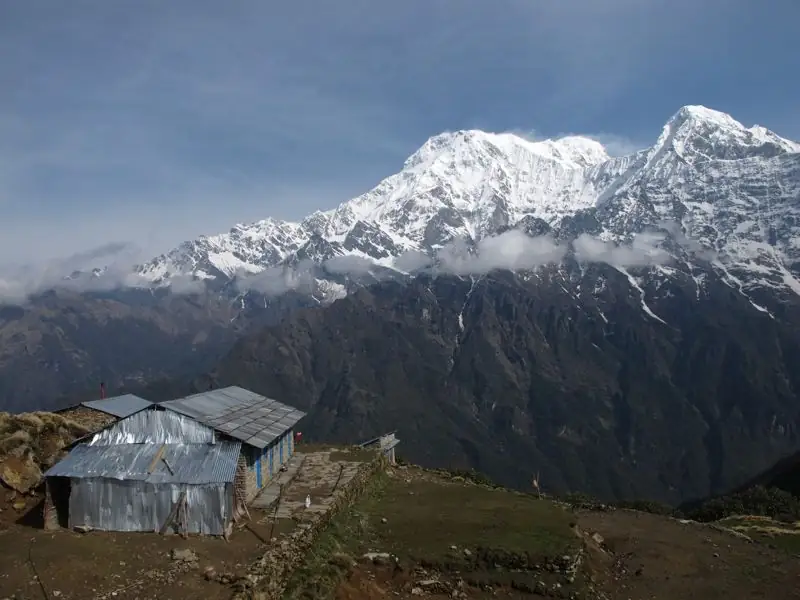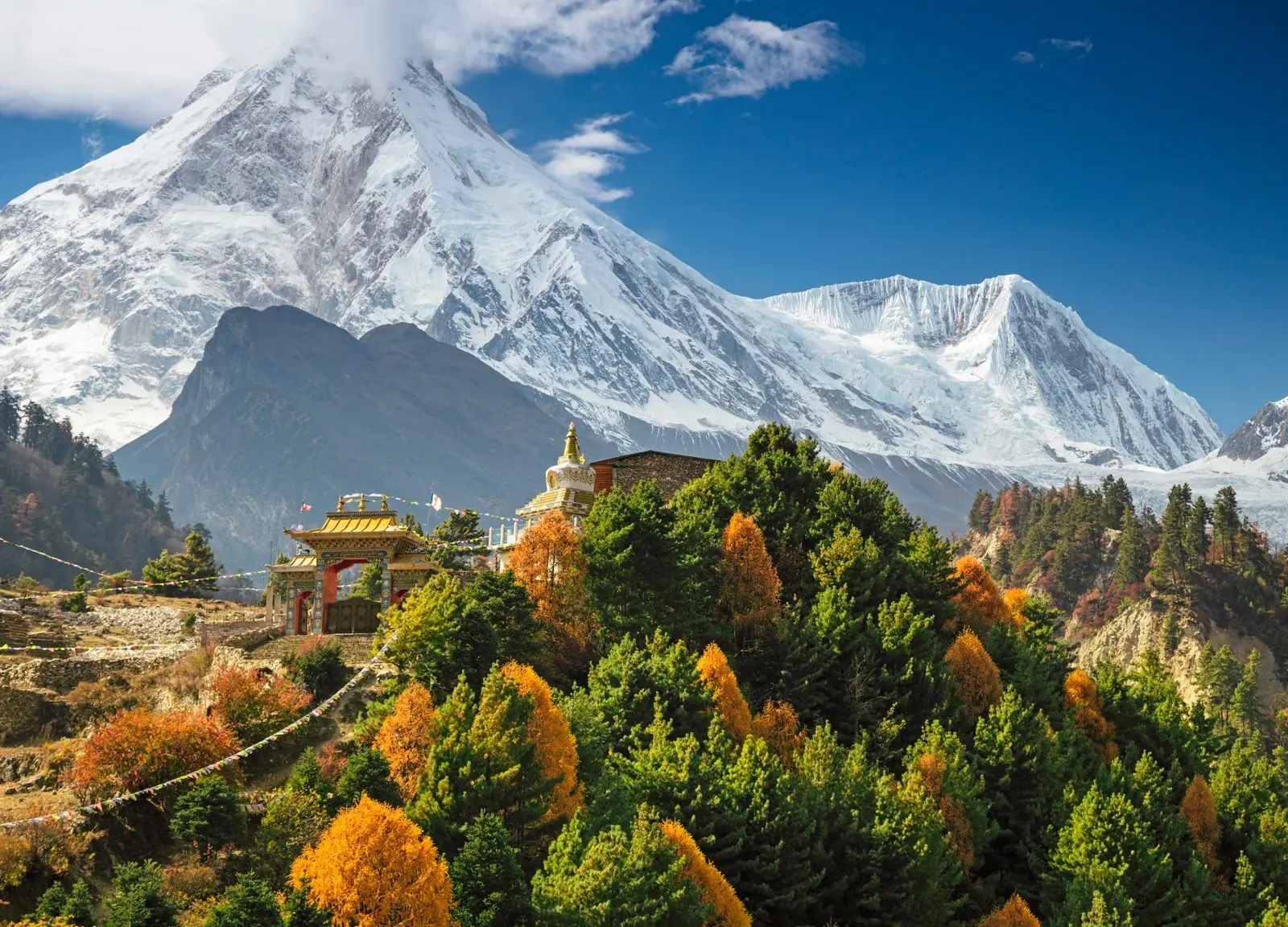
Tsum Valley is a long, narrow valley in the Gorkha district of northern Nepal, tucked against the Tibetan border and running north from the Budhi Gandaki river. Its name is often linked to the Tibetan word for "vivid", and it has long been regarded as a sacred hidden valley in Tibetan Buddhist tradition. It was opened to foreign trekkers only in 2008, which is why it still feels quiet and traditional.
Where it lies
Distances and heights are rounded, and a slow day or a snowfall can change the times.
The valley branches off the main Manaslu Circuit trail near Lokpa (about 2,240 m), after Philim and Chisapani. It runs north through Chumling, Chhokangparo, Nile and Chhule, up to Mu Gompa near the Tibetan border at about 3,700 m. From Lokpa you walk in and out along the same valley, then return to the main route toward Deng, Namrung and Samagaon. The valley is overlooked by Ganesh Himal, Sringi Himal and Boudha Himal.
Why it is called a hidden valley
In Tibetan Buddhist tradition, hidden valleys, called beyul, are sanctuaries where practitioners can retreat in times of trouble. Tsum is said to be one of them, associated with the Tibetan saint Milarepa, who is believed to have meditated in a cave in the valley. The community maintains strong religious traditions, and many customs are rooted in this belief.
What makes it different from the main circuit
- It is a side valley, so fewer trekkers visit.
- It is lower than the Larkya La section, so altitude is gentler.
- It is more cultural: monasteries, nunneries, mani walls and traditional villages.
- The trail is narrow and rough in places, but the landscape feels intimate rather than vast.
How long to allow
As an add-on to the Manaslu Circuit, Tsum Valley typically takes six to eight days from Lokpa and back, depending on how far you go and how many rest days you take. As a standalone trek, it needs about 10 to 14 days including the road journey and the walk in from Soti Khola. See our page on adding Tsum Valley to the Manaslu Circuit.
Who it suits
- Culture-focused trekkers.
- People who prefer lower altitude and quieter trails.
- Photographers interested in village life, architecture and monasteries.
- Anyone who wants a restricted-area experience without a very high pass.
Rules
Tsum Valley is a restricted area. You need a restricted-area permit, a registered agency and a licensed guide, and the route requires an agency-issued TIMS card. See Tsum Valley permits and rules.
Blog and further reading
Our blog has a full article on Manaslu Circuit trek preparation and a comparison of Manaslu and Annapurna Circuit. You can browse more in the Manaslu blog category.
Common questions
Where is Tsum Valley?
In Gorkha district, northern Nepal, branching off the Manaslu Circuit near Lokpa and running north toward the Tibetan border.
When did Tsum open to trekkers?
Around 2008, which is why it remains relatively quiet and traditional.
How many days does it take?
Six to eight days as an add-on to the Manaslu Circuit, or 10 to 14 days as a standalone trek.