




The short version: three of the most asked questions, answered in a line each. The rest of the page goes into detail.
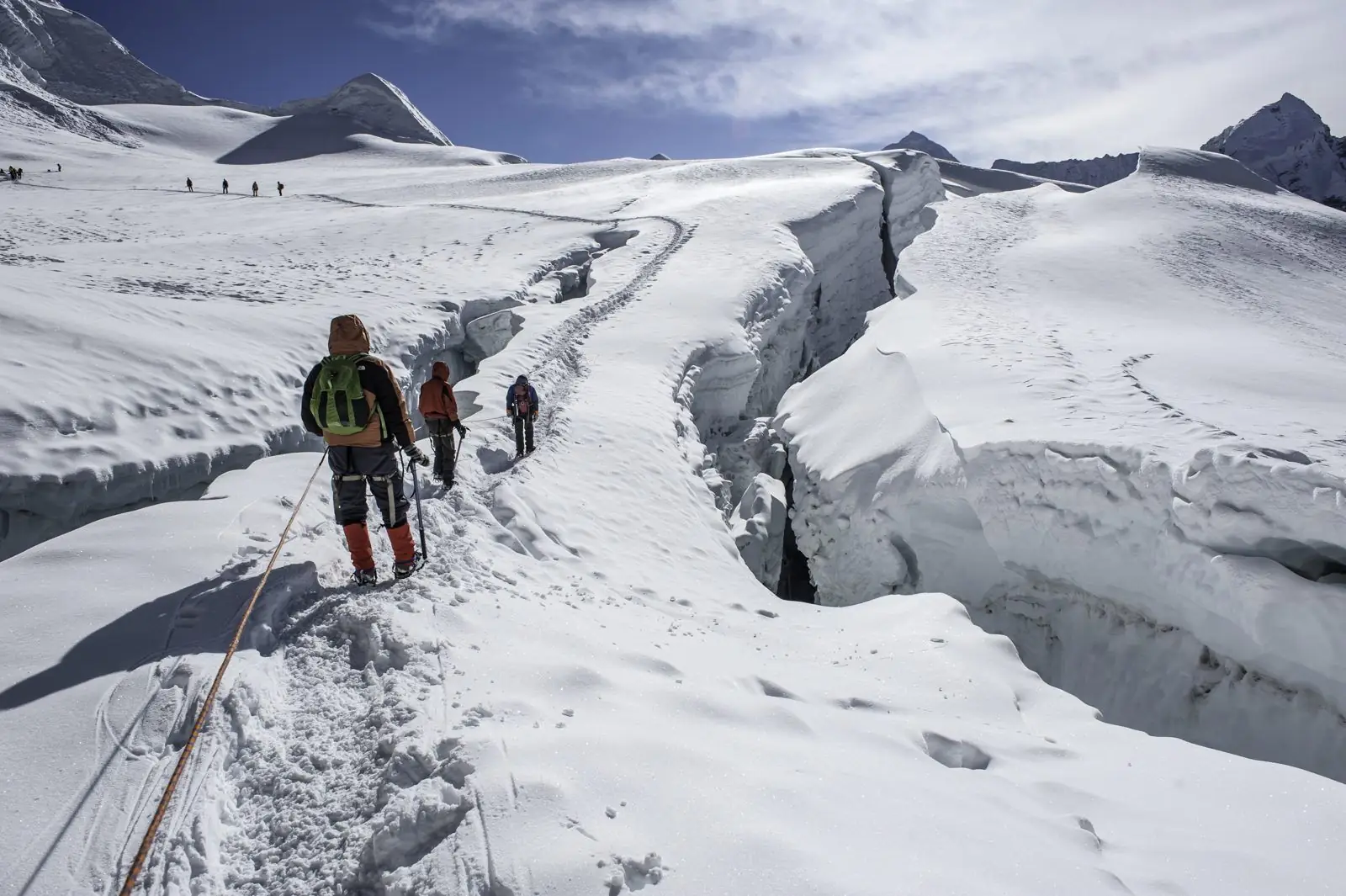
- What are the main hazards on the Baruntse route? Crevasses, loose rock on moraine, avalanche risk after snowfall and cold wind on the ridge are all real.
- Which altitude symptoms should I report to my guide? Tell your guide early about headaches, nausea or breathlessness.
- What should my insurance cover for Baruntse? Choose a policy that covers expedition climbing to 7,000 m and helicopter evacuation, and read it carefully for exclusions.
How does the walk-in help me acclimatise for Baruntse?
The approach doubles as acclimatisation. You climb slowly, sleep higher every few days and take a day or two of rest, then often add Mera Peak or the Mera La before base camp. Do not compress the walk-in to save days, because moving slowly and resting well improves your chances at the top.
What are the main hazards on the Baruntse route?
Crevasses, loose rock on moraine, avalanche risk after snowfall and cold wind on the ridge are all real. Teams manage them with ropes, careful timing and clear communication. Steeper snow and ice sections use fixed ropes, so you need to be comfortable with crampons, an ice axe and ascending rope.
Which altitude symptoms should I report to my guide?
Tell your guide early about headaches, nausea or breathlessness. A headache that keeps getting worse, vomiting, or breathlessness at rest are reasons to stop climbing and descend. Altitude illness is a real risk on a 7,000 m peak, and hiding symptoms to stay on schedule is the most dangerous choice.
Do I need a medical check before the expedition?
Yes. Have a medical check before you go, tell your doctor the altitude you will reach, and carry a doctor-approved kit. Learn the symptoms of altitude sickness before you travel, so you can recognise them in yourself and your teammates and speak up quickly.
What should my insurance cover for Baruntse?
Choose a policy that covers expedition climbing to 7,000 m and helicopter evacuation, and read it carefully for exclusions. Many standard travel policies stop at lower altitudes or exclude roped climbing. Check the wording with your insurer before paying for the trip, and keep proof of cover with you.
What happens if the weather window closes?
Summit days depend on a window of calm weather, so be willing to wait or turn back. High wind on the ridge can stop an attempt entirely. Your guide watches forecasts and conditions, and the spare days in the schedule exist so that nobody has to push on in bad conditions.
Does supplementary oxygen make the climb safer?
Some climbers use supplementary oxygen on summit day as a safety measure, and many teams carry it even if it is not always used. Whether it is included varies by operator, so ask exactly how much is provided at high camp and who decides when it is used.


