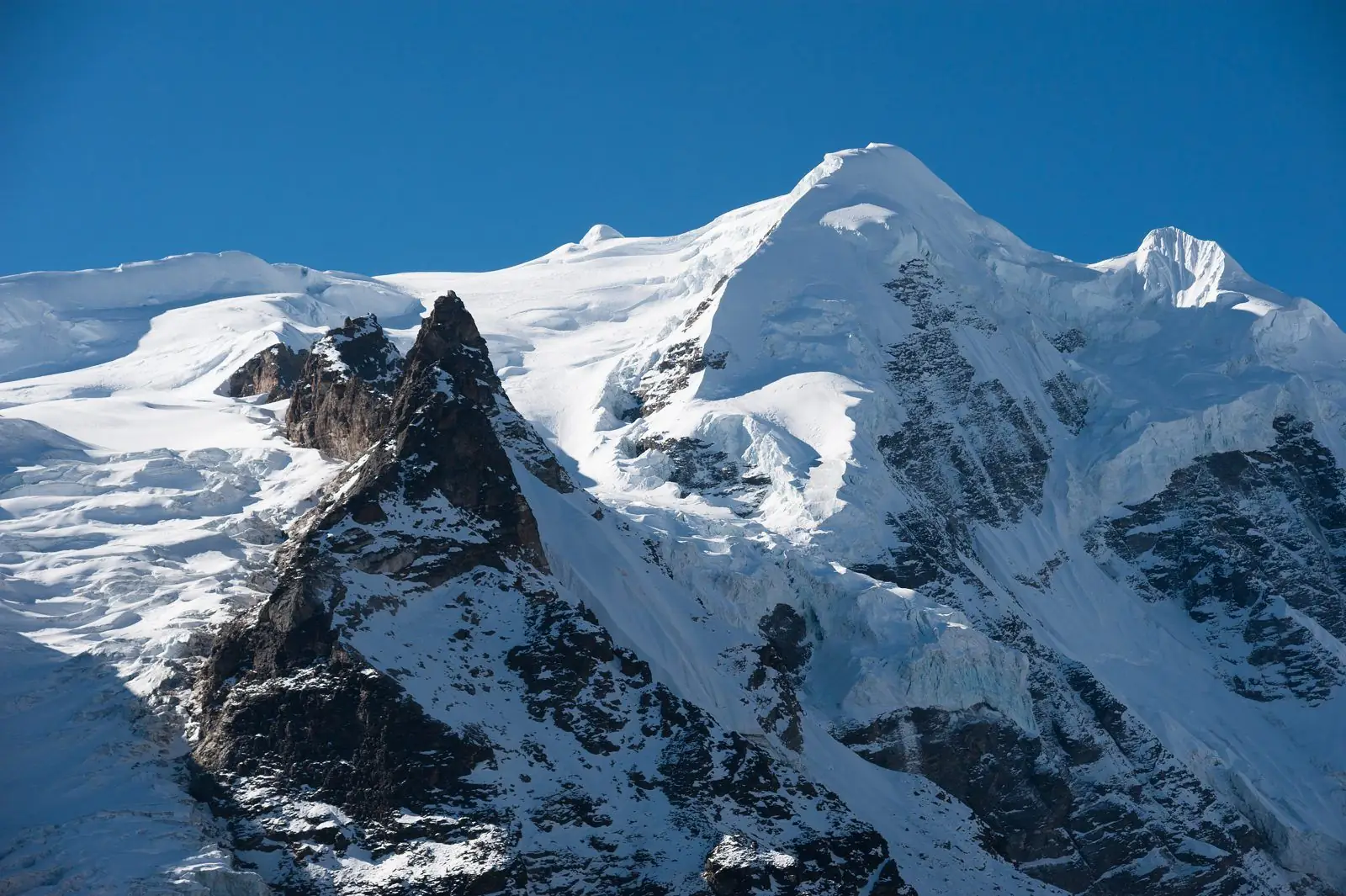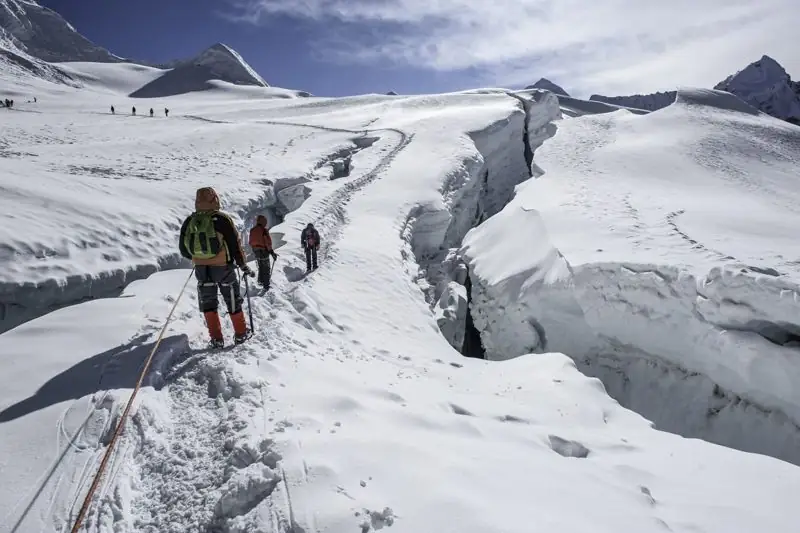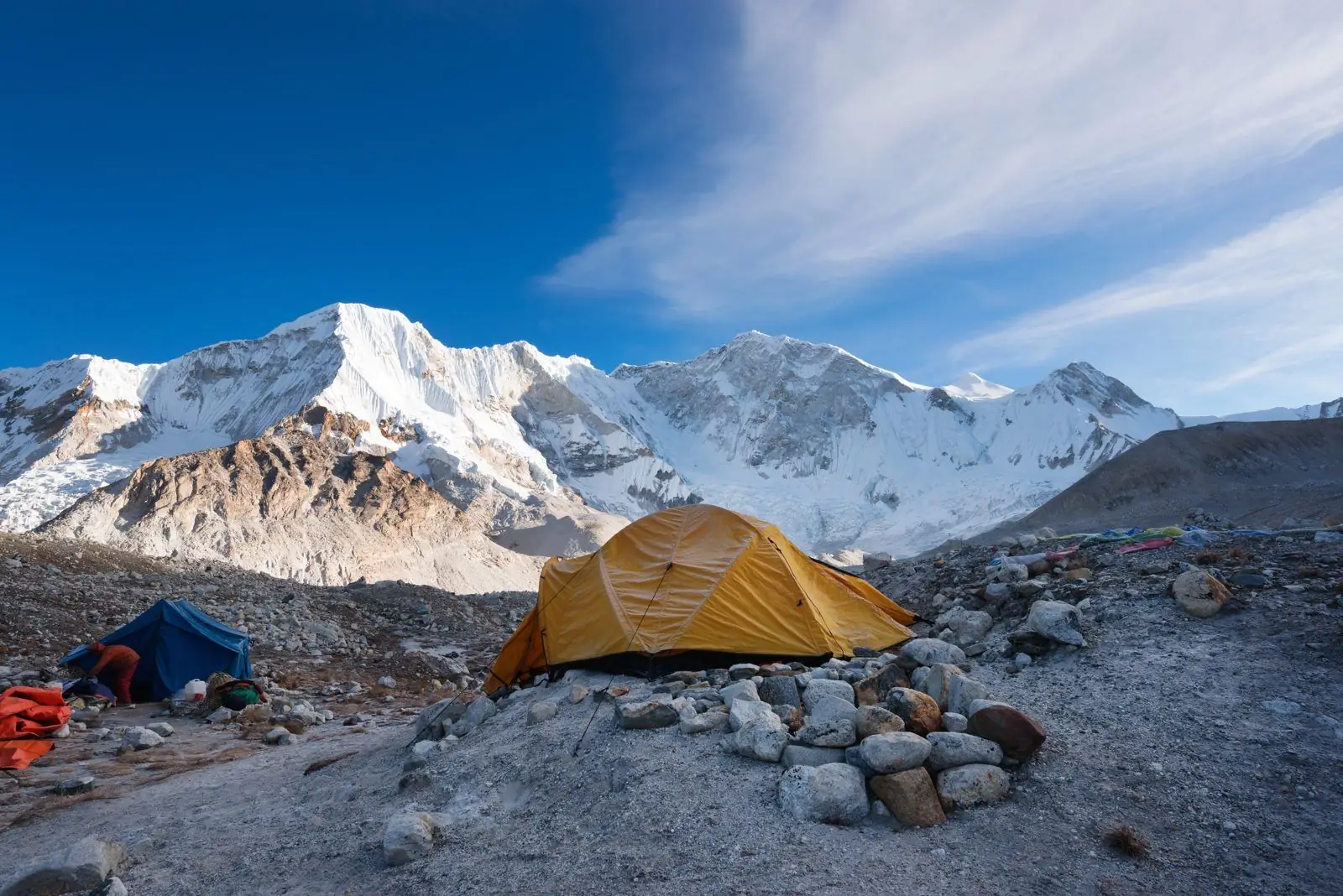
These three Nepalese trekking peaks are all popular first six-thousand-metre objectives. They differ more than their grades suggest.
Island Peak
The best-known of the three. The approach follows the Everest Base Camp trail, which gives good acclimatisation. The climb involves a rocky section, a glacier and a steep snow headwall, using fixed ropes. It is a balanced introduction to technical climbing.
Mera Peak
Mera is higher and more of a long, high-altitude walk with limited technical difficulty on the standard route. The effort lies in the altitude, the remote approach and the cold. It suits people who are strong walkers but nervous about steep ice.
Lobuche East
Lobuche East has a more technical and exposed climb, with steeper rock and ice sections. It is often chosen by those with some mountaineering experience or a strong wish for a more demanding route.
Comparing
- Technical: Lobuche East is the most technical, Island Peak is in the middle and Mera is the least.
- Altitude: Mera is the highest, and the exposure to altitude is greatest there.
- Approach: Island and Lobuche follow the busy Khumbu trail, while Mera uses a quieter route.
- Crowds: Island Peak sees the most climbers in peak season.
Our suggestion
For a first climb, Island Peak or Mera Peak are common. Choose Mera if you prefer a gentler technical level and are comfortable with a long, remote trek. Choose Island if you want to learn basic technical skills. Choose Lobuche East if you already have experience.
Tell us your background and we will suggest an option.
Matching the peak to your goals
If your priority is altitude with the least technical commitment, Mera Peak is the usual choice. If you want a short, real mountaineering challenge with ropes and a steep headwall, Island Peak fits well. If you want a more exposed, rocky and ice-focused route, Lobuche East is the harder option. None are easy, and all benefit from solid fitness and patient acclimatisation.
Combining peaks and treks
Some climbers combine Everest Base Camp with Island Peak or Lobuche East to share the early acclimatisation days. Others pair Mera Peak with the Amphu Laptsa crossing or a longer approach. Combinations add days and cost, so decide whether you want one well-planned objective or a bigger journey.
Making the final choice
Think about your time, your comfort with exposure and rope work, and how you feel about crowds. Talk with an operator about your fitness and experience; a good one will help you choose honestly rather than just sell the most dramatic option.
Technical comparison in more detail
Island Peak has a steep snow and ice headwall of around 100 metres, which is fixed with rope, then a final summit ridge. Mera Peak has a long, gentle glacier slope with no steep sections but a higher summit at about 6,476 metres. Lobuche East features steeper, rockier terrain and more exposure on the ridge, with a summit of about 6,119 metres. Each requires basic mountaineering skills, but the character differs.
Time and cost
Island Peak is often combined with a trek to Everest Base Camp and takes around 18 days. Mera Peak takes 16 to 18 days with a long approach. Lobuche East takes around 17 to 19 days, and is usually combined with the Everest Base Camp trek. Costs follow similar patterns, with small differences due to permits and logistics.
Choosing for your goals
- Choose Mera if you want height, solitude and fewer technical demands.
- Choose Island Peak if you want a classic first technical climb and a well-supported route.
- Choose Lobuche East if you want a more serious climb and have some experience.