




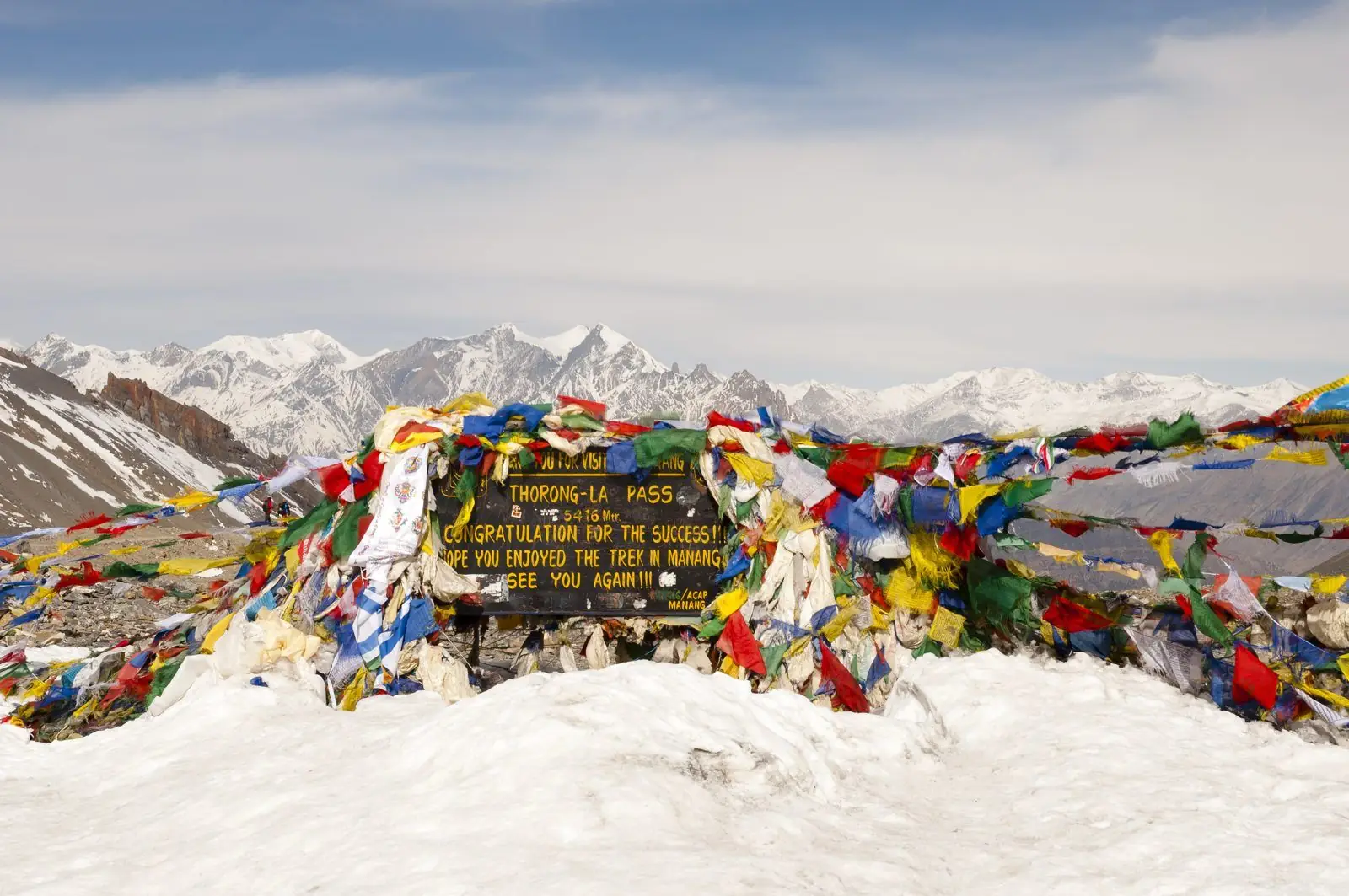
Muktinath is a sacred place for Hindus and Buddhists in the Annapurna Circuit region, at about 3,760 m, on the eastern side of Thorong La. It is known for its temple complex, a row of water spouts and a flame that burns beside spring water. Trekkers arrive here after the pass, or walk up from Jomsom.
Altitude: about 3,760 m. Heights quoted for villages and camps vary by source, so treat this as a guide.
Where Muktinath is and why trekkers stop
Muktinath lies on the far side of Thorong La for those walking the Circuit anticlockwise. After the long descent from the pass, it is the first real destination, with lodges, food and a warm welcome. Others reach it from Jomsom through Kagbeni and Jharkot, a classic shorter walk that needs no pass crossing. Pilgrims come from India and across Nepal, so the place carries meaning well beyond trekking. Allow a morning for the temple complex, and more time if you add the walk to Jharkot.
What to expect at Muktinath
Expect a temple area surrounded by trees, with prayer flags, lanes of small lodges and shops, and a steady flow of pilgrims. The water spouts, a row of carved outlets that visitors pass beneath, and the flame beside spring water are the best known features. Behave respectfully: dress modestly, remove shoes where asked and ask before taking photographs. The setting is dry and open, with the valley falling away below. Evenings are quiet once day visitors leave, and the lodges serve warming food.
Altitude and how you may feel
After Thorong La, Muktinath is a big drop in sleeping height, and most trekkers feel better here. Even so, the place is still high, and those arriving from Jomsom gain height quickly if they fly in and climb the same day. Headache, nausea and tiredness can appear. Drink water, take it easy and rest if needed. If symptoms get worse, descend toward Jomsom. For pass crossers, the tired legs from the descent are usually more of a problem than altitude, so stretch and eat well.
Lodging, food and practical tips
There are many lodges, from simple rooms to slightly more comfortable ones, and the food is more varied than higher up. Pilgrim crowds can make the temple area busy in festival periods, so visit early in the morning for a quieter experience. Bring cash for lodges and small purchases. From here you can continue to Jomsom, Tukuche, Marpha or Tatopani, or fly out from Jomsom. Timings vary with pace and trail conditions, so keep some slack in your plan.
Stage guides that pass through Muktinath
These day-by-day guides start or end at Muktinath, with walking times, ascent and where to sleep.
- Muktinath to Tukuche trek: stages, altitude and time
- Thorong Phedi to Muktinath trek: stages, altitude and time
- Muktinath to Tatopani trek: stages, altitude and time
- Muktinath to Jomsom trek: altitude, time and route
- Jomsom to Muktinath trek: altitude, time and route
- Yak Kharka to Muktinath trek: stages, altitude and time
- Manang to Muktinath trek: stages, altitude and time
- Muktinath to Marpha trek: stages, altitude and time
Common questions
Why is Muktinath sacred?
It is holy to both Hindus and Buddhists, known for its temple complex, a row of water spouts and a flame burning beside spring water. Pilgrims visit from across Nepal and India.
Can I reach Muktinath without crossing Thorong La?
Yes. Many travellers fly to Jomsom and walk up through Kagbeni and Jharkot. It is a classic short walk and avoids the high pass, though the altitude gain is still real.
How much time should I spend at Muktinath?
Allow a morning for the temple complex, and an extra hour or two if you walk on to Jharkot. Many trekkers stay one night, which gives time to visit early before the crowds.


