
 By
Mera Peak (6,476 m) is the highest trekking peak in Nepal and one of the most popular first Himalayan climbs. The route runs through the quiet Hinku valley south of Everest, then up a glaciated slope to a summit with views of five 8,000 m mountains. It is a non-technical climb by mountaineering standards, but it combines a long high-altitude trek with a roped glacier ascent, so it needs real fitness and acclimatisation.
This guide covers the route, permits, best seasons, difficulty, equipment and the questions we are asked most often.
Climb overview
| Detail | Information |
|---|---|
| Duration | 16 to 20 days in total, with 8 to 10 days of trekking to base camp |
| Summit altitude | Mera Peak North, 6,476 m (the central summit is 6,461 m) |
| Difficulty | Strenuous, with basic glacier and snow climbing |
| Best seasons | October to November; March to May |
| Route | Lukla to Chutanga, Hinku valley, Khare, Mera base camp, summit, return to Lukla |
| Accommodation | Teahouses to Khare, then tents at base camp and high camp |
| Requirements | Climbing permit through a registered agency, licensed guide, climbing equipment |
Why climb Mera Peak
- A first 6,000 m peak. The summit slopes are moderate, so Mera is a common choice for trekkers moving up from Everest Base Camp or Island Peak.
- Quiet trails. The Hinku valley sees far fewer people than the Khumbu, with rhododendron forest, yak pastures and few lodges.
- Big views. From the summit you can see Everest, Lhotse, Makalu, Cho Oyu and Kangchenjunga on a clear day.
- Real mountaineering experience. You learn to use crampons, an ice axe and rope on a glacier, with guides beside you.
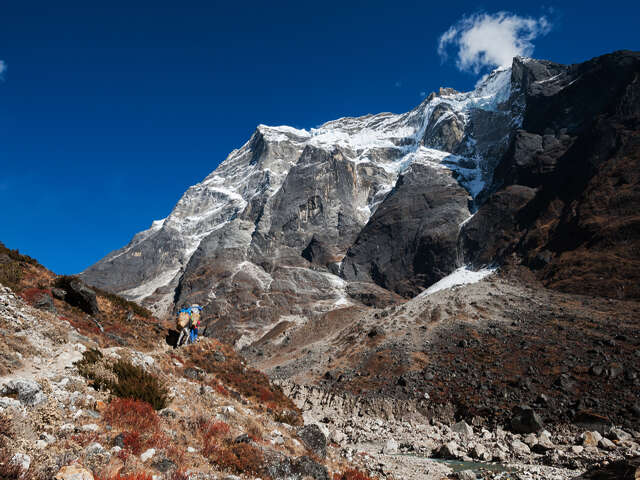
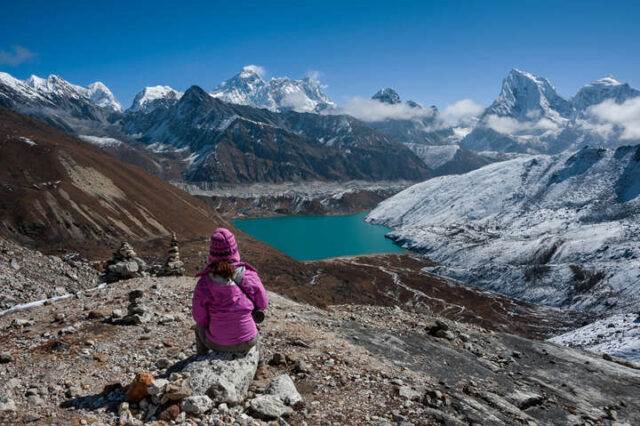
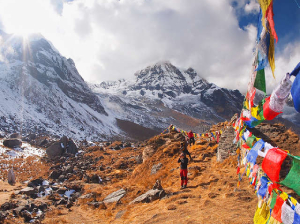
Trekking towards Mera Peak
Route and itinerary
Most itineraries fly to Lukla and walk south over the Zatrwa La into the Hinku valley, then climb to Khare and base camp. A typical schedule is below. We add acclimatisation and weather days, because the high camp is above 5,700 m.
| Day | Route | Altitude |
|---|---|---|
| 1 | Fly Kathmandu to Lukla, trek to Chutanga | 3,430 m |
| 2 | Chutanga to Thuli Kharka over the Zatrwa La | 4,300 m (pass 4,610 m) |
| 3 | Thuli Kharka to Kothe | 3,600 m |
| 4 | Kothe to Thangnak | 4,358 m |
| 5 | Rest and acclimatisation at Thangnak | 4,358 m |
| 6 | Thangnak to Khare | 5,045 m |
| 7 | Rest day at Khare, with equipment and technique training | 5,045 m |
| 8 | Khare to Mera base camp via Mera La | about 5,300 m |
| 9 | Base camp to high camp | about 5,800 m |
| 10 | Summit day, return to Khare | 6,476 m |
| 11 | Spare weather day at Khare | 5,045 m |
| 12 to 14 | Return trek to Lukla | 2,860 m |
| 15 | Fly Lukla to Kathmandu | 1,400 m |
Altitudes are approximate and vary slightly between sources. Route details can change with trail and weather conditions.
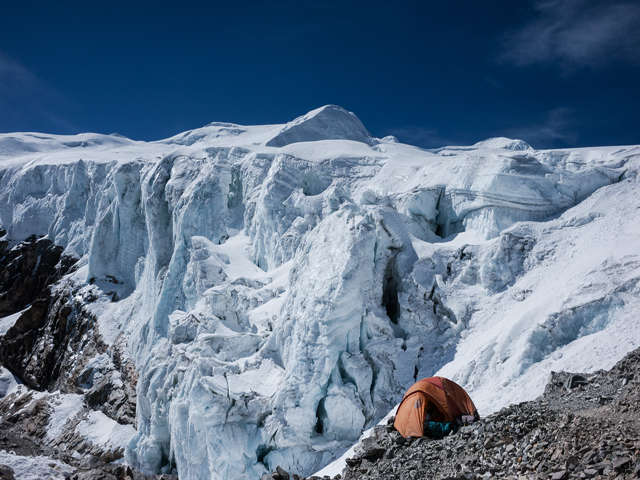
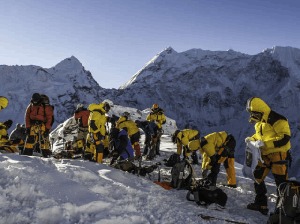
Camping at Mera Peak high camp
Summit day
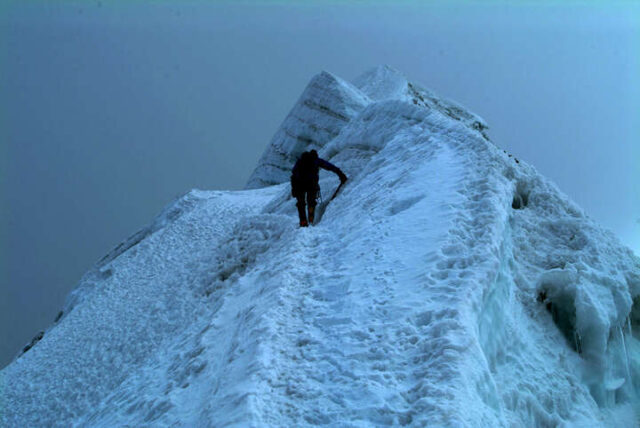
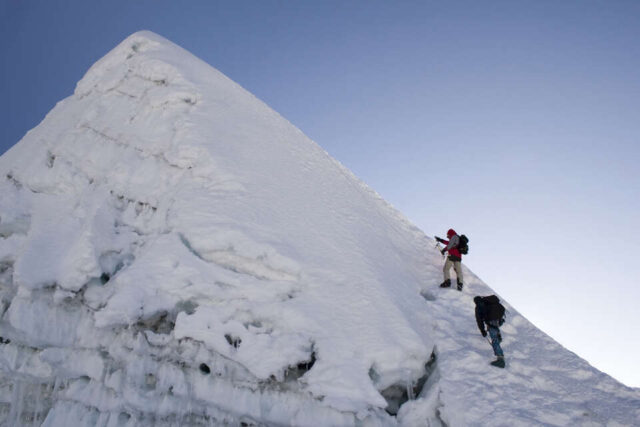
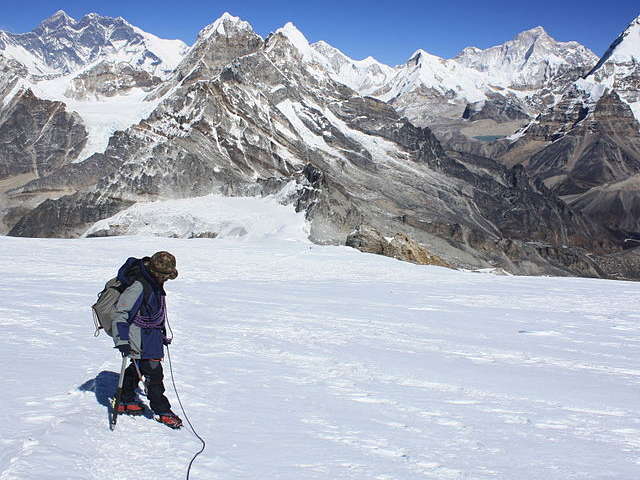
Summit day starts around 2 or 3 am from high camp. Climbers rope up and walk slowly across the glacier in crampons, then climb a final snow slope of roughly 30 to 40 degrees to the top. Allow 5 to 8 hours up and 2 to 3 hours down to high camp. Temperatures can fall below -20 °C, so cold-weather gear matters as much as fitness.
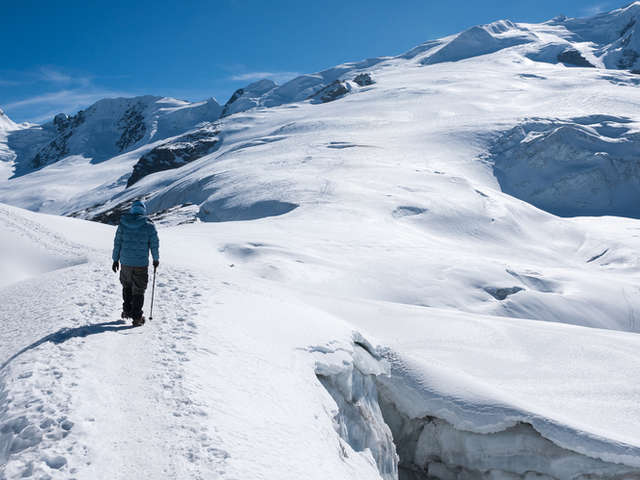
The ascent to the summit of Mera Peak
Permits and regulations
- Climbing permit from the Nepal Mountaineering Association (NMA), issued through a registered trekking agency. The fee varies by season.
- Park and local permits for the Hinku valley and the Lukla area. Your agency arranges these.
- TIMS or local entry cards as currently required on the route.
- A licensed guide for the climb, with climbing equipment and a sirdar for the high camp.
Fees and rules change, so please confirm current costs with us before booking.
Best time to climb
- October to November: the most stable weather and clear mornings, but cold nights and the busiest period.
- March to May: warmer conditions and good views, with more afternoon cloud. April and May are popular.
- June to September: not recommended because of monsoon rain and poor visibility.
- December to February: not recommended because of extreme cold and strong winds at altitude.
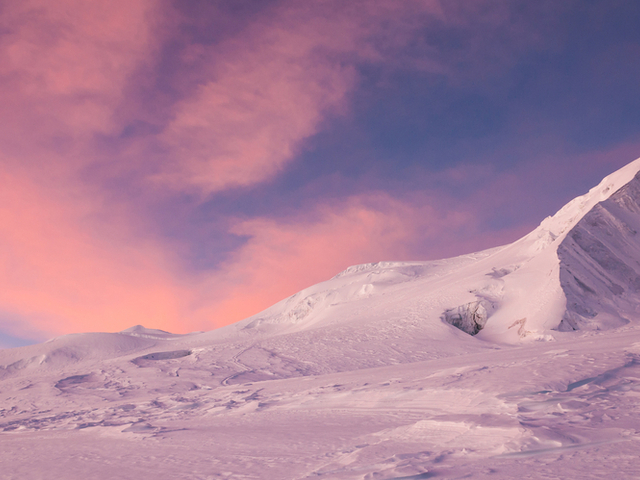
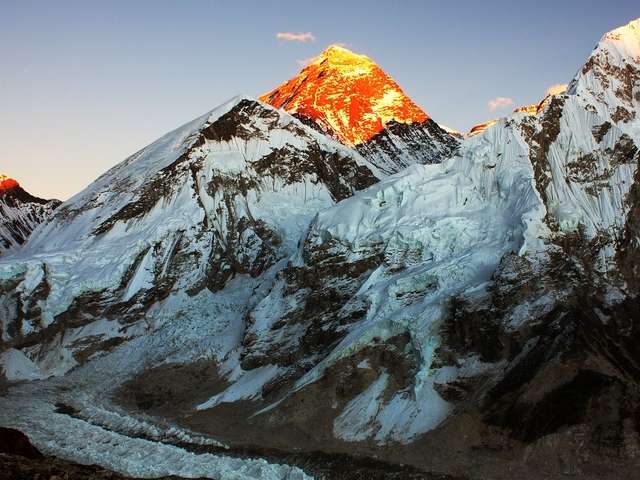
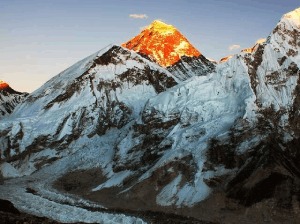
Mera Peak at sunrise
Difficulty and preparation
Mera is harder than the Everest Base Camp trek and easier than Island Peak’s headwall, but the altitude is the main challenge. Most people who fail do so because they climb too fast, not because the slope is too steep.
- Fitness: train 12 to 16 weeks with long hill walks carrying a 8 to 10 kg pack, plus cardio and leg strength.
- Acclimatisation: above 3,000 m, increase sleeping altitude by no more than about 500 m a night and use every rest day.
- Altitude sickness: tell your guide at once if you have headache, nausea, poor sleep or breathlessness. Descent is the main treatment.
- Experience: a previous trek above 4,000 m helps. Basic crampon and rope skills are taught at Khare.
- Medical advice: see your doctor before the trip, especially about altitude medication.
Equipment checklist
- Mountaineering boots (double or insulated), warm socks and gaiters
- Down jacket, hardshell jacket and trousers, fleece and base layers
- Harness, helmet, crampons, ice axe and carabiners (rentable in Kathmandu)
- Sleeping bag rated to -20 °C and an insulated mat
- Warm gloves and mittens, balaclava, sun hat, glacier glasses and sunscreen
- Headlamp with spare batteries, trekking poles and water bottles
- Nepali rupees in cash, because there are no ATMs beyond Lukla
Frequently asked questions
Do I need climbing experience for Mera Peak? No technical background is required, but you need good fitness and some high-altitude trekking experience. Guides teach basic glacier skills before the climb.
Is Mera Peak harder than Island Peak? They are different. Mera is less steep but longer and higher at camp. Island Peak has a steep headwall that needs fixed ropes.
What is the success rate? It depends mostly on weather and acclimatisation. A longer itinerary with spare days raises the chance of reaching the summit.
Can Indian citizens climb Mera Peak? Yes. The same climbing permit and guide rules apply. Contact us for the documents and fees that apply to Indian citizens.
Plan your Mera Peak climb with Base Camp Hikes
Base Camp Hikes arranges climbing permits, licensed guides, porters, equipment, flights and teahouse and camp logistics for Mera Peak, with small groups and extra acclimatisation days built in. contact our team for departure dates and a tailored quote.