Small deposit in India. Balance in Nepal.

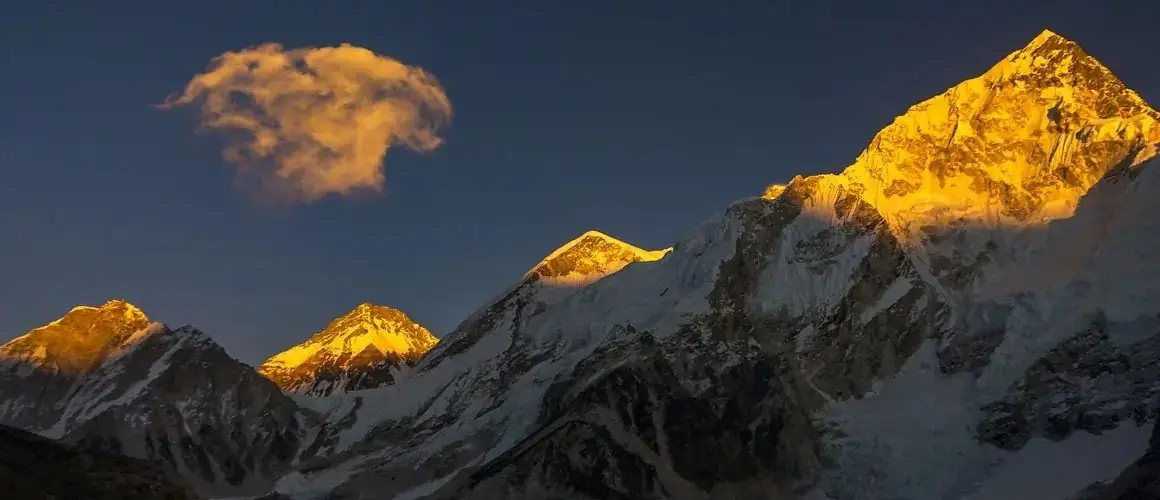
Golden evening light on Mount Everest and the surrounding Himalayan peaks
8 guides

The Himalayas: Your Questions Answered

The Himalayas run for about 2,400 km across Asia and hold the highest mountains on Earth, including Mount Everest at 8,848.86 m. Location, highest peaks, names, weather, geology and trekking, in plain answers.

The Himalayas at a glance

The Himalayas are the highest mountain range on Earth. They stretch in a long arc of about 2,400 km from the Indus bend near Nanga Parbat in the west to the Brahmaputra bend near Namcha Barwa in the east, and they cross or border India, Nepal, Bhutan, China (Tibet) and Pakistan. Nepal sits in the middle of the arc and holds eight of the fourteen mountains above 8,000 m.

The guides below answer the questions people ask most: where the range is, which peaks are highest, what the names mean, what the weather does through the year, how the range was built, and how an ordinary walker can go and see it.

The Himalayas: the key answers

Heights, dates, fees and rules are approximate and can change, so confirm the current plan with us before you book.

What are the Himalayas? Length, countries and key facts
The Himalayas are the highest mountain range on Earth, an arc about 2,400 km long and 200 to 400 km wide that runs across northern India, Nepal, Bhutan, southern Tibet (China) and northern Pakistan. The highest point is Mount Everest, 8,848.86 m, on the Nepal and China border.
Where are the Himalayas located? Countries and map guide
The Himalayas are in Asia, between the plains of northern India and the Tibetan Plateau. The range passes through five countries: Pakistan, India, Nepal, Bhutan and China (Tibet), from about 74 to 95 degrees east.
Highest peaks of the Himalayas: the full list with heights
The highest peak of the Himalayas is Mount Everest at 8,848.86 m (29,031.7 ft), on the Nepal and China border. Kanchenjunga (8,586 m) is second in the Himalaya proper and is the highest peak in India. Ten Himalayan peaks rise above 8,000 m.
Himalayan mountain names and what they mean
Most Himalayan mountain names come from Sanskrit, Nepali or Tibetan and describe what people saw or believed: Annapurna is "full of food", Dhaulagiri is "white mountain", Machapuchare is "fish tail" and Kanchenjunga is "five treasures of the great snow".
Himalaya weather and climate: temperature by season
Himalayan weather depends mostly on altitude and season. Temperature drops about 6 C for every 1,000 m you climb, the monsoon brings rain from June to September, and the clearest, most settled weather is in October and November and again from March to May.
How were the Himalayas formed? Plates, age and growth
The Himalayas were formed by the collision of the Indian tectonic plate with the Eurasian plate, which began about 50 million years ago. The collision crumpled and stacked the crust, and because India is still pushing north the range is still rising by a few millimetres a year.
Himalayan ranges of Nepal: every himal from east to west
Nepal's Himalaya is divided into groups of peaks called himals. From east to west the main ones are Kanchenjunga, Mahalangur (Everest), Rolwaling, Langtang and Jugal, Ganesh, Mansiri (Manaslu), Annapurna and Dhaulagiri, followed by Kanjiroba, Saipal and Api in the far west.
Trekking in the Himalayas: a first-timer's guide
Trekking in the Himalayas means walking for several days on village trails and staying in simple lodges, not climbing with ropes. A fit beginner can do it. The usual first choices in Nepal are Poon Hill (4 to 5 days), Langtang (7 to 8 days), Annapurna Base Camp (7 to 10 days) and Everest Base Camp (12 to 14 days).

Overview2 guides

Peaks3 guides

Weather1 guide

Geology1 guide

Trekking1 guide

Related guides6 guide sections

Go deeper into the highest peaks and the treks that reach them.

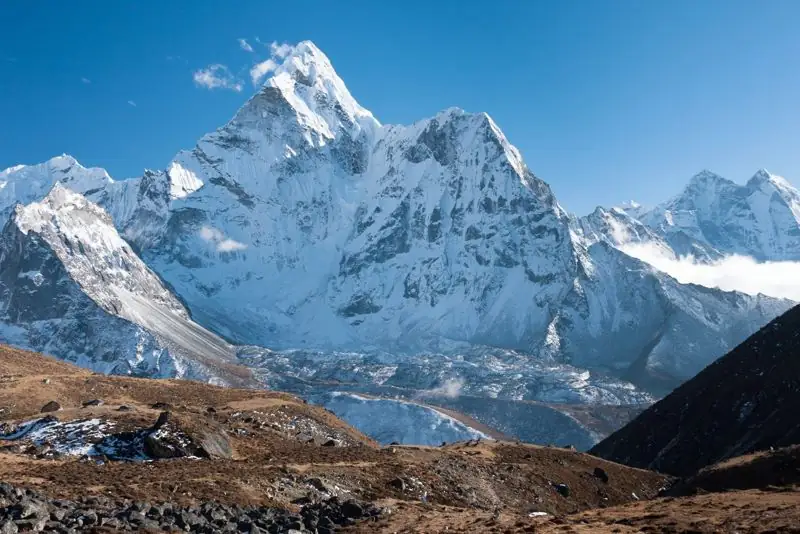
Ama Dablam rising above the Khumbu valley in the Nepal Himalaya

Plan your Himalayan trek

Tell us your dates, fitness and budget and we will suggest a route, with a clear price.

Get a free itinerary and priceWhatsApp usCall +91 932 595 1234