




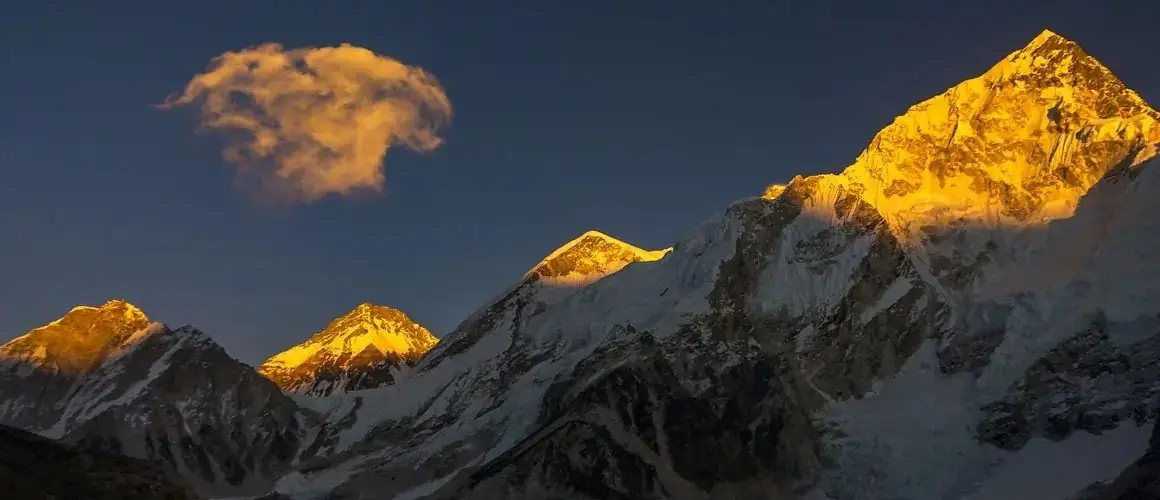
Trekking in the Himalayas means walking for several days on village trails and staying in simple lodges, not climbing with ropes. A fit beginner can do it. The usual first choices in Nepal are Poon Hill (4 to 5 days), Langtang (7 to 8 days), Annapurna Base Camp (7 to 10 days) and Everest Base Camp (12 to 14 days).
What trekking in the Himalayas really is
A trek is a long walk on a path that local people use every day. You carry a small day pack, a porter carries the main bag, and each night you stop at a family-run lodge, called a tea house, with a bed, blankets and hot meals. On the popular routes of Nepal there is no camping and no technical climbing. What makes it hard is the number of days in a row, the stairs and the altitude.
How fit do you need to be?
You should be able to walk five to seven hours a day, several days in a row, with some steep climbs and descents. People in their sixties and seventies complete Everest Base Camp every season, and so do first-timers who have trained for two or three months. Regular walks with a loaded pack, stair climbing and some cycling or running are enough. See fitness and training for a Nepal trek.
Good first treks
- Poon Hill, 4 to 5 days, high point 3,210 m. A famous sunrise over Dhaulagiri and Annapurna, low altitude and short days.
- Mardi Himal, 5 to 7 days, high point about 4,500 m. A quiet ridge walk close to Machapuchare.
- Langtang Valley, 7 to 8 days, high point about 3,870 m at Kyanjin Gompa, with optional viewpoints higher up. No flight needed.
- Annapurna Base Camp, 7 to 10 days, high point 4,130 m. You finish inside a ring of high peaks.
- Everest View trek, about 7 days, to Namche and the Tengboche area for a first sight of Everest.
- Everest Base Camp, 12 to 14 days, high point 5,364 m at base camp and 5,545 m on Kala Patthar. The classic, and achievable for a prepared beginner.
A normal day on the trail
Breakfast is at about seven, and you walk by eight. The morning is usually the longer stretch, with a tea stop, and lunch is at a lodge on the way. Most days end between two and four in the afternoon, which leaves time to rest, wash and explore the village. Dinner is early, and most people are asleep by nine. Distances are short, often 8 to 15 km, because the trail climbs and the air is thin.
Altitude: the one thing to respect
Above about 2,500 m some people feel the altitude: headache, poor sleep, loss of appetite. It has little to do with fitness. The safe approach is simple and well proven: go up slowly, sleep no more than about 300 to 500 m higher each night once above 3,000 m, take a rest day every 1,000 m or so, drink plenty and tell your guide early if you feel unwell. If symptoms get worse, go down.
Good itineraries build this in. An Everest Base Camp plan with two acclimatisation days is far safer than a rushed one.
Guide, porter and permits
Rules in Nepal have tightened, and most trekking regions now expect foreign trekkers to walk with a licensed guide arranged through a registered agency. Every region also has its own entry permit, for example the Sagarmatha National Park permit for Everest or the ACAP permit for Annapurna. Fees and rules change from time to time, and Indian and other SAARC nationals usually pay lower fees.
A guide does more than show the way: he or she books rooms, watches your health, manages the pace and handles problems such as a cancelled flight.
What it costs
Cost depends on the number of days, flights, the standard of lodges and group size. As a rough guide, a short trek such as Poon Hill costs far less than Everest Base Camp, which needs a Lukla flight and two weeks of lodging at high altitude where everything is carried in. Ask for a price that states clearly what is included: guide, porter, permits, flights, meals and rooms. Our cost guides give current figures in rupees and dollars for each main route.
When to go
October and November have the clearest skies. March to May is warmer with flowers and a little more haze. December to February suits lower treks and those who do not mind cold. June to September is the monsoon, best kept for rain-shadow areas. For Indian travellers the Dussehra and Diwali holidays fall in the best season, so book flights early. See Himalaya weather and climate.
What to pack
Good walking shoes that are already broken in, a warm down jacket, a rain shell, thermal layers, a hat and gloves, sunglasses and sun cream, a head torch, a water bottle and a way to treat water. Sleeping bags and down jackets can be rented in Kathmandu and Pokhara. See the packing list by season.
Common questions
Can a beginner trek in the Himalayas?
Yes. Many first treks are done by people with no mountain experience. Choose a route that matches your time and fitness, train for a couple of months and walk with a guide.
Which is the easiest Himalayan trek in Nepal?
Poon Hill is the usual answer: four to five days, a high point of 3,210 m and comfortable lodges throughout.
How many days do you need?
At least five to six days in Nepal for a short trek including travel, about ten for Annapurna Base Camp and about two weeks for Everest Base Camp.
Is trekking in the Himalayas safe?
On the main routes, with a sensible itinerary and a licensed guide, it is safe for healthy people. The main risks are altitude illness and weather, and both are managed by going slowly and keeping spare days.
Heights, dates, fees and rules are approximate and can change, so confirm the current details with us before you book.


