Mera Peak rewards stamina. The approach is long, and the summit day is tiring, so your training should centre on endurance and on getting used to carrying a pack for hours.
Aerobic base
Do steady cardio three or four times a week: brisk walking, running, cycling or swimming. Add a longer weekly session of two to four hours, and slowly lengthen it.
Hiking with a pack
Hills and stairs with a loaded daypack are the best preparation. Wear the boots you will use, and practise on consecutive days to mimic trekking.
Strength
Include squats, lunges, step-ups, calf raises and core exercises. Strong legs and a stable trunk help on long ascents and descents.
Cold and altitude
If possible, spend time in cold conditions and at moderate altitude before the trip. This is not essential but helps to build confidence. A well-paced itinerary will do most of the acclimatisation work.
Skills
- Practise putting on crampons and walking in them.
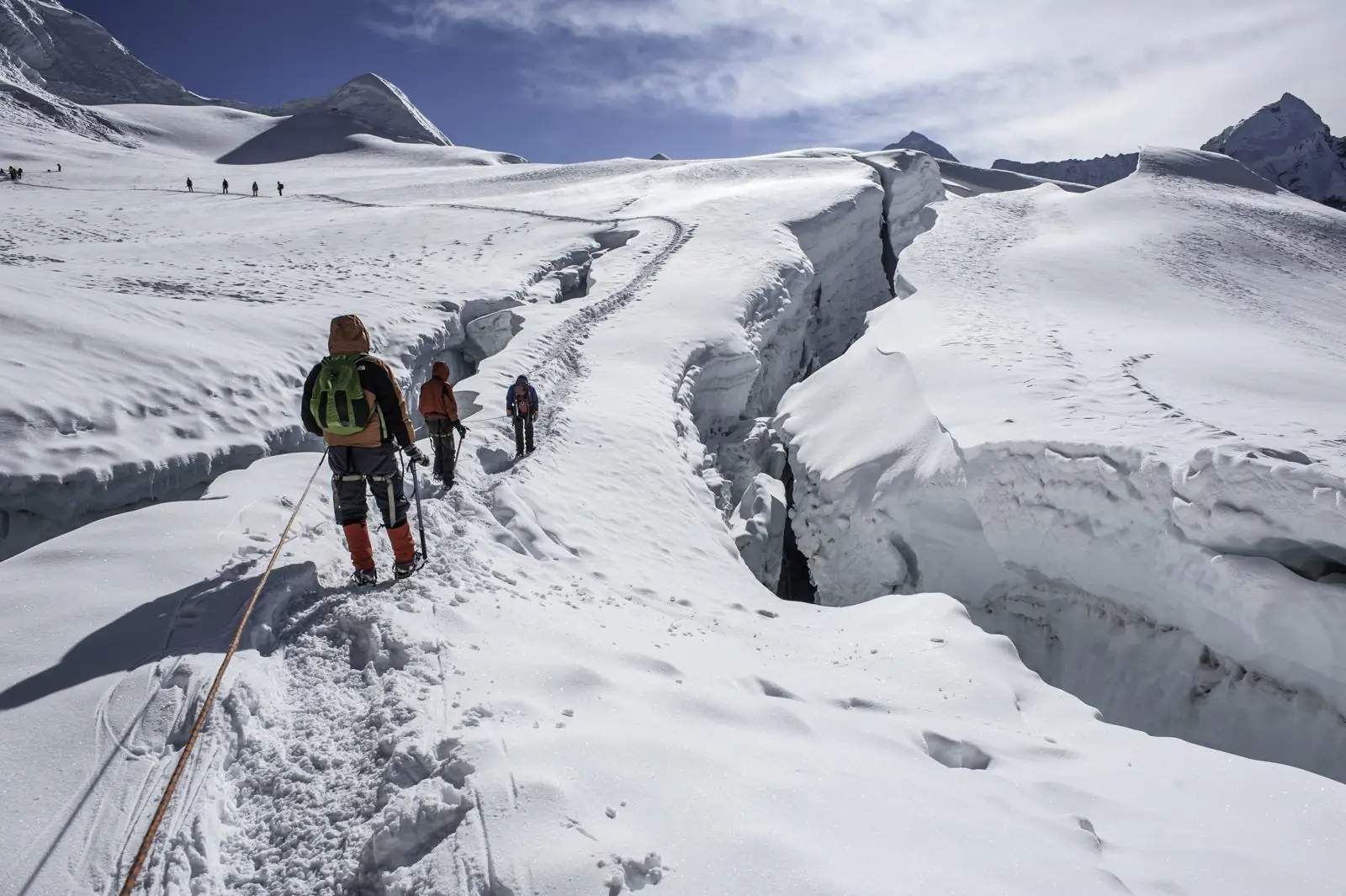
- Learn to tie into a rope team and use an ascender.
- Practise managing layers, food and water on long days.
Timeline
Three to six months of regular training is a good target. Begin with a medical check-up and adjust the plan to avoid injury.
Mindset
Summit day is a long, cold effort. Practising patience, steady pacing and simple routines will help you stay calm and efficient when it matters.
A realistic training week
A sensible week might include two aerobic sessions, one strength session and one long hike with a pack, plus a rest day. Increase the long hike gradually and include stairs or hills. The goal is steady improvement and avoiding injury.
Training your feet
Your feet carry you through the trip, so break in your boots, learn to manage blisters and wear the same socks you will use on the trek. Cold-weather boots can feel stiff, so walk in them often to let your feet adapt.
Staying healthy beforehand
Sleep, nutrition and avoiding illness in the weeks before departure matter more than a last hard workout. A cold or injury can ruin an otherwise well-prepared trip, so take care of yourself as the date approaches.
Training for a long approach
Because the Mera Peak trek is long and remote, endurance matters. Build up to hikes of six to eight hours with a pack, and include back-to-back days. Practise walking on uneven ground and in the cold, if possible. Strength and conditioning for legs and core reduces fatigue and helps balance.
Mountaineering skills
Although the climb is non-technical, learning basic skills makes you safer and more comfortable. A one-day glacier course, a practice session with crampons or an introduction to rope handling is useful. Even an afternoon on a snow slope teaches you how crampons feel.
Health habits
Sleep well, eat balanced meals and avoid excessive alcohol in the weeks before travel. A last-minute illness or injury can end your trip before it begins. Take care of your feet and keep up with routine health checks.