




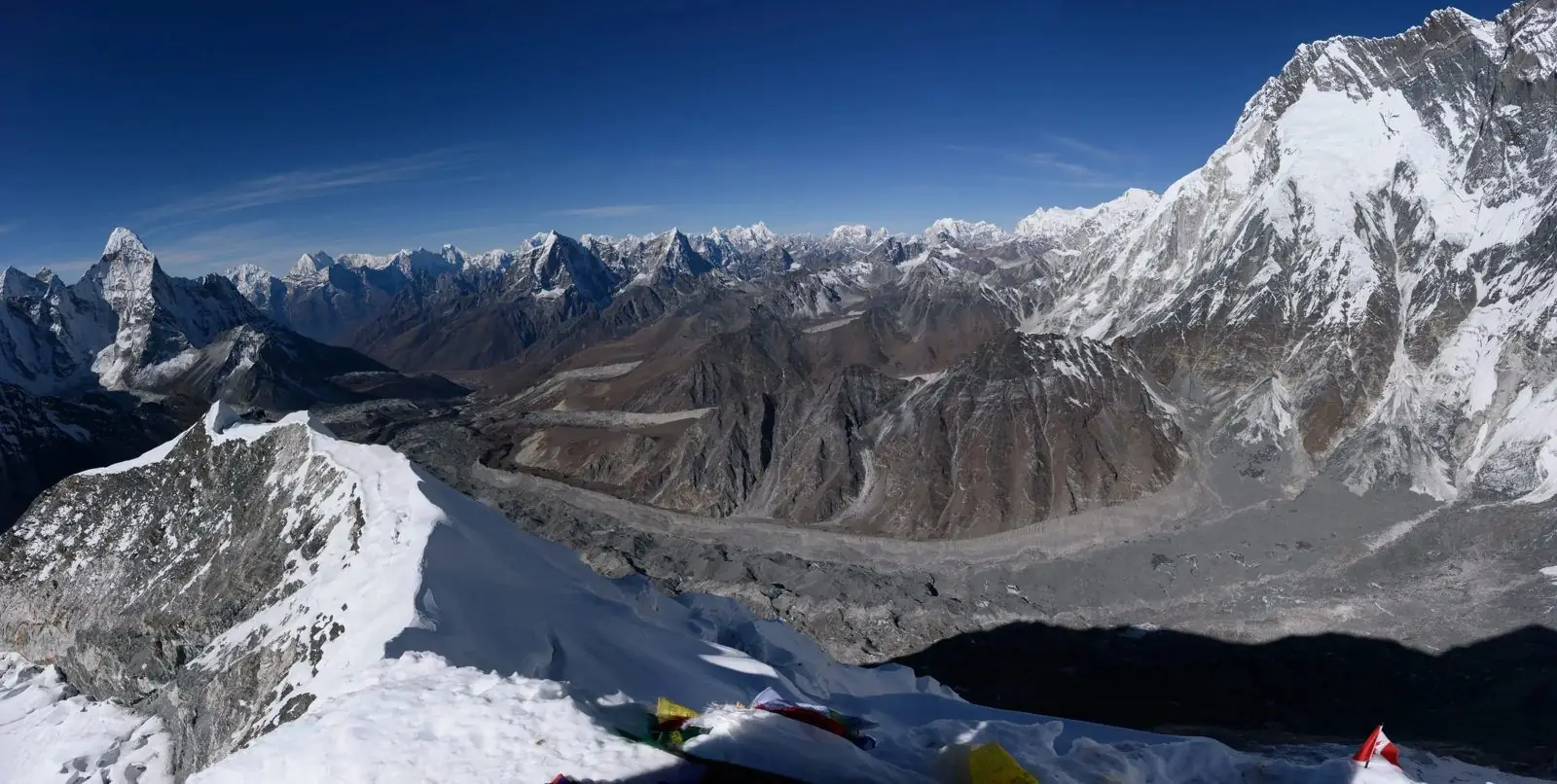
Kusum Kangguru is a 6,367 m mountain with a distinctive profile that rises east of the Dudh Kosi, between Lukla and Namche. It is classed as a trekking peak but is regarded as one of the harder ones, with a long approach and a steep ridge.
Where it stands
The mountain is on the east side of the Dudh Kosi valley, away from the main tourist trail, and it belongs to the same high group as Thamserku and Kangtega. The height is usually given as 6,367 m (20,889 ft).
The name
The name is sometimes explained in local terms, but sources differ on the exact meaning, so treat any single translation with caution. The summit area has several tops, which gives the mountain its distinctive profile from the valley.
Trekking peak status
Nepal groups it among the trekking peaks, which means a simpler permit than for an expedition peak. But it is regarded as a difficult one, with steep ice, mixed ground and a committing ridge. The label describes the paperwork, not the effort.
The approach
The approach starts from the Dudh Kosi valley and climbs through forest and pasture to a high base camp on the moraine. It is a long walk that reveals views of Thamserku and Kangtega. Plan extra days for acclimatisation and weather.
Who should consider it
This peak suits experienced climbers who have climbed Island Peak or Mera Peak and want a harder objective. Good fitness, comfortable use of crampons and rope handling, and a guide who knows the route are all needed.
Season
Autumn and spring are the sensible windows. Autumn offers clear skies and cold nights, while spring is warmer but cloud builds in the afternoon.
Common questions
Is it near Lukla? It is within a few days of the airstrip. Is it on the Everest Base Camp route? No, it needs a separate plan. Is it easier than Island Peak? No, it is generally considered harder.
The approach in detail
The route usually begins near the lower valley and climbs steeply through forest, past rhododendron and bamboo. It is a more private approach than the main trail, with fewer lodges and more camping. This is part of its appeal, but it also means you must carry or hire more supplies.
Gear and preparation
Prepare as for any serious trekking peak. You will need mountaineering boots, crampons, an ice axe, a harness and a helmet. Sleeping bags need to be warm. A pair of trekking poles helps on the long approach. We can help you rent equipment in Kathmandu.
Weather and timing
Weather in the Dudh Kosi valley can be wetter than in the high Khumbu, so plan for rain in the lower sections. Allow extra days at the start of the trek to account for flight delays at Lukla.
A good second peak
Many people climb Island Peak first and then return for something harder. Kusum Kangguru is a natural next step, but it is better thought of as a step toward alpine climbing than as a casual extension of a trek.


