




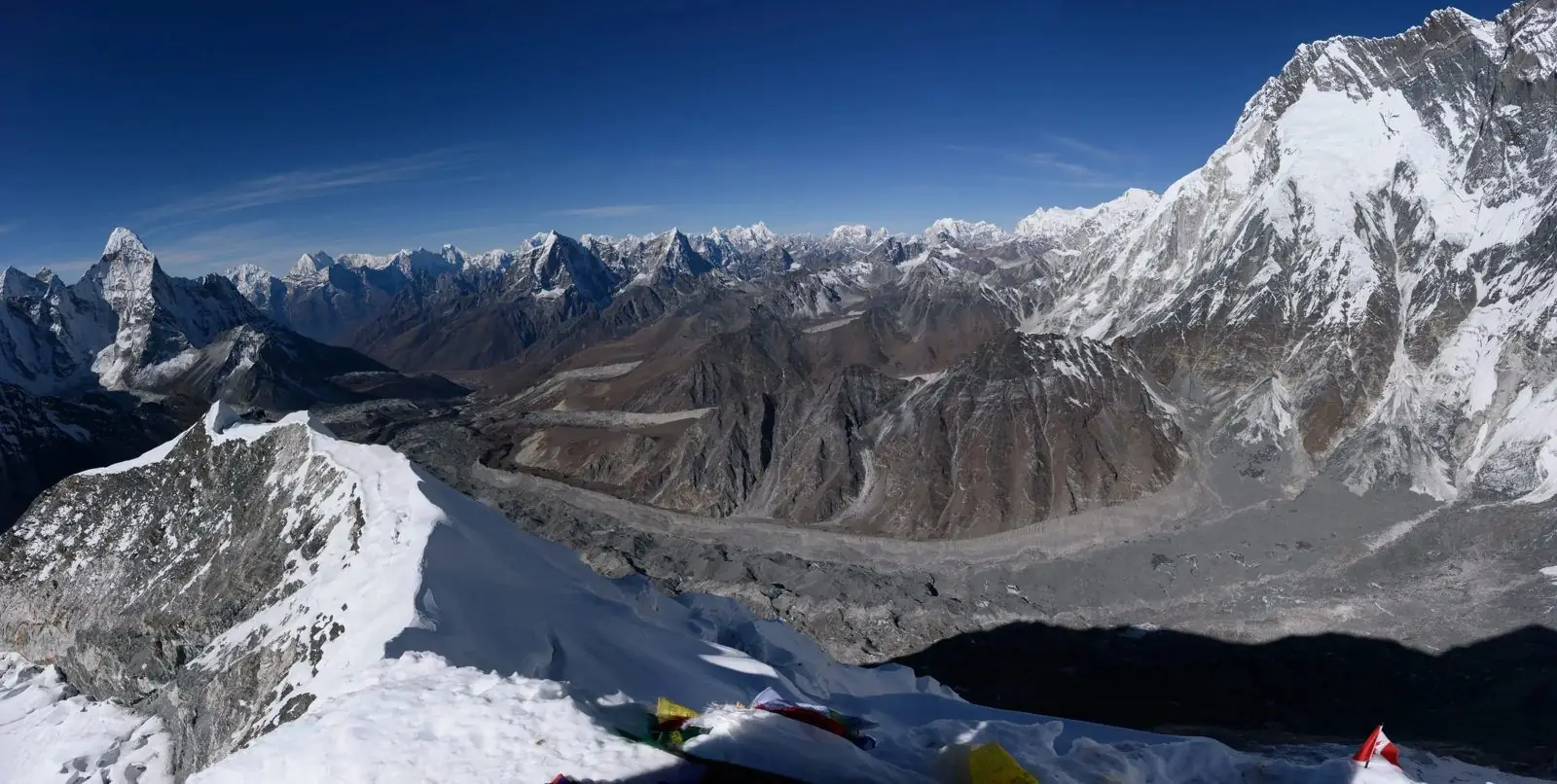
Singu Chuli, also called Fluted Peak, is a 6,501 m mountain in the Annapurna Sanctuary. It is classed as a trekking peak and sits near Annapurna Base Camp, so it can be combined with a trek to the sanctuary by climbers who have the experience.
A sanctuary peak
The Annapurna Sanctuary is a high basin ringed by giants. Singu Chuli stands on the east side, with a graceful profile. The height is 6,501 m (21,329 ft). Its alternate name comes from the flutes of ice on its faces.
Trekking peak, but not easy
Like other trekking peaks, it needs a simpler permit than expedition peaks. The climb itself is steep and technical. It is a step up from Island Peak.
Who it suits
The peak is best for climbers with solid snow and ice experience, who have trekked at altitude, and who are happy on steep ground. Beginners should start elsewhere.
Base camp and approach
Teams approach through the Modi Khola valley to the sanctuary, set up a base camp and then a high camp. The altitude is high, so spend nights acclimatising at Machhapuchhre Base Camp and Annapurna Base Camp.
Season
Spring and autumn are the usual windows. Winter is cold and avalanche-prone.
Neighbours
The nearby Tharpu Chuli is lower and a gentler objective. The Annapurna Base Camp guides cover the route.
Common questions
Is Singu Chuli visible from Annapurna Base Camp? Yes. Is it harder than Tharpu Chuli? Yes. Do I need a guide? Yes.
The meaning of the name
The two names for this mountain reflect two different traditions. Singu Chuli is the name used in Nepal, while Fluted Peak is the English name, which refers to the vertical flutes of snow and ice on its face. Both names appear on maps and in guidebooks.
The Annapurna Sanctuary setting
The sanctuary is a high glacial basin, reached by a narrow gorge between Hiunchuli and Machhapuchhre. Inside, the walls are almost 360 degrees of snow peaks. It is one of the most dramatic places in the Himalaya, and climbing here feels like working in an amphitheatre.
Preparing for the climb
Build fitness with long hikes carrying a pack, and practise on steep ground. Spend time at altitude before the climb, and bring good gloves and boots. Training with an experienced guide before the trip can improve your confidence.
Fitting it into a trip
A typical trip combines the trek to Annapurna Base Camp with an extra three to five days for the peak. Leave spare days for weather, and keep a flexible mind about the summit.
Weather and the sanctuary
Weather in the Annapurna Sanctuary is changeable. Clear mornings often give way to cloud by midday, and snow can fall at any time of year at base camp height. Plan to start early, check the forecast with your guide each evening and keep a spare day in your schedule. Heavy snowfall can make the approach unsafe, and the sensible response is to wait or change plans rather than push on.
More questions
Is Fluted Peak an easy climb? No, it is a serious trekking peak. Can I do it without climbing experience? Not safely. How many days should I add? Usually three to five beyond the Annapurna Base Camp trek, plus spare days.


