




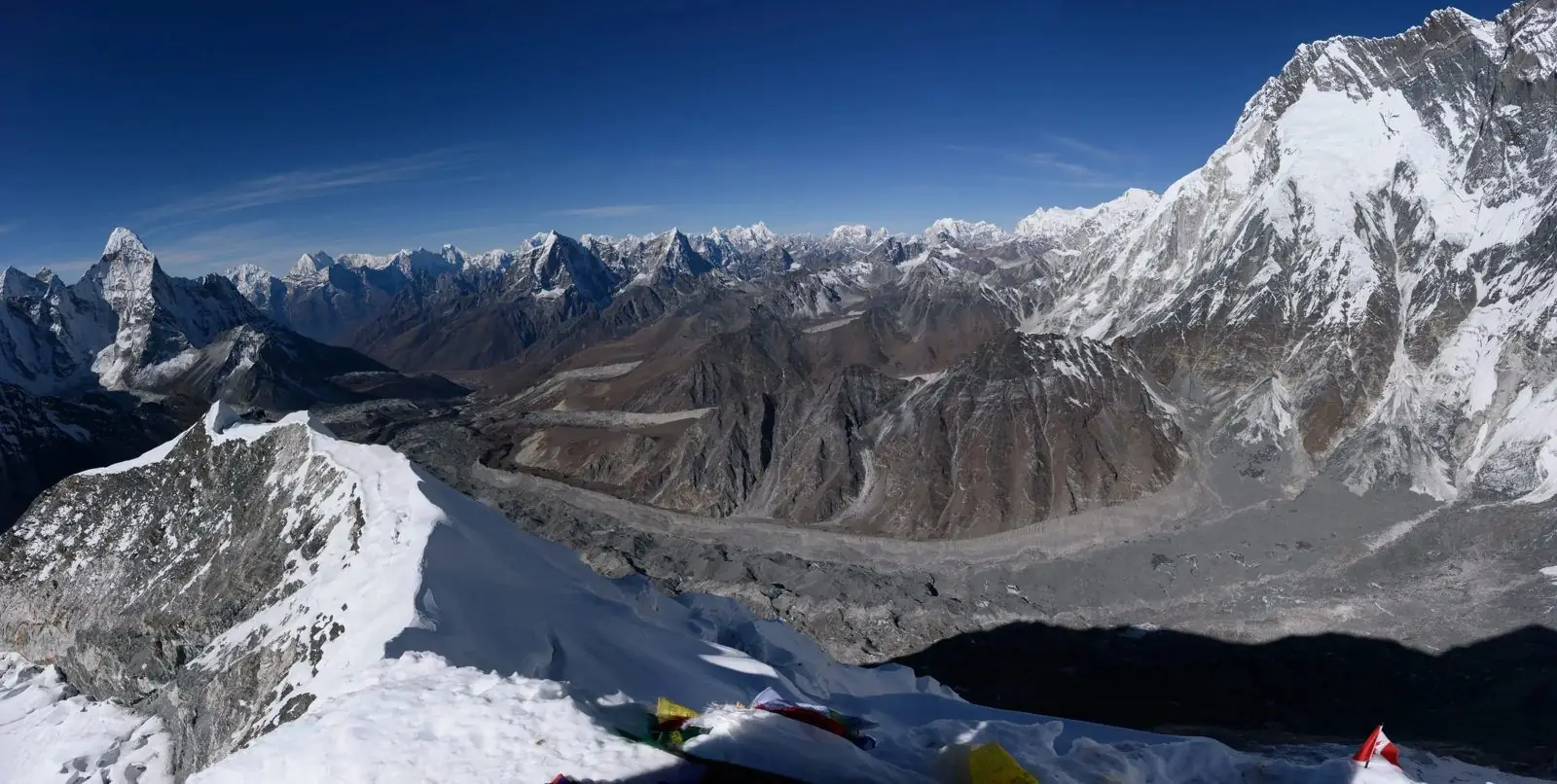
Tharpu Chuli, known as Tent Peak because of its shape, is a 5,663 m trekking peak in the Annapurna Sanctuary. It is lower and gentler than Singu Chuli and is a good first snow peak for fit trekkers who want a taste of climbing.
A peak with a nickname
The tent-like shape makes the mountain easy to spot. It stands near Annapurna Base Camp, a short distance from the main sanctuary trail. The height is 5,663 m (18,579 ft).
What the climb involves
The climb is on snow and ice with a final steep section. You will use an ice axe and crampons and travel roped. Weather and snow conditions decide how hard it is on the day.
Who it suits
Fit trekkers who have been to Annapurna Base Camp and want an introduction to climbing. A guide will teach basic skills. The summit day is long but not extreme.
Preparation
Practise with crampons and an ice axe before you go. Spend several nights at altitude in the sanctuary to acclimatise.
Season
October and November, then April and May.
Compared with Singu Chuli
Tent Peak is lower and shorter. Singu Chuli is higher and more technical.
Common questions
Is Tent Peak a trekking peak? Yes. Is it on the way to Annapurna Base Camp? It is close by, off the main path. Do I need a permit? Yes, arranged through an agency.
Why it is a good first peak
The climb is shorter and less technical than many other peaks. It offers a chance to learn the basics of snow and ice travel with a guide beside you. Many people who try Tent Peak go on to attempt larger mountains.
Skills you can learn
You can learn how to walk in crampons, how to use an ice axe, how to rest-step on steep ground and how to travel safely on a rope team. These skills are useful on every future mountain trip.
What to bring
Mountaineering boots, crampons and an ice axe can be rented in Pokhara. Bring warm layers, a windproof shell, good gloves and sunglasses with strong protection. The glare off the snow can be intense.
A reasonable goal
Not everyone reaches the summit, and that is normal. Weather or conditions can end an attempt. A good guide will help you to judge risk, and the trip is still a rewarding adventure whatever happens.
Planning the trip
A sensible plan is to trek to Annapurna Base Camp, give yourself a rest day, and then use two or three days for the peak. Many guides like to practise snow skills on a nearby slope before the real attempt. Leave a spare day or two in case the weather turns, and do not plan flights home tightly against the summit date.
Cost and permits
The cost includes a climbing permit, the usual sanctuary fees, a guide, porters and camp support. Prices change with season and group size, so ask us for a written quote for your dates.


