By
Insurance for the Everest Base Camp trek must cover trekking up to at least 5,600 m, because Kala Patthar, the highest point, is about 5,545 m. It must also name helicopter evacuation, with a stated limit, and it should be bought in India before you travel. Many ordinary travel policies stop at 4,000 m or 4,200 m, and a policy that stops there leaves the highest days of the trek uncovered. This guide gives a checklist to read a policy against, the questions to ask an insurer, and what happens if you need to be evacuated.
The short answer
- Altitude: cover to at least 5,600 m, with trekking named as a covered activity.
- Helicopter evacuation: written in the policy, with a limit and the conditions for using it.
- Medical: hospital treatment in Kathmandu and treatment of altitude sickness not excluded.
- Buy: before leaving India, and send the policy number and the insurer’s 24-hour number to the trek operator.
- Confirm: email your exact route and highest point to the insurer and keep the written reply.
Last checked: 28 October 2026. This is general information, not insurance advice. Plans and limits change, so the current policy wording is what counts.
Base Camp Hikes does not sell or arrange this insurance and does not handle claims. You buy the policy yourself, and any claim or reimbursement is settled directly between you and the insurance provider.
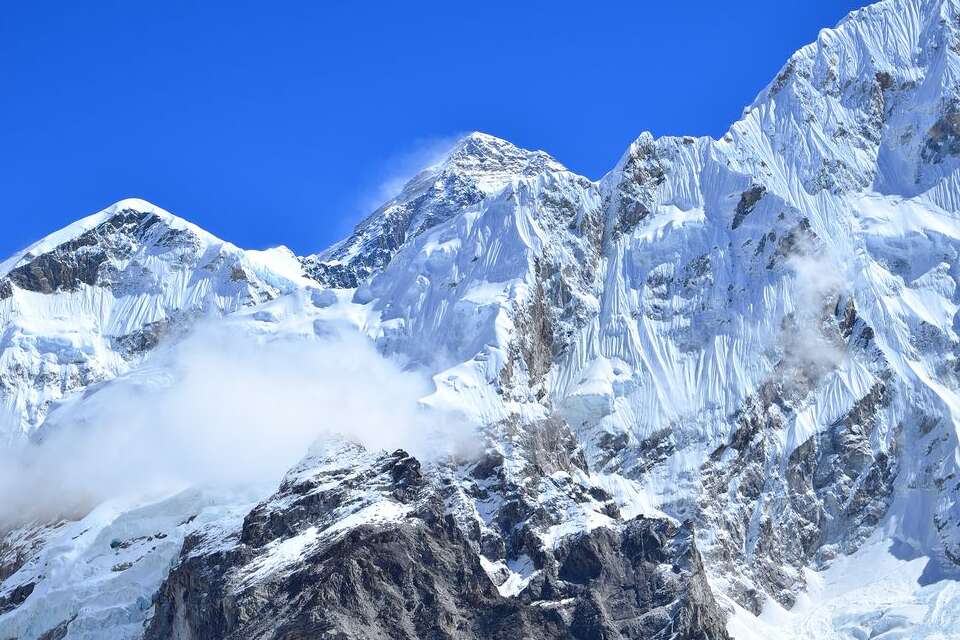
The view from Kala Patthar, about 5,545 m, the highest point most trekkers reach.
In this guide: Why it matters | Altitude limit | Policy checklist | Cover by stage | Wording | Email template | Helicopter evacuation | Providers from India | Bills and reimbursement | Plan changes | Cancel or reschedule | Calamities and riots | Entry without passport | What to ask | Buying | Claims | FAQ
Why does Everest Base Camp need special insurance?
The route is remote. Clinics in the Khumbu are small, there are no roads above Lukla, and a serious case may need a helicopter to Kathmandu. Weather can also delay flights, which is why trip delay cover matters. An ordinary holiday policy is written for a beach trip, and often excludes trekking or caps altitude at a level well below Kala Patthar.
What altitude limit should the policy have?
Check the maximum altitude in the policy, not the plan name. The trek reaches about 5,364 m at Base Camp and about 5,545 m at Kala Patthar, so the limit should be at least 5,600 m.
| Policy altitude limit | Covers | Verdict |
|---|---|---|
| Up to about 4,200 m | Namche Bazaar, Tengboche and Dingboche | Not enough. The upper trek is uncovered |
| 4,200 to 6,000 m band | Base Camp and Kala Patthar | Suitable, if the other points below are met |
| 5,600 m or higher stated | The whole route | Suitable |
Some Indian trek operators work with providers that sell plans in altitude bands. Pick the band that includes 5,600 m and read the wording to confirm it.
What should an Everest Base Camp insurance policy include?
| Check | What to look for | Why it matters |
|---|---|---|
| Maximum altitude | At least 5,600 m | Kala Patthar is about 5,545 m |
| Trekking | Trekking at altitude in Nepal named as covered | Many policies exclude it |
| Helicopter evacuation | Explicitly covered, with a limit | A rescue flight can cost a large sum |
| Medical and hospital | A stated amount, and treatment in Kathmandu included | Hospital bills are paid from this |
| Altitude sickness | Acute mountain sickness not excluded | It is the most common trek illness |
| Pre-existing conditions | Clear terms for asthma, diabetes, heart or blood pressure | Conditions can void a claim if undeclared |
| Pony rides and helicopter return | Check if covered | Some policies exclude them |
| Trip delay and cancellation | Included | Lukla flights are often delayed |
| Claims method | Direct payment or pay first and claim later | Decides what you pay on the spot |
| 24-hour assistance number | Listed on the certificate | Evacuations need the insurer’s approval |
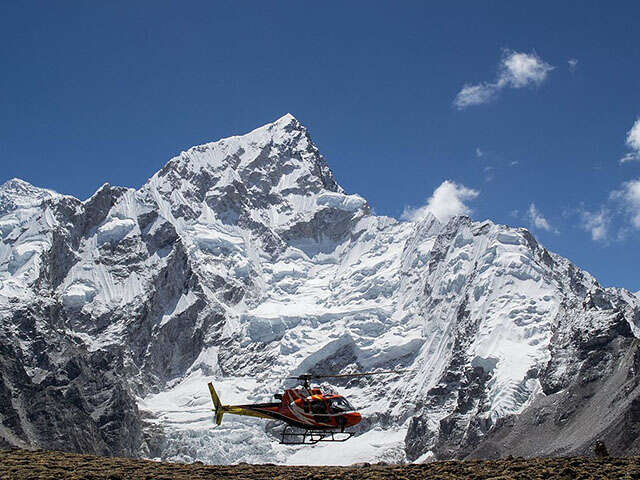
A helicopter lifts off from the Base Camp area. Rescue flights need the insurer’s approval.
How does helicopter evacuation work?
The guide and, when needed, a doctor at the nearest health post make the first decision. If a helicopter is needed, the trek operator and the insurer coordinate it. Evacuations usually need the insurer’s approval, so the policy number and emergency number should be with the operator before the trek starts. A high limit and a clear helicopter clause make the process faster. Ask whether the cover applies only above a certain altitude, and whether it pays the helicopter company directly.
If you walk, rest and descend promptly when symptoms start, many cases never need a helicopter. Read the altitude sickness guide and the altitude sickness guide for the trek.
Which providers should you compare for Everest Base Camp insurance in India?
Base Camp Hikes suggests starting with two providers that sell to trekkers from India: Asego and ASC360. They are a starting point, not the only choices. Several insurers and agents sell trekking cover, so get quotes from two or three and compare them side by side on the same checklist.
| Provider | What to know | What to do |
|---|---|---|
| Asego | Sells travel cover to Indian customers. Ask for the written wording on altitude, helicopter evacuation and exclusions | Contact: Niranjan Deshmukh, +91 77190 88666. Email the route and highest point, and ask for the altitude limit, helicopter clause and exclusions in writing before you pay |
| ASC360 | Adventure insurance company with offices in Kathmandu and Delhi. Its Everest Base Camp package is a fixed plan with cashless helicopter evacuation, listed from INR 9,483 per person on its site | Contact the Delhi office on +91 84487 65102 or the Kathmandu office on +977 98101 18211. Confirm the altitude covered, helicopter cover and exclusions in writing |
| Other insurers or agents | Many travel and adventure policies exist, and plan terms change often | Compare them on the same checklist, and do not buy on price or plan name alone |
ASC360 Everest Base Camp package at a glance
ASC360’s own pages, read on 28 October 2026, describe the plan this way. Treat it as the provider’s description, and read the policy wording before buying.
| Item | What the provider says | What to confirm |
|---|---|---|
| Plan | Everest Base Camp Safety Rescue Package, a standard plan with fixed cover and rates for all routes. It cannot be customised | That it matches your route and dates |
| Starting price | From INR 9,483 per person for the Everest Base Camp package, as listed on the home page | The final quote for your age, dates and group size |
| Evacuation | Cashless medical evacuation by helicopter and by land, started after the claims team approves. Typical time is given as 30 minutes to 5 hours, depending on weather and conditions | The evacuation limit and any altitude condition |
| Hospital | Cashless hospitalisation, so the insurer pays hospitals, clinics and evacuation providers directly | Which hospitals, and what the limit is |
| Medical | Altitude sickness and other sickness and injuries are listed as covered, with oxygen therapy and a mountain medical clinic consultation. Deductible is shown as zero | The sum insured and deductible on your own certificate |
| Altitude | The package page lists Everest Base Camp at 5,364 m. The home page mentions evacuation up to 8,000 m | Whether Kala Patthar at about 5,545 m is covered for trekking, in writing |
| Exclusions | Pre-existing diseases are excluded. Emergencies, delays and expenses arising from natural calamities such as landslides, earthquakes and floods are not covered, subject to policy terms | Read the full exclusion list |
| Emergency | Call the numbers on the medical rescue card. A 24/7 response centre in Nepal and on-call doctors are listed | Keep the card and the number with your guide |
| How to buy | Use the Get Quote Now form (nationality, dates, adventure type, number of people, age) or choose the package and book | The wording that arrives after the quote |
Plan names and limits change, and Base Camp Hikes has not verified either provider’s full policy wording, so the details above come from their public pages. Read the current wording before paying. The Everest Base Camp trek insurance guide has more detail.
How do you collect bills for reimbursement?
Many policies reimburse costs after the trip, so the paperwork you collect on the trek decides how smoothly a claim goes. The simplest rule: ask for the bill at the moment you pay, before you move on, because it is hard to get one later in a remote village or after you leave the country.
- At every payment: ask for a written, itemised bill or receipt with the date, the name of the clinic, hotel or service, and the amount. If the place has no printed bill, ask for a handwritten one with a signature or stamp, and take a photo.
- Medical visits: collect the doctor’s notes, diagnosis, prescriptions, medicine bills and any test or X-ray report. Ask for these before you leave the clinic or hospital.
- Helicopter or transport: keep the invoice, the flight or transfer details and the medical reason for the flight. Ask your operator for a written note of what happened.
- Delays: keep the airline notice or message about the delay or cancellation, your boarding pass, and receipts for extra hotel nights, food and transport.
- Before you leave Nepal: go through your folder and check you have a bill for every payment. It is much easier to fix a gap in Kathmandu than from India.
- Copies: photograph every bill the same day, and keep the originals in a waterproof pouch.
- Proof of payment: keep the card slip or a record of the transfer or cash payment next to the bill.
Send the claim as soon as you can, with the originals if the insurer asks for them, and keep your own copies.
What if the trek plan changes?
Plans change on a real trek. Tell the insurer about any change, and get the reply in writing.
| Change | What to do |
|---|---|
| Extra days for weather or rest | Choose a policy period with spare days at both ends, and ask how to extend it |
| A side trip or a higher viewpoint | Tell the insurer the new route and highest point, and check the altitude limit |
| A different trek in Nepal | Ask the insurer to confirm the route is covered |
| Stopping early because of illness | Keep the doctor’s note and proof of any non-refundable costs |
| A helicopter back instead of walking | Usually a personal cost unless the insurer approves it as a medical emergency |
| Ignoring advice to descend | Can put your cover at risk, so follow medical advice and report symptoms early |
What if you cancel or reschedule before the trek?
Insurance pays for a loss caused by a covered event, such as illness or injury certified by a doctor. It does not pay because a trekker changed their mind or wants a different date.
- Cancelling: a covered cancellation usually pays non-refundable costs such as flights, up to the limit. It does not usually refund the trek fee.
- Rescheduling: the trek fee, credit or refund follows the operator’s booking terms, not the insurance.
- Policy dates: they must match the new trip, so ask the insurer to amend them, or buy a new policy, before the original start date.
- When cover starts: ask whether cancellation cover applies before you leave India.
- Proof: keep the doctor’s certificate and the cancellation confirmations.
What about natural calamities, riots and strikes?
This is the most restricted part of trek insurance. Plans cover medical problems far better than they cover disruption. Delays, cancellations and extra costs caused by weather, landslides, floods, strikes or political unrest are often excluded or limited. Add spare days to your schedule, keep flights flexible where possible, and ask the insurer in writing how it treats natural calamity, riot, strike, civil commotion, terrorism and travel advisories.
Indian trekkers entering Nepal without a passport: is insurance still valid?
Indian citizens do not always need a passport for Nepal. For air travel, the Embassy of India in Kathmandu lists two valid documents: an Indian passport or an original Election Commission voter ID card with a photograph. A printed or downloaded voter ID is not accepted, and Aadhaar, PAN and driving licence are not accepted for air travel. Rules for the land border can differ, so check the official immigration notices before you travel.
Insurance is a separate question, and the answer depends on the policy:
- Passport details at purchase: some application forms ask for a passport number. If you do not hold one, ask the insurer which ID it accepts.
- How you enter: some policies are written for travel by flight from India, with cover starting on departure. If you cross the land border, ask whether cover starts when you leave your home city, or at the border.
- Same route, in and out: some plans expect the trip to start and finish in India. Say how you will enter and leave Nepal.
- Get it in writing: email the insurer your ID type, your entry point (air or a named land border) and your dates, and keep the reply with your documents.
For a trek, carrying a passport is still the simplest choice, since claims, hospitals and evacuations are easier with strong ID. Whatever ID you carry, it should match the name on the insurance certificate.
What should you ask the insurer before buying?
- Is the maximum altitude at least 5,600 m, and where is that written?
- Is trekking in Nepal a covered activity?
- Is helicopter evacuation covered, up to what limit, and is there an altitude condition?
- Is acute mountain sickness treatment covered?
- How are my pre-existing conditions treated?
- Will you pay the hospital or helicopter directly, or do I pay first?
- What is the 24-hour assistance number?
Then email the insurer your exact itinerary, dates and highest point, Kala Patthar at about 5,545 m, and ask them to confirm in writing that all of it is covered. Keep that reply with your documents.
When and how should you buy?
- When: in India, before you leave, and before any non-refundable payment where possible.
- Declare: every health condition and medicine honestly.
- Carry: the certificate on your phone and a printed copy.
- Share: the policy number and emergency number with your operator.
- Also check: that the dates cover the whole trip, including delay days at both ends.
How do claims work?
Claims are settled directly between you and your insurance provider. Base Camp Hikes does not interfere in claims, bills or reimbursement, and it is not a party to the policy. Ask your insurer how it pays. Some pay the hospital or helicopter directly. Others expect you to pay first and claim later, in which case collect every bill as described above. Report an emergency to the insurer as early as you can, since delays can complicate a claim.
Does a bank card or employer cover work?
Some travel and card covers exist, but they often exclude high-altitude trekking or cap the altitude. Read the exact wording before relying on one, and ask for written confirmation as with any other policy.
Other things to plan with insurance
Insurance is one layer. Fitness, pace and acclimatisation days matter just as much. See the 12-week training plan, the acclimatisation days guide and the packing checklist. For the full route and costs, read the complete trek guide. Older trekkers can read Everest Base Camp with parents and seniors.
Where on the trek does the cover matter most?
Risk is not spread evenly across the 14 days. The table maps the route to the cover that is most likely to be tested at each stage.
| Stage | Altitude | What can go wrong | Cover that matters |
|---|---|---|---|
| Lukla and Phakding | 2,650 to 2,800 m | Flight delay or cancellation, a twisted ankle on the trail | Trip delay, medical, ground transport |
| Namche Bazaar and rest day | 3,440 m | Stomach illness, first altitude headaches | Medical and outpatient treatment |
| Tengboche, Deboche, Dingboche | 3,700 to 4,400 m | Altitude sickness, chest infection, knee strain | Altitude sickness cover, helicopter evacuation |
| Lobuche and Gorakshep | 4,900 to 5,164 m | Moderate to serious altitude illness, poor sleep, cold injury | Altitude limit, helicopter evacuation, hospital stay |
| Base Camp and Kala Patthar | 5,364 to 5,545 m | Highest-risk days of the trek | Altitude limit of at least 5,600 m |
| Descent to Lukla | Down to 2,800 m | Tired legs, falls, missed return flight | Trip delay, medical, rebooking costs |
A policy capped at 4,200 m would stop mattering in the middle of this table, which is exactly where cover is most likely to be needed.
What do the words in the policy actually mean?
Many claims are lost in the wording rather than the price. These are the phrases to look for, and what each one should tell you.
| Phrase in the policy | What to check | Red flag |
|---|---|---|
| Hazardous or adventure activities | Whether trekking is listed as covered or listed as excluded | Trekking only appears in the exclusions |
| Maximum altitude or altitude cap | The number in metres, and whether it applies to treatment as well as to the activity | A cap below 5,600 m |
| Emergency evacuation or air ambulance | Whether it covers helicopter transport from a trek route to a hospital | Only covers evacuation by road or from a hospital to home |
| Medically necessary | Who decides the flight is necessary, usually the insurer or its assistance desk | Evacuation not covered if you call a helicopter without approval |
| Pre-existing condition | The definition, and the time period it looks back over | Excluded without clear rules for declared conditions |
| Mountaineering or technical climbing | Whether the policy treats trekking and climbing separately | Trekking grouped with climbing and excluded |
| Sub-limits | Caps on hospital room, doctor visits or evacuation inside the overall sum | A large headline sum with small sub-limits |
| Excess or deductible | The amount you pay before the policy pays | A high excess on small claims |
How would the cover work in real situations?
Three example situations show what to look for. They are illustrations, not claims about any specific insurer.
- The Lukla flight is cancelled for two days. The question is whether trip delay cover pays for the extra hotel nights and food, and whether it needs a written weather or airline notice. Keep boarding passes, the airline message and receipts.
- A trekker develops a severe headache and vomiting at Lobuche. The guide checks symptoms and oxygen, advises descent, and if there is no improvement the operator contacts the insurer’s assistance desk. The key questions are whether the insurer approves the helicopter, who pays the flight company, and which hospital in Kathmandu receives the patient.
- A fall on the way down injures a knee near Namche. The cover that matters is outpatient treatment, X-rays and, if needed, a flight or transport to Kathmandu. Ask whether the policy pays for a ground porter or horse carry, which is common on the lower trail.
What is the timeline for buying and preparing?
| When | What to do |
|---|---|
| 8 to 10 weeks before | Shortlist two or three insurers and compare them against the checklist. Read the full wording, not the brochure. |
| 6 to 8 weeks before | Email the insurer the route, dates and highest point, and ask for written confirmation. Declare health conditions. |
| 4 to 6 weeks before | Buy the policy. Save the certificate to your phone, cloud storage and a printed copy. |
| 2 weeks before | Send the policy number and the 24-hour assistance number to the trek operator. Save the number on your phone. |
| The week of travel | Check the policy dates cover delay days at both ends. Carry a printed copy in your hand baggage. |
| On the trek | Keep the certificate and receipts together, and tell the guide early if symptoms start. |
What should you write to the insurer?
A written confirmation is your best protection. A short email like this covers the points that matter. Adapt it to your own trip.
Subject: Confirmation of cover for the Everest Base Camp trek, policy [number]
I will trek in Nepal from [start date] to [end date], from Lukla to Everest Base Camp and Kala Patthar. The highest point is about 5,545 m. I will be with a licensed guide and a trekking company. Please confirm in writing that: (1) trekking to 5,545 m is covered, (2) helicopter evacuation from the trek route is covered and the limit, (3) treatment of altitude sickness is covered, (4) hospital treatment in Kathmandu is covered, (5) my declared conditions are covered, and (6) the 24-hour assistance number for emergencies.
Thank you.
What are the most common insurance mistakes?
- Buying by plan name. A plan called “adventure” can still cap altitude well below Kala Patthar.
- Trusting the sum insured. A large headline cover can hide small sub-limits for evacuation or hospital stays.
- Not declaring a condition. Asthma, diabetes, blood pressure and heart conditions should be declared and confirmed in writing.
- Calling a helicopter without approval. A self-arranged flight may not be reimbursed. Call the assistance number first.
- Policy dates that end too early. Delays at Lukla and Kathmandu can push your return past the policy end date.
- Keeping the documents only on one phone. Phones lose power in the cold. Keep a paper copy and a copy with the guide or operator.
- Not saving receipts. Without bills, medical reports and boarding passes, a claim becomes difficult.
Special cases: seniors, solo trekkers and groups
- Seniors: age bands can change the premium or restrict cover. Ask for the age limit in writing, and read the Everest Base Camp with parents and seniors guide.
- Solo trekkers: make sure someone at home also has the policy number and the assistance number.
- Families and groups: check whether the policy is per person, and whether each member has their own certificate.
- People with a health condition: talk to your doctor before you travel, and ask the insurer in writing how the condition is treated.
What should be in your emergency folder?
- Policy certificate and the insurer’s 24-hour number, on paper and on your phone.
- Written confirmation of your route and highest point from the insurer.
- Passport copy, permit copies and the operator’s emergency contact.
- Your medicines list, blood group and any allergies.
- An emergency contact at home who has the policy number.
- A waterproof pouch for every bill, receipt, medical note and boarding pass, kept together as you go.
See the packing checklist for a place to keep these in your daypack.
FAQ
Is travel insurance compulsory for the Everest Base Camp trek? Treat it as essential. Operators commonly ask for proof of cover, and rescue costs can be very high. Check the requirement with your operator.
What altitude should my insurance cover? At least 5,600 m, since Kala Patthar is about 5,545 m.
Is helicopter evacuation included in standard travel insurance? Often not. It must be named in the policy with a limit.
Does insurance cover altitude sickness? Only if the policy does not exclude it. Check the wording.
Can I buy insurance after reaching Kathmandu? It is best to buy in India before you leave, with the confirmation in hand.
Will my policy pay for a helicopter directly? It depends on the insurer. Ask whether it pays directly or reimburses you later.
What if I have asthma, diabetes or a heart condition? Declare it and ask how the policy treats it. An undeclared condition can void a claim.
Does insurance cover Lukla flight delays? Only if trip delay cover is included. Ask for the terms.
Is a 4,200 m plan enough? No. It leaves Dingboche onwards, including Base Camp and Kala Patthar, uncovered.
What documents should I carry? The certificate on your phone, a printed copy, the insurer’s 24-hour number and the written confirmation of your route.
Who calls the helicopter? The trek operator and the insurer coordinate it, after the guide or a doctor makes the first decision.
Does the trek package include insurance? Check the inclusions of your package, and confirm in writing whether insurance is part of it.
Are pony rides covered? Some policies exclude them. Ask.
Should I tell the insurer my exact itinerary? Yes. Email the route, dates and highest point and keep their written reply.
What is the difference between insurance and a rescue membership? A rescue membership can pay for a flight but may not cover hospital bills, delays or baggage. Check what each one pays, and do not assume one replaces the other.
Can I claim for a planned helicopter return from Gorakshep or Lukla? Often not, because a planned flight is not an emergency. Ask the insurer in writing.
Does Base Camp Hikes handle insurance claims? No. You buy the policy and settle any claim or reimbursement directly with the insurance provider. Your operator only helps with the practical side on the trail, such as contacting the assistance number you share.
Can Indians trek in Nepal without a passport? The Embassy of India lists a passport or an original voter ID as valid for air travel to Nepal. Check the official rules for your entry point, and carry a passport for the trek where you can.
Does insurance work if I enter Nepal without a passport? It depends on the policy. Ask the insurer in writing, giving your ID type, entry point and dates.
What if I need to reschedule my trek? Insurance does not pay for a reschedule on its own. The trek fee follows the operator’s terms, and the policy dates must be amended with the insurer before the original start date.
What happens if my trek plan changes? Tell the insurer about added days, side trips or a different route, and get written confirmation. Check the altitude limit, the policy end date and the maximum number of days.
Does insurance refund my trek fee if I cancel? Usually not. Trip cancellation covers non-refundable costs such as flights after a covered event. A refund of the trek fee follows the operator’s own cancellation terms.
Does insurance cover cancellation before I leave India? Check your certificate and ask the insurer in writing whether cancellation cover applies before you leave India.
Are natural disasters, riots and strikes covered? They are the most restricted area. Delays and expenses from weather, unrest and natural disasters are often excluded. Read the wording and ask the insurer in writing.
Will insurance pay if I take a helicopter instead of walking back? Not for a planned or convenience flight. Evacuation cover applies to medical emergencies approved through the insurer’s assistance team.
Can I arrange my own helicopter and claim it later? Do not rely on that. Many providers will not reimburse evacuations arranged by the trekker, the guide or a third party. Call the assistance number first.
What bills should I keep for a claim? Itemised bills or receipts for every payment, doctor notes and reports, prescriptions, flight or transfer invoices, delay notices, boarding passes and proof of payment. Ask for them when you pay.
Does the policy cover lost luggage on the Lukla flight? Only if baggage cover is included. Ask for the terms and keep baggage tags.
How long should the policy last? Cover the whole trip, including a few spare days at both ends for delays in Kathmandu and Lukla.
Do I need to inform my operator of my policy? Yes. Send the policy number and the 24-hour number before the trek so evacuations can be arranged quickly.
Trek Everest Base Camp with Base Camp Hikes
For dates and a quote, see the 14-day Everest Base Camp trek, or message the team on WhatsApp or phone at +91 932 595 1234 (9 am to 7 pm IST), write to info@basecamphikes.com, or use the enquiry form.
Sources
- Nepal Tourism Board: safety in the mountains
- Embassy of India, Kathmandu: valid travel documents
- Asego: travel.asego.in
- ASC360: asc360.com and the Everest Base Camp package page