 By
Nepal’s best-known wildlife lives in two very different places: the southern lowlands (Terai), where you can see one-horned rhinoceros, Bengal tigers, elephants, gharial and dolphins, and the high Himalaya, home to snow leopards, red pandas and blue sheep. Your best odds of a sighting are rhinos in Chitwan, and blue sheep on a trek. Tigers and snow leopards are rarely seen. The numbers below come from Nepal’s Department of National Parks and Wildlife Conservation (DNPWC) and recent national surveys.
Nepal wildlife at a glance
- Tigers: 429 in the 2026 national census, up from 355 in 2022.
- One-horned rhinoceros: 752 in the 2021 census, across four national parks.
- Wild Asian elephants: about 255 to 265, according to DNPWC.
- Snow leopards: roughly 300 to 400 along the northern border.
- Easiest to see: rhinos and deer in Chitwan; blue sheep on Himalayan treks.
Last checked: 29 October 2026. Wildlife counts change with each survey, so treat the numbers as the latest published figures.
In this guide: All species compared | Himalayan animals | Terai animals | Where to go | Wildlife tips | FAQ
Nepal’s wildlife compared
| Animal | Where in Nepal | Chance of seeing it | Best place |
|---|---|---|---|
| Red panda | Eastern and central Himalaya, in forest | Very low | Langtang, Kanchenjunga, Sagarmatha |
| Snow leopard | Northern border above 3,000 m | Very low | Manang, Langtang, Manaslu |
| Blue sheep | Alpine slopes | High on treks | Langtang, Manang, Khumbu |
| Musk deer | Alpine forest | Very low | Annapurna and Mustang areas |
| One-horned rhino | Terai grasslands | High | Chitwan |
| Bengal tiger | Terai forests | Low | Bardia, Chitwan |
| Asian elephant | Terai forests | Moderate | Bardia, Chitwan |
| Gharial | Terai rivers | Good on a canoe or river trip | Chitwan, Bardia |
| Ganges river dolphin | Karnali, Koshi and Narayani rivers | Low | Karnali near Bardia |
| Leopard, sloth bear, hyena | Terai forests | Very low | Chitwan, Bardia |
Animals of the Himalaya
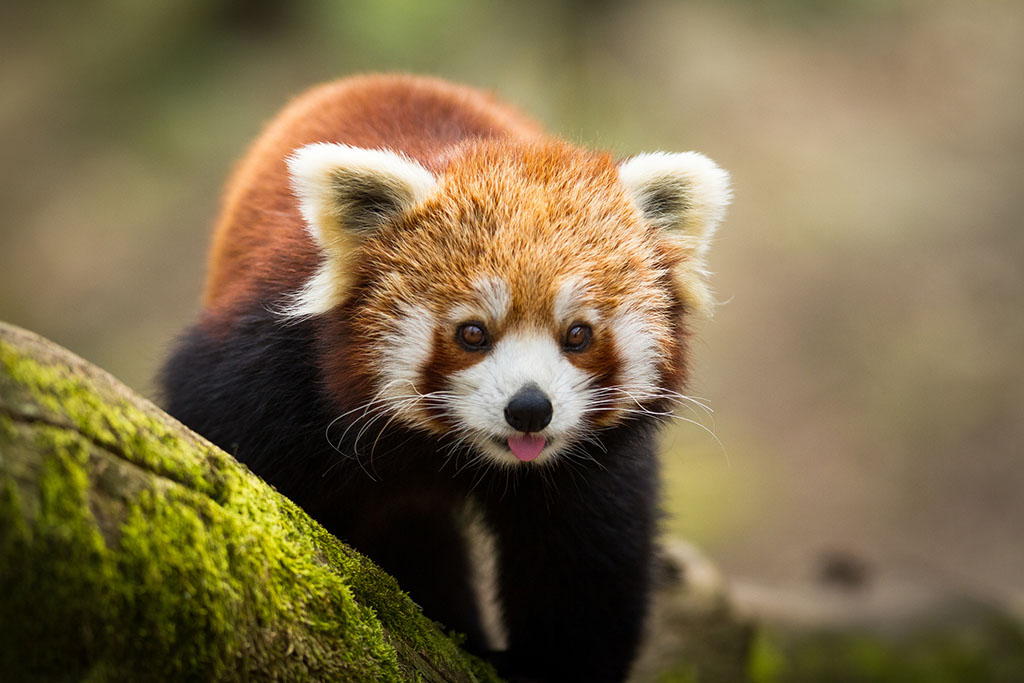
A red panda in the canopy.
Red panda
The red panda is a small, rust-coloured, bamboo-eating mammal that spends most of its time in trees. DNPWC lists it as endangered in Nepal and reports it in Langtang, Sagarmatha, Kanchenjunga and Makalu Barun, with an estimated 317 to 582 individuals. It is shy and mostly active at dawn and dusk. Sightings on treks are very rare, but the forests of the Langtang and Kanchenjunga regions give the best chance. See the Langtang trek.
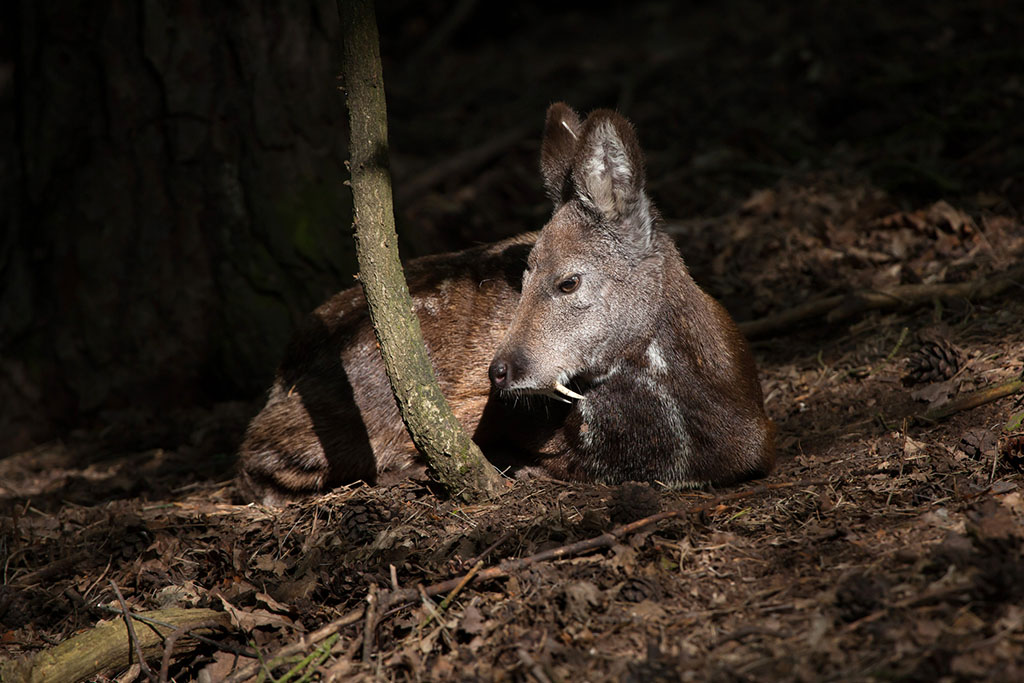
A musk deer in the forest.
Musk deer
The musk deer is a shy forest deer. The males have long fangs rather than antlers, and they carry a scent gland that has made them a target for poachers. They are mostly nocturnal, so a sighting on a trek is very unlikely. Their habitat includes alpine forest in the Annapurna and Mustang region.
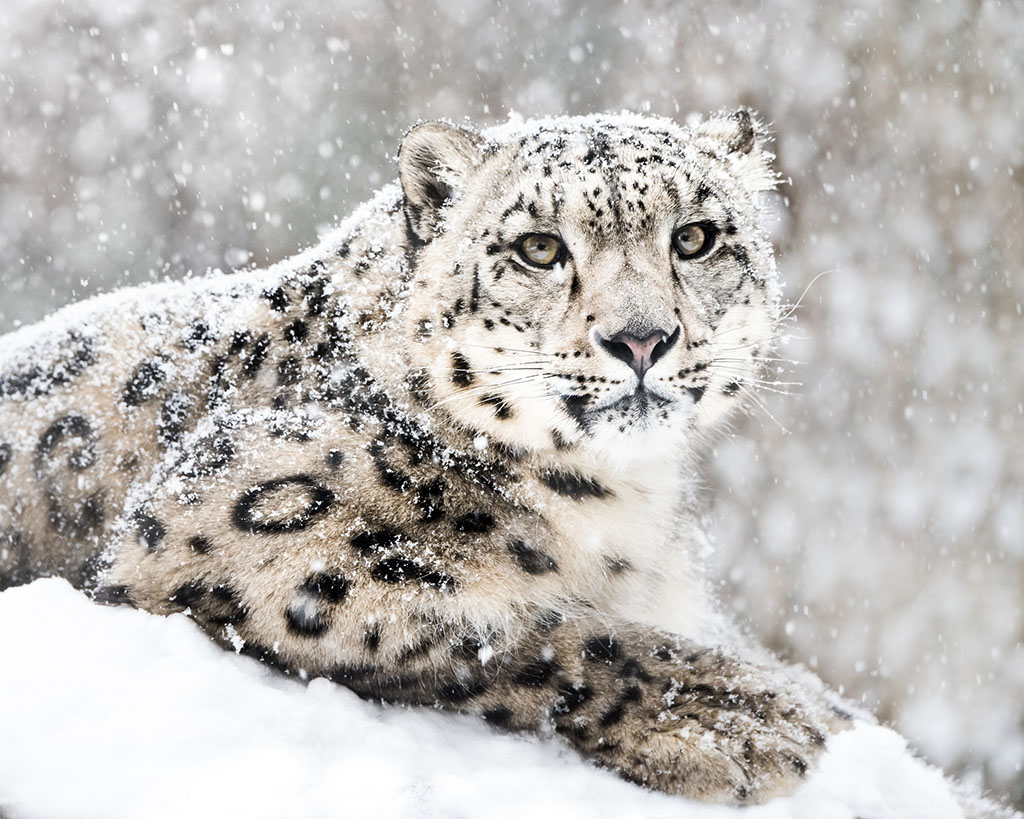
A snow leopard on a rocky slope.
Snow leopard
The snow leopard lives on steep, rocky ground between roughly 3,000 and 5,500 m along the northern border. DNPWC lists it as endangered, with an estimated 301 to 400 in Nepal, and recent surveys put the number near 400. It lives in seven protected areas: Annapurna, Kanchenjunga, Langtang, Makalu Barun, Manaslu, Sagarmatha and Shey Phoksundo. It is rarely seen, and most sightings come from dedicated winter trips with guides. On a normal trek, look for tracks and blue sheep, its main prey. See hidden lakes of Nepal for remote regions.
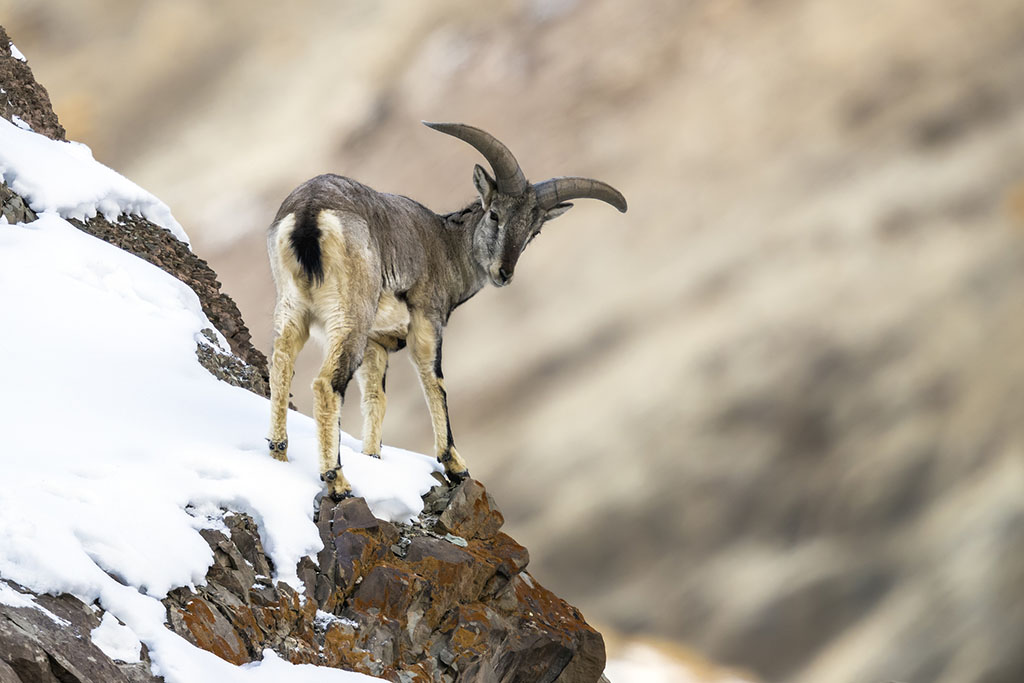
Blue sheep on an alpine slope.
Blue sheep (bharal)
Blue sheep are the most commonly seen Himalayan animal, often in herds on grassy slopes above the tree line. They are closer to goats than sheep, and their grey coat has a blue sheen in some lights. They stand still on cliffs, so look for movement. Langtang, Manang and the upper Khumbu are good places. Walk quietly and scan the slopes with binoculars. See tea houses of Langtang.
Animals of the Terai and its rivers
One-horned rhinoceros
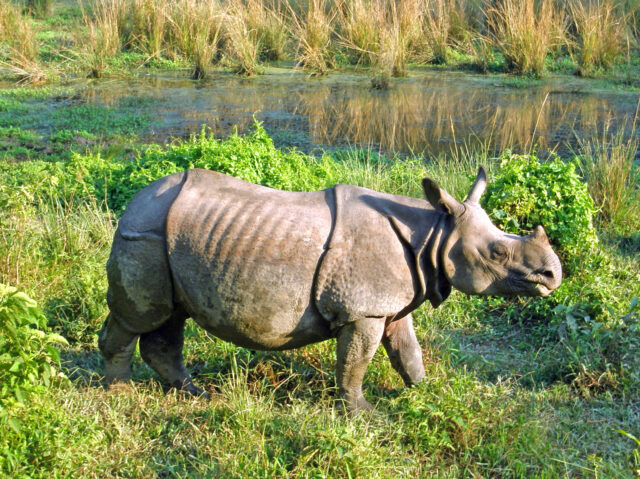
Nepal’s rhino population has recovered strongly. The 2021 census counted 752 greater one-horned rhinoceroses across four parks, up from 645 in 2015. Chitwan is the best place to see them, from a jeep, on foot with a guide or from a canoe. They like grassland and wallows near the river. Read the best places to visit in Nepal for Chitwan travel details.
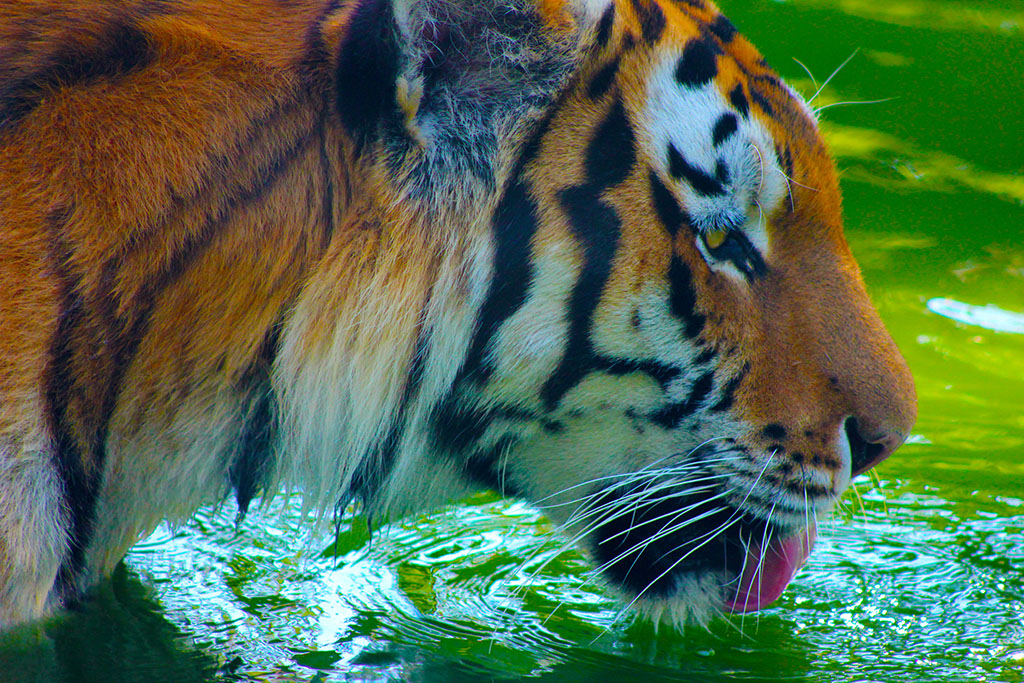
A Bengal tiger drinking water.
Bengal tiger
Nepal’s 2026 tiger census recorded 429 wild tigers, up from 355 in 2022. Chitwan held 145 and Bardia 112, which is down from 125 in 2022 and the only fall among the major parks. Parsa, Banke and Shuklaphanta all rose. Tigers are hard to see, so go for the forest and the other animals, and treat a tiger as a bonus. The census was led by DNPWC with the Nepal Army and other partners. Plan at least two or three nights in the park.
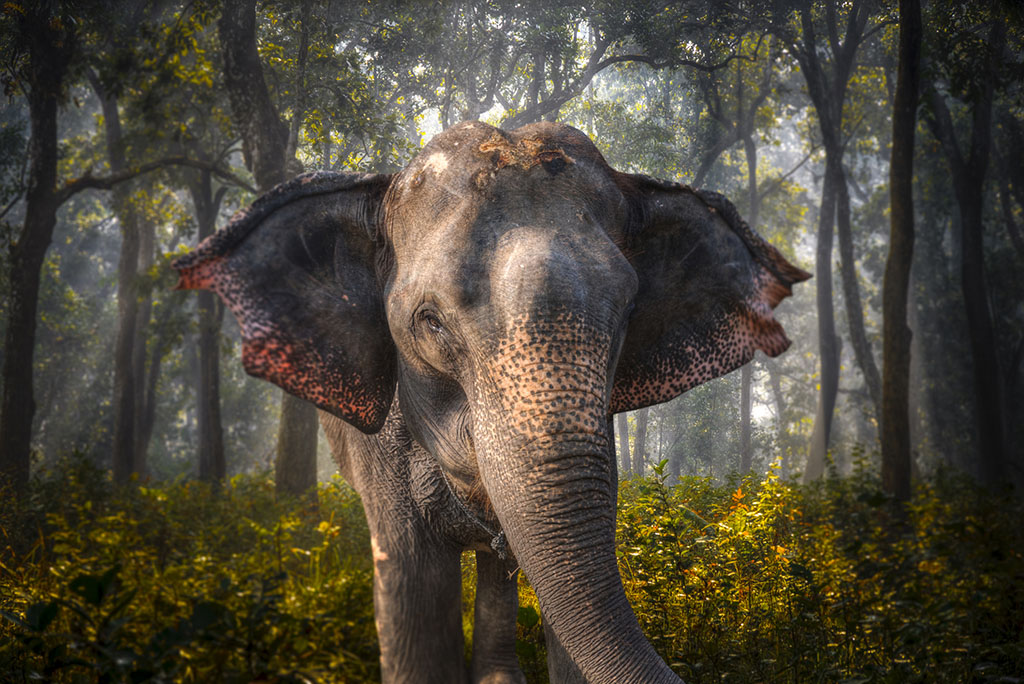
An Asian elephant in the Terai.
Asian elephant
DNPWC estimates about 255 to 265 wild elephants in Nepal, in the Terai across Bardia, Chitwan, Koshi Tappu, Parsa and Shuklaphanta. They are endangered because of habitat loss, broken corridors and conflict with farmers. Wild herds can be dangerous, so watch from a jeep with a guide. Bardia has some of the best chances.

An Indian leopard in the Terai.
Leopard
Leopards live in the Terai and the mid-hills, and are mostly active at night. They are very hard to see on a day safari, though night drives or camera traps sometimes reveal them. Keep children and pets close in villages at dusk.
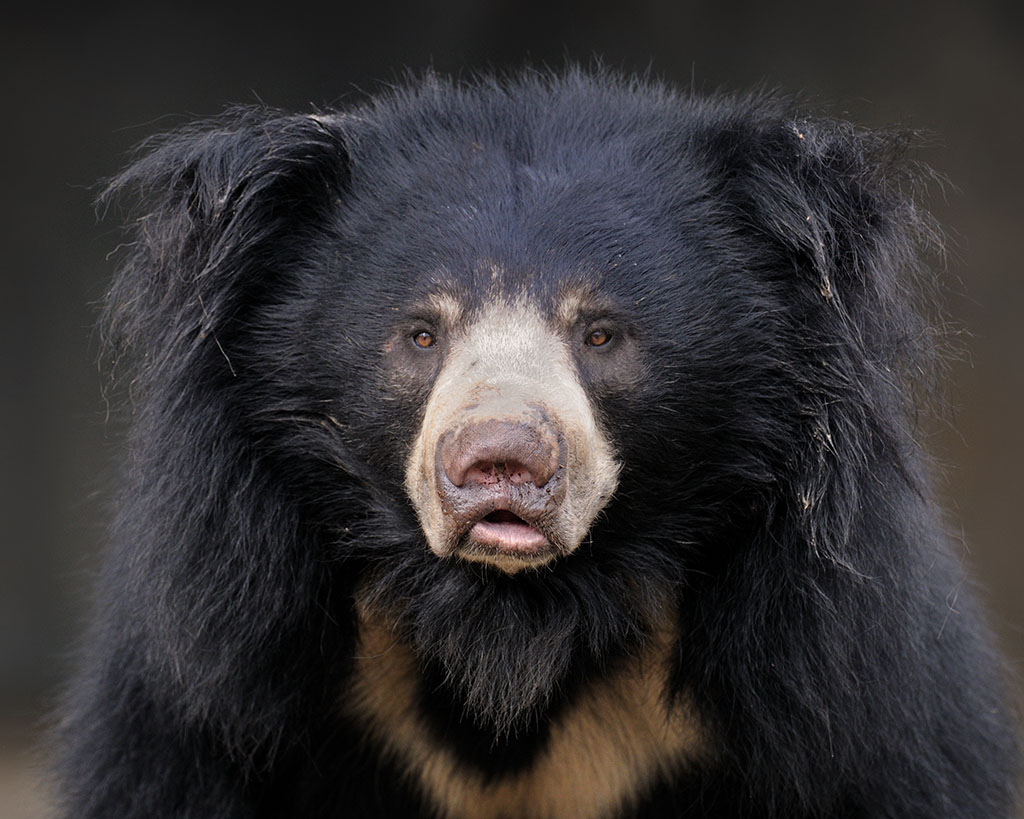
A sloth bear in the Terai.
Sloth bear
The sloth bear is a shaggy black bear that feeds on termites, ants and fruit. It lives in Terai forests such as Chitwan and Bardia. It can be dangerous if surprised, so keep a distance and follow your guide on foot.
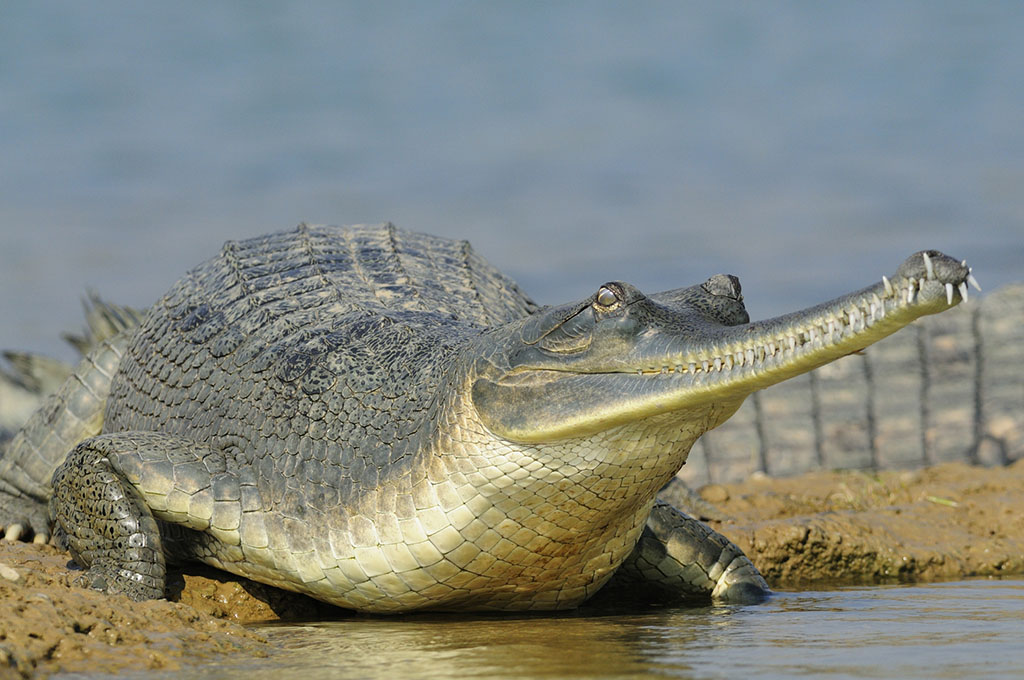
A gharial with its long, thin snout.
Gharial
The gharial is a fish-eating crocodile with a long, thin snout, and DNPWC lists it as critically endangered. The 2019 annual report estimated 198 in Nepal, and more recent river surveys in the Rapti and Narayani have counted more. It lives in the Chitwan and Bardia rivers and the Koshi. The park’s breeding centres raise young for release. A canoe ride on the Rapti is a good way to see them.
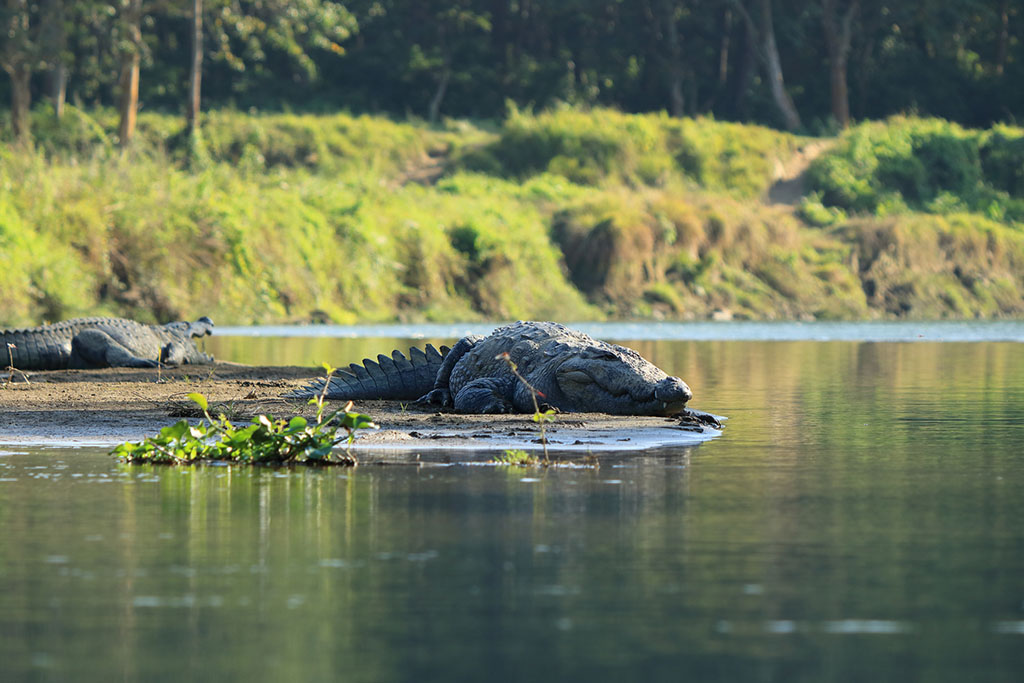
A mugger crocodile on a sandbar.
Mugger crocodile
The mugger, or marsh crocodile, has a broad snout and eats fish, reptiles and mammals. It basks on sandbars and in marshes and slow rivers in the Terai. Keep clear of the water’s edge.

A Ganges river dolphin.
Ganges river dolphin
This freshwater dolphin is almost blind and uses sound to find fish. DNPWC says fewer than 20 adults remain in Nepal and the population is declining, and that it is limited to the Karnali, Geruwa, Mohana, Bhada, Koshi and Narayani rivers. Bardia is the main protected area where it is seen. Boat trips on the Karnali give a small chance.
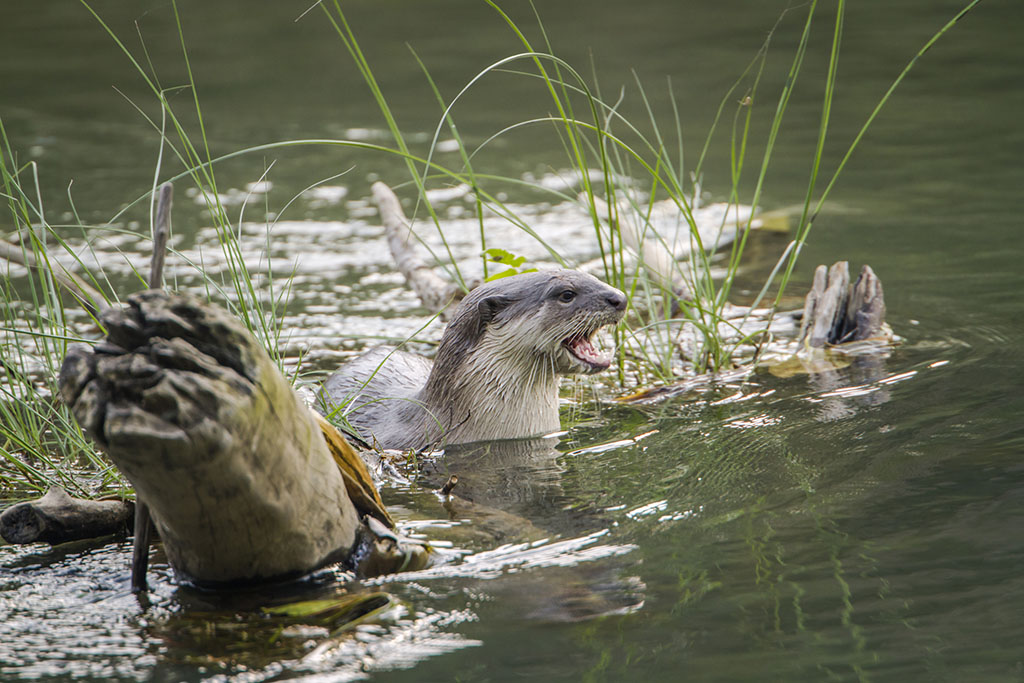
Otters in a Terai river.
Otters
Nepal has three otter species, found in rivers, lakes and wetlands. Look for them early in the morning along the Babai River in Bardia and in quiet lakes in the hills.
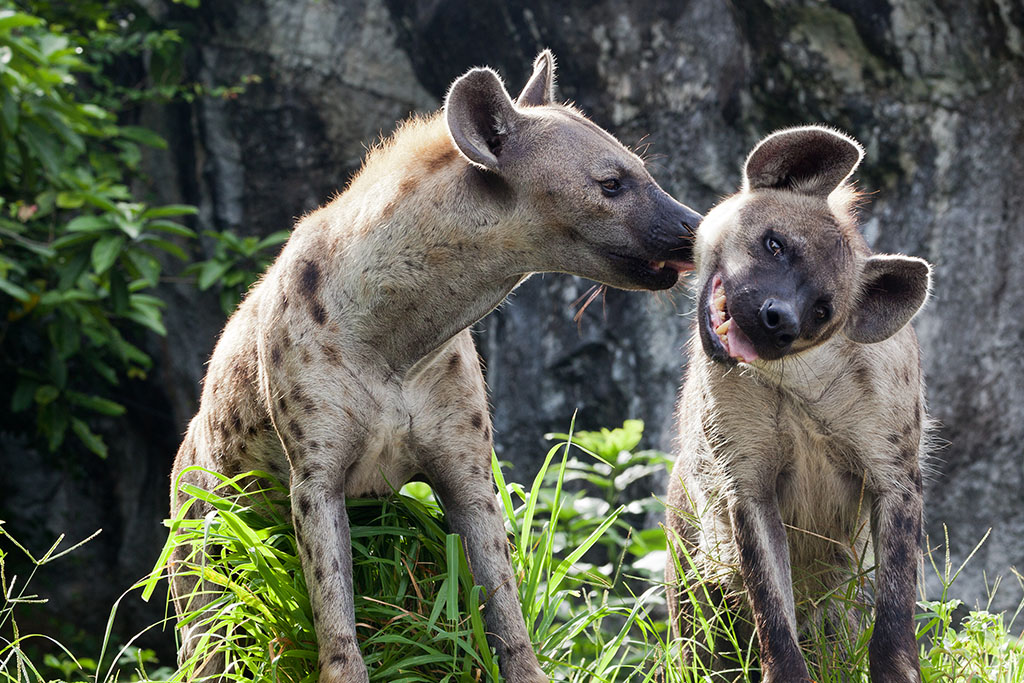
Striped hyenas in the Terai.
Striped hyena
The striped hyena is a shy nocturnal scavenger of the Terai grasslands and forests. It is rarely seen and little studied. Despite its reputation, it avoids people.
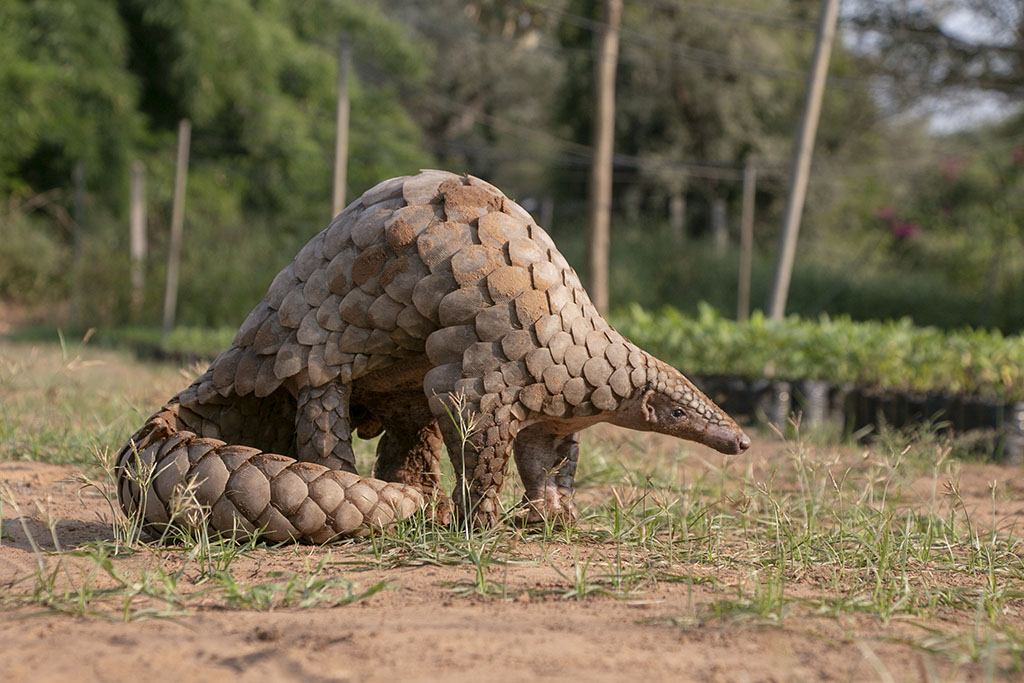
An Indian pangolin.
Pangolin
The pangolin is a scaly mammal that eats ants and termites. It is nocturnal and very rarely seen, and it is heavily trafficked for its scales. Do not buy any pangolin products.
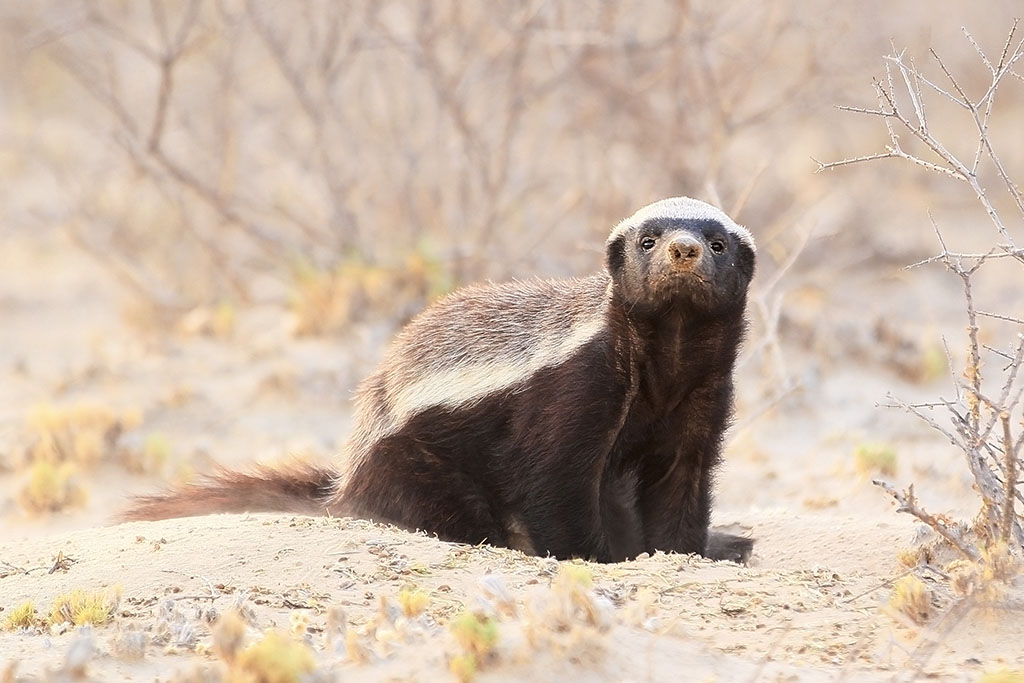
A honey badger.
Honey badger
Honey badgers are tough, bold diggers that eat insects, reptiles and small mammals. They live in lowland forests and are rarely seen by visitors.
Where to see wildlife in Nepal
| Place | Best for | Time to allow |
|---|---|---|
| Chitwan National Park | Rhinos, deer, gharial, birds | 2 to 3 nights |
| Bardia National Park | Tigers, elephants, dolphins, quieter jungle | 3 nights |
| Langtang National Park | Blue sheep, red panda, forests | 7 to 10 days |
| Manang and Annapurna | Blue sheep, Himalayan birds | 10 to 18 days |
| Sagarmatha National Park | Himalayan monal, tahr, blue sheep | 14 days |
Chitwan was established in 1973 and covers about 953 sq km, and Bardia, at 968 sq km, is the largest national park in the Terai. See our Chitwan National Park tour.
Tips for seeing wildlife
- Go with a licensed guide. Park rules require guides on foot safaris and in the core areas.
- Be quiet and still. Wear dull colours, avoid bright clothes and keep your voice low.
- Go early or late. Most animals are active at dawn and dusk.
- Keep your distance. Rhinos, elephants and bears can charge, and crocodiles ambush at the water’s edge.
- Use binoculars. They matter more than a long camera lens on a trek.
- Go in the dry season. October to March is cooler, and animals gather near water.
- Do not feed or chase animals. Do not buy wildlife products.
FAQ
What wildlife can you see in Nepal? Rhinos, tigers, elephants, gharial and dolphins in the lowlands, and blue sheep, red pandas and snow leopards in the Himalaya.
Where can I see tigers in Nepal? Chitwan and Bardia are the main parks. The 2026 census counted 145 in Chitwan and 112 in Bardia.
How many tigers are there in Nepal? 429, according to the 2026 national census.
How many rhinos are there in Nepal? 752 in the 2021 census, across four national parks.
Where can I see rhinos? Chitwan is the best and most reliable park.
Can I see a snow leopard on a trek? It is very unlikely. Most sightings are on specialised winter trips.
Where can I see red pandas? In the forests of Langtang, Sagarmatha, Kanchenjunga and Makalu Barun, though sightings are rare.
What is the best time for wildlife? October to March for the Terai; spring and autumn for treks.
Are wild animals dangerous? Some are. Follow your guide, keep your distance and avoid walking at night.
Do I need a guide in the national parks? Yes. Park authorities require guides for safaris and walks.
Which park is quieter, Chitwan or Bardia? Bardia, which is also further to travel.
Can I combine wildlife with a trek? Yes. Many visitors do Chitwan or Bardia after a Himalayan trek.
Plan your Nepal wildlife trip with Base Camp Hikes
See the Chitwan National Park tour or the 14-day Everest Base Camp trek. For a quote, message the team on WhatsApp or phone at +91 932 595 1234 (9 am to 7 pm IST), write to info@basecamphikes.com, or use the enquiry form.