 By
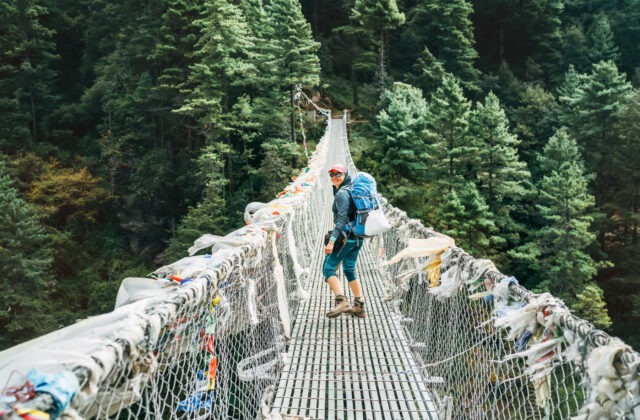
The suspension bridges on the Everest Base Camp trek are swaying footbridges that carry the trail over the Dudh Koshi and the streams that feed it, and you will cross several of them on the walk from Lukla to Namche Bazaar alone. Most are wide enough for a trekker and a loaded porter to pass, but they move underfoot, they are shared with yaks and mules, and the first high one catches many people off guard.
This guide tells you where the bridges fall on the route, how to cross one calmly, who has the right of way, and what to do if heights bother you. It is written for first-time trekkers, including families and anyone nervous before their flight to Lukla.
Bridges on the EBC trail at a glance
- Where you meet them most: the first two to three days, Lukla to Namche Bazaar, along the Dudh Koshi valley.
- The one people remember: the bridge near Jorsale, after which the trail climbs for about three hours to Namche (Nepal Tourism Board).
- Who you share them with: porters, yak and mule trains and other trekkers.
- Golden rule: if animals are coming, stop on the near side and let them cross first.
- Heights: you do not need a head for heights to trek to Everest Base Camp, but you do need a plan for the bridges.
Last checked: 3 November 2026. Route and altitude facts come from Nepal Tourism Board and Sagarmatha National Park pages. Crossing advice is our own, from guiding this route. Bridges can be repaired, closed or rebuilt, so your guide has the final say on current conditions.
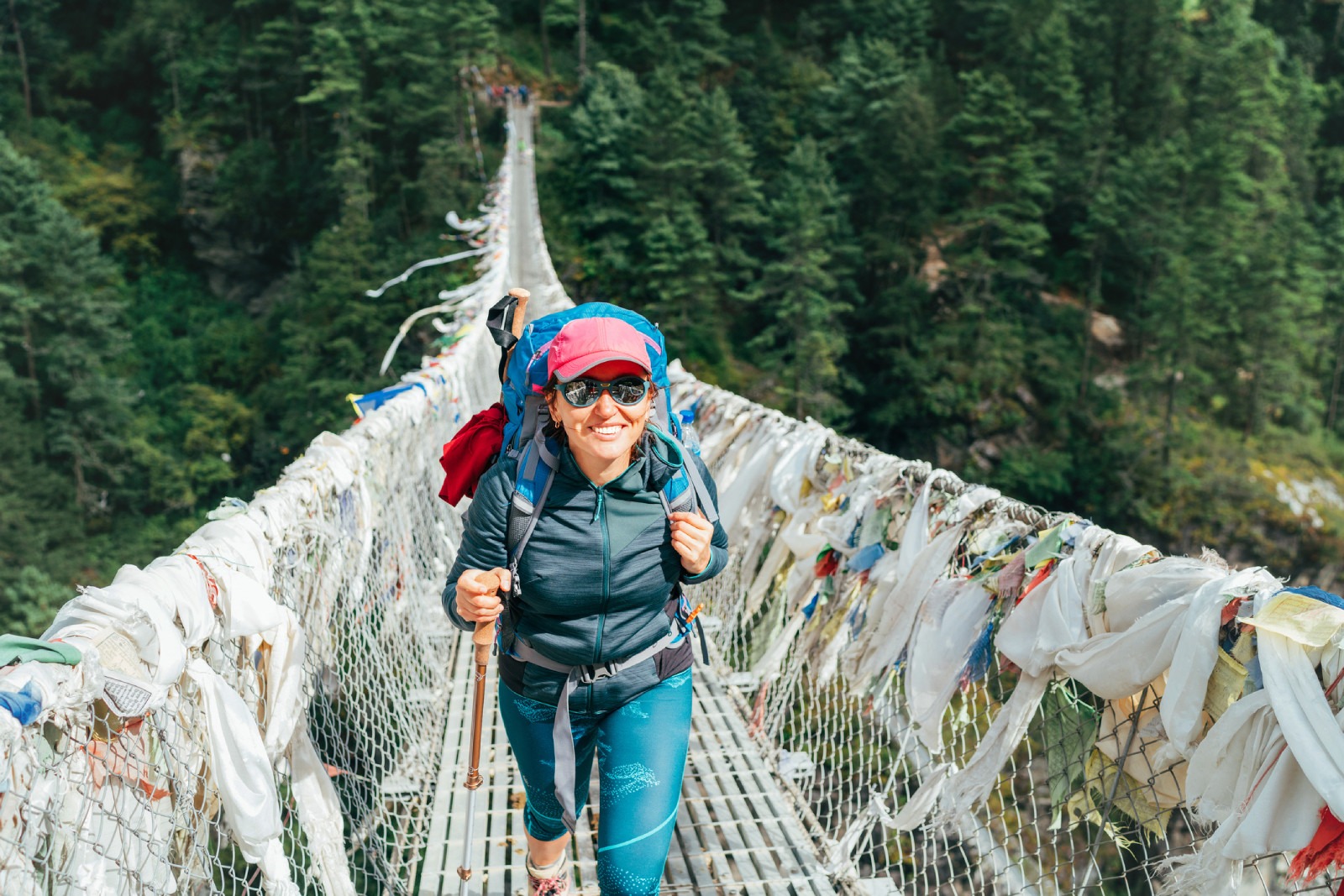
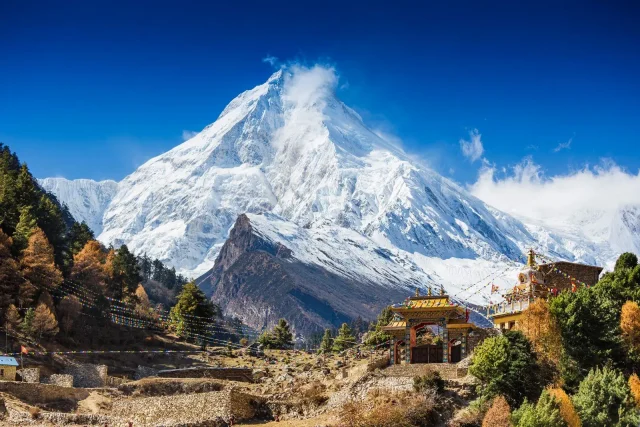
A footbridge on the trail to Everest in the Nepal Himalayas.
In this guide: Where the bridges are | How to cross | Yaks and porters | If you fear heights | Weather and conditions | Planning | FAQ
Where the bridges are on the Everest Base Camp trail
The Everest trail follows the Dudh Koshi river valley up from Lukla. The Nepal Tourism Board describes it this way: the two-week trek starts and finishes at Lukla, and “a gentle two-day trek up the Dudh Koshi valley leads to the famous Namche Bazaar.” Because the path keeps changing sides of the valley, that is where most of the crossings happen.
| Stage | Facts from official pages | What it means for bridges |
|---|---|---|
| Lukla (2,850 m) | The trek starts here; Lukla is the airport for the Everest region (Nepal Tourism Board). | Easy walking first, with your first small crossings once you drop towards the river. |
| Phakding | A popular first-day stop (Nepal Tourism Board). | A gentle first day; use it to get used to how a bridge feels. |
| Monjo (2,845 m) | Sagarmatha National Park lists its lowest point as 2,845 m at Monjo. | The last stop before the park entrance and the big climb. |
| Jorsale | Permits are checked here; the trail starts to climb after a suspension bridge, and Namche is about a 3-hour hike from that bridge (Nepal Tourism Board). | The most talked-about crossing. Bridge first, then the long uphill to Namche. |
| Namche Bazaar (3,500 m) | The staging point for the Everest region; the board advises a couple of days here to acclimatise. | After Namche the valley opens up, and you meet bridges less often. |
| Pheriche and beyond | Pheriche is a named stopping place on the route (Nepal Tourism Board). | Our photo above shows a metal footbridge near Pheriche, so crossings continue higher up. |
The first two columns come from official pages. The third column is our own guidance.
We do not give a bridge count or lengths here. Neither the Nepal Tourism Board nor Sagarmatha National Park publishes one, and we would rather say so than quote a number we cannot source. If you are nervous, ask us to walk you through the specific crossings on your itinerary before you fly.
How to cross a hanging bridge safely
These are the habits our guides teach every group on the first morning:
- Stop and look first. Check both ends. If a yak or mule train is on or approaching the bridge, wait.
- Cross one person at a time in your own group if the bridge is narrow or moving a lot. Leave a gap so the swing does not build up.
- Walk at a steady, ordinary pace. Do not run and do not bounce. Rhythm makes a bridge sway more.
- Look at the far end, not down. Fix your eyes on the other side. Glance down only to place your feet.
- Hold the side lightly if you need to. Keep a hand free, and keep both poles in one hand or folded so they do not catch in the mesh.
- Keep your backpack close. Straps tight, nothing dangling from the pack, and the chest strap closed.
- Do not stop in the middle for photos. Take your picture from the bank, or at the far end once you are off.
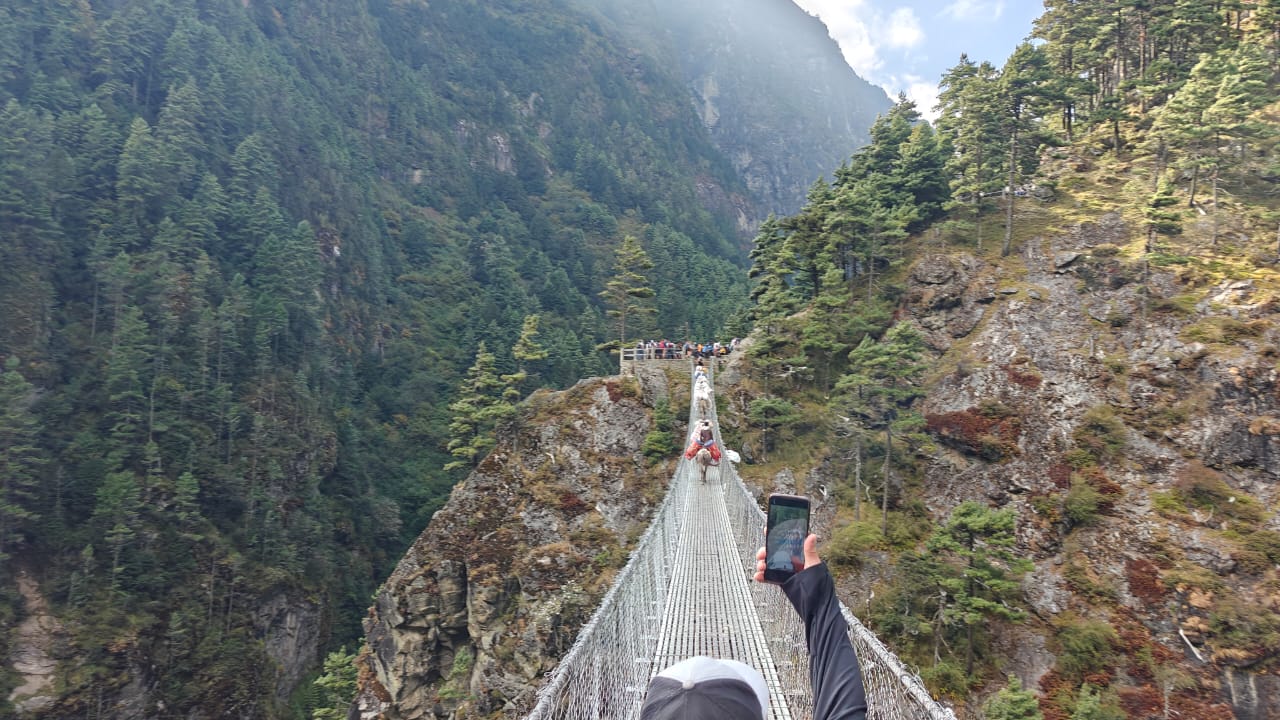
Suspension bridge over the Dudh Koshi river
Yaks, mules and porters: who goes first?
The Everest trail is a working road for the villages above Lukla. Sagarmatha National Park’s own management plan reports slightly more than 30,000 tourists visiting the park a year, and everything those visitors and the lodges use is carried on people and animals. That is why bridges are busy.
- Animals and loaded porters have priority. Wait on the bank until they have fully crossed.
- Stand on the uphill side of the trail when animals pass on open ground. Do not stand on the outer edge, where a swinging load can push you off balance.
- Do not stop in a gap between two animals on a bridge. Wait for the whole train.
- Let porters pass without hurry. A porter carrying a heavy load cannot step aside easily, so make space early.
- Listen for bells. Yak and mule trains usually carry bells, and you will often hear them before you see them.
For more on trail etiquette and how our teams look after porters, see our Everest Base Camp trek guide.
If you are afraid of heights
Fear of heights is common, and it does not stop people from reaching Base Camp. What helps is preparation, not willpower:
- Tell your guide before the trek starts. A guide who knows will walk next to you or just ahead and set the pace.
- Practise on the first day. The early bridges are a gentle introduction before the bigger ones near Namche.
- Use a routine. Pause, breathe out slowly, pick a point on the far side, then walk.
- Do not rush to get it over with. A steady pace is safer than a dash.
- Ask to cross when it is quiet. Early in the morning there are fewer animals and fewer people.
If a particular crossing really is too much, tell your guide. They know the trail and can sometimes suggest another route or timing. We will not pressure you to cross.
Weather and conditions on the bridges
| Condition | What to expect | What to do |
|---|---|---|
| Wind | Bridges sway more on gusty afternoons, especially higher in the valley. | Cross in the morning where you can. |
| Rain or frost | Wet or icy surfaces are slippery, and the approaches get muddy. | Slow down, shorten your stride and watch your footing. |
| Crowds | Peak trekking months bring more groups and animal trains. | Start early and leave gaps between people. |
| After the monsoon | Floods and landslides can damage or close bridges and force a diversion. | Ask your guide for the current route before you fly. |
The first and last rows are our general experience, not official figures. The Nepal Tourism Board does advise caution on the glacier section near Base Camp, where it says the risk of falling on the ice is great, but that is a separate hazard from the bridges.
Planning your trek around the bridges
You do not need special gear for bridges, but a few choices help:
- Footwear with grip. The planks and the muddy approaches reward good soles.
- A small, well-packed bag. Your porter carries the main load, and a tidy daypack makes each crossing easier.
- Take your time over the first days. We build in acclimatisation days at Namche, which also gives you more practice on the bridges before the higher ground. See altitude sickness: symptoms and what to do.
- Insure the trek. Make sure your policy covers trekking at altitude and helicopter evacuation.
FAQ
Are there hanging bridges on the Everest Base Camp trek? Yes. The trail follows the Dudh Koshi valley from Lukla and crosses it and its side streams on suspension footbridges, most noticeably on the way to Namche Bazaar.
How many suspension bridges are there on the Everest Base Camp trek? No official source we reviewed gives a count, so we do not quote one. Expect several crossings on each of the first days, with fewer after Namche.
Which is the famous bridge near Namche Bazaar? The Nepal Tourism Board describes a suspension bridge near Jorsale, after which the trail climbs for about three hours to Namche. Many trekkers remember it as the main crossing of the trek.
Are the bridges on the Everest Base Camp trail safe? Trekkers cross them every day, and they are shared with porters and animals. Follow your guide, walk at a steady pace and let animal trains go first. Conditions can change after floods, so check with your guide.
What if I am afraid of heights? Tell your guide at the start. Practise on the early bridges, look at the far end, cross at a quiet time and take your time. Many people with a fear of heights complete the trek.
Who has right of way on a hanging bridge? Yaks, mules and loaded porters. Wait on the bank until they have completely crossed.
Which side should I stand on when yaks pass? The uphill side of the trail, away from the drop. Do not stand on the outer edge.
Can I take photos on a suspension bridge? Take them from the bank or after you have crossed. Stopping in the middle blocks the bridge and makes it less safe for porters and animals.
Do trekking poles get in the way on bridges? They can catch in the mesh. Keep them together in one hand or fold them before you step on.
Are the bridges closed in any season? Bridges can be damaged or closed by floods and landslides, especially after the monsoon. Your guide knows the current status and can change the route if needed.
Is the Everest Base Camp trek suitable for beginners? Yes, for fit walkers. The bridges are part of the experience and are manageable with a calm approach and a guide. Allow extra days for acclimatisation.
How do I book an Everest Base Camp trek with Base Camp Hikes? Message us with your dates and group size. We confirm the itinerary, permits and cost, and brief you on the bridges and trail before you fly.
Plan your Everest Base Camp trek with Base Camp Hikes
For dates and a quote, message the team on WhatsApp or phone at +91 932 595 1234 (9 am to 7 pm IST), write to info@basecamphikes.com, or use the enquiry form.
Sources
- Nepal Tourism Board: Everest Base Camp (route, Jorsale bridge, permit checks, acclimatisation)
- Nepal Tourism Board: Namche Bazaar (altitude and acclimatisation advice)
- Nepal Tourism Board: Everest Region (Lukla and route altitudes)
- Sagarmatha National Park: Park website (altitude range, Monjo)
- Sagarmatha National Park: Management plan 2016-2020 (annual visitor numbers)