By
The best day trips from Kathmandu are Swayambhunath, Kathmandu Durbar Square, Boudhanath, Pashupatinath, Bhaktapur and Patan. All six lie within about an hour of Thamel, and the first four fit into one full day. If you have one spare day before or after a trek, do Swayambhunath, Durbar Square and Boudhanath. If you have two, add Pashupatinath and then Patan and Bhaktapur. This guide gives the travel time, how long to stay and what to see at each, plus three ready-made routes.
Kathmandu day trips at a glance
- Closest to Thamel: Swayambhunath (about a 20-minute walk) and Kathmandu Durbar Square.
- Furthest: Bhaktapur, about 40 to 60 minutes by taxi depending on traffic.
- One day: Swayambhunath, Durbar Square, Boudhanath, Pashupatinath.
- Two days: add Patan on one day and Bhaktapur on the other.
- Best times: early morning, before the crowds and the traffic.
Last checked: 29 October 2026. Entry fees and opening hours change often, so confirm them at the ticket counter. Carry small notes and your passport.
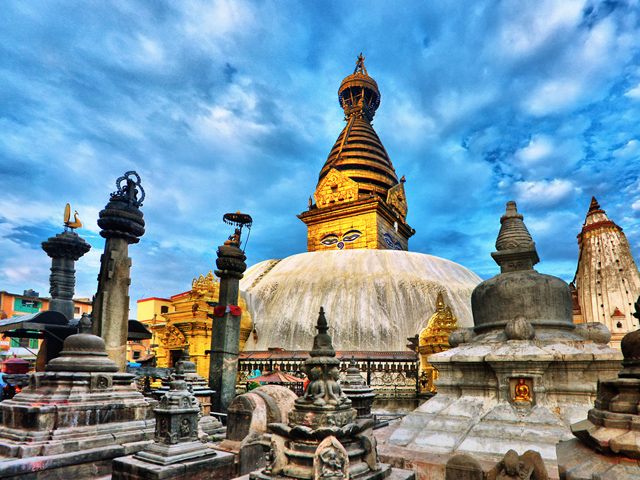
Swayambhunath on its hill above Kathmandu.
In this guide: Six trips compared | Swayambhunath | Durbar Square | Boudhanath | Pashupatinath | Bhaktapur | Patan | Routes | FAQ
Six day trips from Kathmandu compared
| Trip | From Thamel | Time to allow | Best for | Best time |
|---|---|---|---|---|
| Swayambhunath | About 20 minutes on foot | 1.5 to 2 hours | Views, monkeys, Buddhist art | Early morning |
| Kathmandu Durbar Square | 10 to 15 minutes on foot | 2 to 3 hours | Old royal palace, Kumari Ghar | Morning |
| Boudhanath | 20 to 30 minutes by taxi | 1 to 2 hours | Tibetan culture, circling the stupa | Dawn or dusk |
| Pashupatinath | 20 to 30 minutes by taxi | 1.5 to 2 hours | Hindu rites, riverside temples | Late afternoon |
| Bhaktapur | 40 to 60 minutes by taxi | Half to full day | Medieval city, pottery, food | Morning |
| Patan | 30 to 40 minutes by taxi | Half day | Newar art, museum, metalwork | Morning |
Times are approximate and depend on traffic, which is heaviest at morning and evening peaks.
1. Swayambhunath (the Monkey Temple)
Swayambhunath is a white stupa with a gold spire, set on a hill west of Thamel. The classic approach is the long stone stairway of around 365 steps lined with prayer wheels, shrines and monkeys. A second entrance has a road for those who prefer not to climb. At the top, walk clockwise round the stupa, spin the wheels in the same direction and look out over the valley. Keep food and loose items out of sight, as the monkeys are bold, and keep your distance. A bite needs medical attention. Allow 90 minutes to two hours, and a ticket is needed at the entrance. See also Kathmandu’s temple of monkeys.
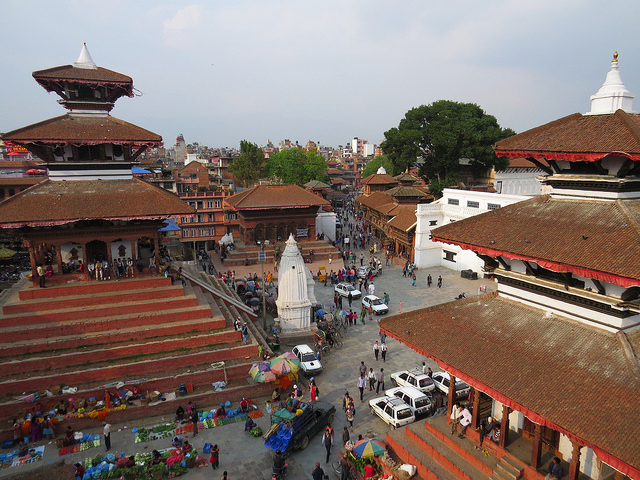
Kathmandu Durbar Square.
2. Kathmandu Durbar Square and Freak Street
Durbar Square was the royal centre of the Malla kings, when Kathmandu, Patan and Bhaktapur were separate kingdoms. In the late 1760s the Gorkha king Prithvi Narayan Shah took all three, and later made Kathmandu his capital. The square holds multi-tier pagoda temples, carved Newar windows, courtyards and the Kumari Ghar, home of the living goddess. The 2015 earthquake damaged several monuments, and restoration has continued, so expect scaffolding in places. The old street to the south is Freak Street, known in the 1960s and early 1970s for hippie travellers, and today a quiet lane of old houses and small shops. Buy your ticket at the gate and keep it, as it may be checked. Read 7 must-see Nepalese festivals for Indra Jatra, held in the square.
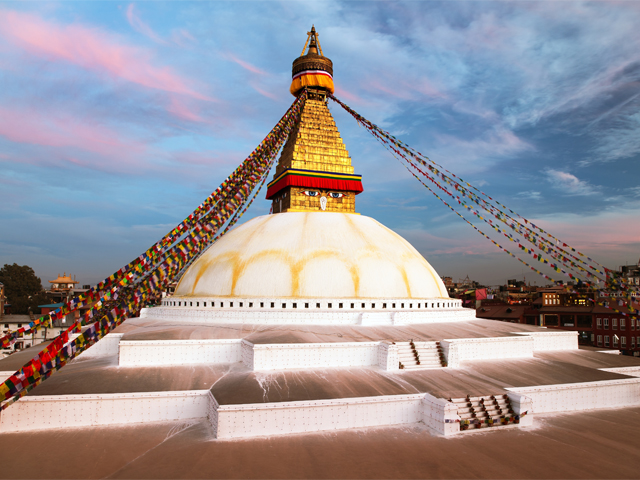
Boudhanath Stupa.
3. Boudhanath Stupa
Boudhanath is one of the largest stupas in the world and the centre of Tibetan Buddhism in Nepal. The white dome stands for the earth, painted eyes look out from the square tower above it, and 13 stepped rings on the spire are often explained as the stages of the path to enlightenment. The stupa stands on an old trade route between Tibet and the valley, and many Tibetan families settled around it after the 1950s. Walk clockwise, spin the prayer wheels clockwise too, and stop at a rooftop cafe for the view. It lies about 7 km east of the city centre, near the airport. Go at dawn or dusk, when pilgrims gather and butter lamps burn.
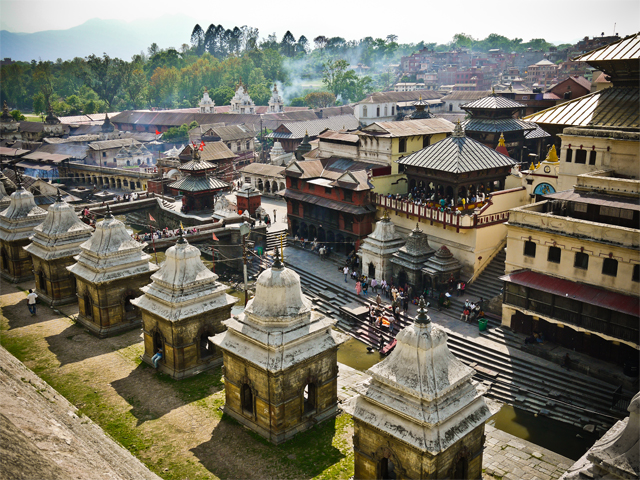
Pashupatinath temples and ghats.
4. Pashupatinath
Pashupatinath is a cluster of Hindu temples and ghats on the Bagmati River, dedicated to Shiva. Non-Hindus cannot enter the main temple, but you can see it, the cremation ghats and the sadhus from the opposite bank. Treat the cremations with respect: do not photograph the mourners and do not point. Sadhus expect a donation for a photo, so agree a price first. The late afternoon is the best time, with the evening aarti at dusk. The complex is about 20 to 30 minutes by taxi from Thamel and combines easily with Boudhanath nearby.
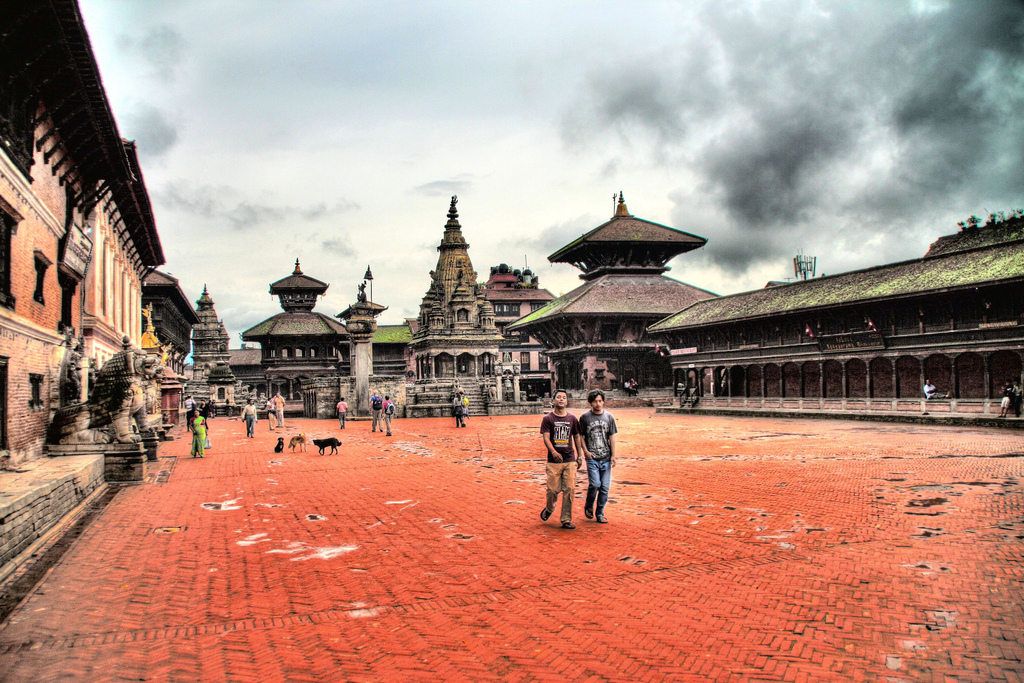
Bhaktapur.
5. Bhaktapur
Bhaktapur is the best-preserved of the three old cities, with brick lanes, carved wooden windows, tiered pagodas and sunken stone wells. It was ruled by Newar kings until the Gorkha conquest of the 1760s. Allow at least half a day: see the Durbar Square, the five-storey Nyatapola Temple, the Peacock Window and Pottery Square, then eat curd and Newari food at a rooftop restaurant. It is about 40 to 60 minutes from Thamel, and a visitor entry fee applies. Read a day trip to Bhaktapur.
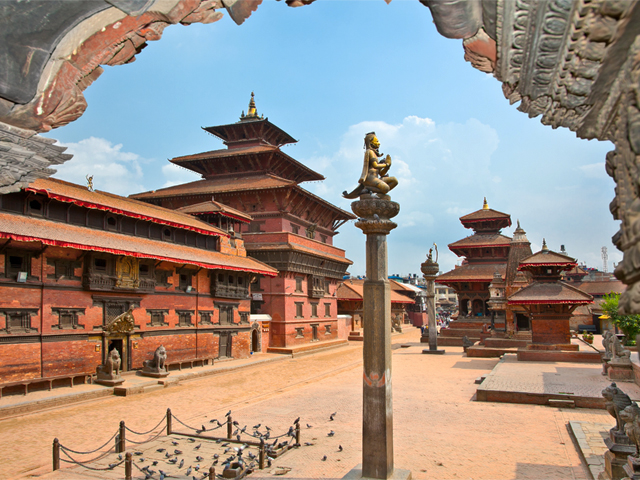
Patan Durbar Square.
6. Patan
Patan, also called Lalitpur, lies just south of Kathmandu across the Bagmati River. It is known for stone and metal craftsmen, and for the closest mix of Buddhist and Hindu sites in the valley. The Durbar Square is a World Heritage monument, with the 17th-century Krishna Mandir, and the Patan Museum in the old palace is a good stop. Spend the afternoon in the lanes behind the square, where workshops cast bronze statues. A ticket is needed for the square.
Three ready-made routes
| Route | Order | Time |
|---|---|---|
| One day, central | Swayambhunath, Durbar Square (lunch), Boudhanath at dusk | 8 to 9 hours |
| One day, east side | Boudhanath at dawn, Pashupatinath, Patan in the afternoon | 8 to 9 hours |
| Two days | Day 1 as the central route; day 2 Patan morning, Bhaktapur afternoon | Two days |
Practical tips
- Getting around: taxis and ride-hailing apps work in Kathmandu; agree the fare first or use the meter. A driver for the day is often better for the east-side route.
- What to wear: cover shoulders and knees at temples, and wear shoes that slip off easily.
- Etiquette: walk clockwise around stupas, ask before photographing people, and keep leather items out of Hindu temples where asked.
- Weather: October to November and March to May are clearest. See weather and climate in the Himalayas.
- Before a trek: keep a spare Kathmandu day in case of flight delays. Read what to do in Kathmandu before and after Everest Base Camp and booking extra hotel nights in Kathmandu.
FAQ
What are the best day trips from Kathmandu? Swayambhunath, Kathmandu Durbar Square, Boudhanath, Pashupatinath, Bhaktapur and Patan.
How many days do I need in Kathmandu? One day for the four central sights, and two days to add Patan and Bhaktapur.
Which sight is closest to Thamel? Kathmandu Durbar Square, then Swayambhunath, which is about a 20-minute walk.
Can I do all six in one day? It is possible but rushed. Two days is more comfortable.
Do I have to pay to enter these sites? Yes, foreign visitors pay at most of them. Confirm current fees at the gate.
Can non-Hindus enter Pashupatinath? Not the main temple, but you can view the complex from the river banks.
What is the best time of day to visit? Early morning for Swayambhunath, Durbar Square and Bhaktapur, dawn or dusk for Boudhanath, and late afternoon for Pashupatinath.
Are the monkeys dangerous? They can bite and snatch food. Keep your distance and do not feed them.
How do I get to Bhaktapur? By taxi in about 40 to 60 minutes, or by local bus, which is slower.
Is Kathmandu safe for tourists? Yes, with normal care for pickpockets in crowds and for traffic.
Were the monuments damaged in the 2015 earthquake? Several were, and restoration has continued. Some areas may be closed or covered.
Can I combine this with a trek? Yes. Most trekkers spend one or two days in Kathmandu before or after the trek.
Plan your Nepal trip with Base Camp Hikes
See the 14-day Everest Base Camp trek or read the 22 best places to visit in Nepal. For a quote, message the team on WhatsApp or phone at +91 932 595 1234 (9 am to 7 pm IST), write to info@basecamphikes.com, or use the enquiry form.
Photo credits: Dhilung Kirat, Alessandro Casagrande, Daniel Snelson and Michael Foley.