By
Swayambhunath, known as the Monkey Temple, is a hilltop Buddhist stupa on the western edge of Kathmandu, about 2 km from Thamel. The usual way up is a stone stairway of around 365 steps, and the visit takes one to two hours. Go early in the morning for cooler air, clear views over the valley and pilgrims on their morning rounds. This guide covers how to get there, what to see, the legend of the monkeys, and the etiquette that makes the visit smoother.
Swayambhunath at a glance
- Where: a hill west of central Kathmandu, a 20 to 30 minute walk from Thamel.
- How long: one to two hours.
- Best time: early morning, or late afternoon for the light.
- Entry: foreign visitors buy a ticket at the top of the stairs; check the current price.
- Watch out for: monkeys that snatch food, steep steps and crowds at midday.
Last checked: 29 October 2026. Fees, hours and repairs change, so confirm them on the day.
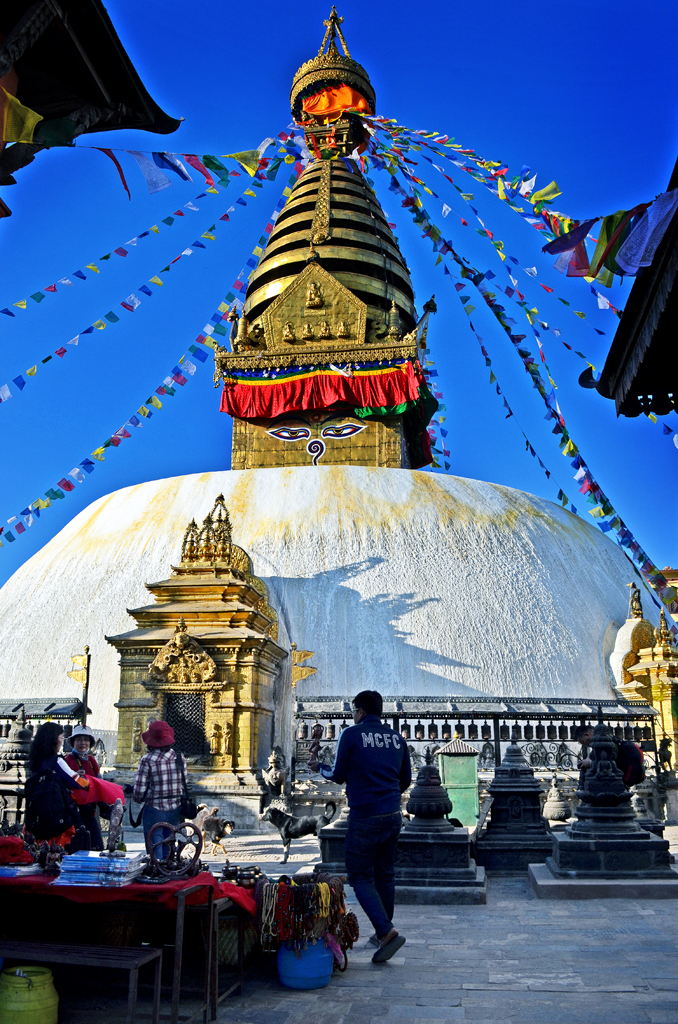
The central stupa at Swayambhunath.
In this guide: Getting there | What to see | The monkeys | Etiquette | Plan your visit | FAQ
How to get to the Monkey Temple
| Option | Time from Thamel | Notes |
|---|---|---|
| Walk | 20 to 30 minutes | Cross the Vishnumati River and climb the eastern stairs; ask your hotel for directions |
| Taxi or ride-hailing app | 10 to 15 minutes | Agree the fare first or use the meter; the car can go up a road to a rear entrance |
| With a day tour | Included | Combine with Durbar Square, Boudhanath and Pashupatinath |

The stairway to Swayambhunath.
The eastern stairway is the traditional approach. It is lined with prayer wheels, small shrines and statues, and many people stop to rest on the way up. Take it slowly, drink water and wear shoes with grip, since the steps can be slippery after rain. If you do not want to climb, ask your driver to use the road to the rear entrance.
What to see at Swayambhunath
The temple complex stands around a large white stupa. Records place a stupa on this hill from around the 5th century, and the site has been rebuilt and repaired many times. Here are the main things to look for.
The central stupa
The white dome stands for the world. A square tower rises above it with a pair of painted eyes on each side, and above that are 13 stepped rings under a gilded spire. These rings are usually explained as the stages on the path to enlightenment. The same style appears at Boudhanath.
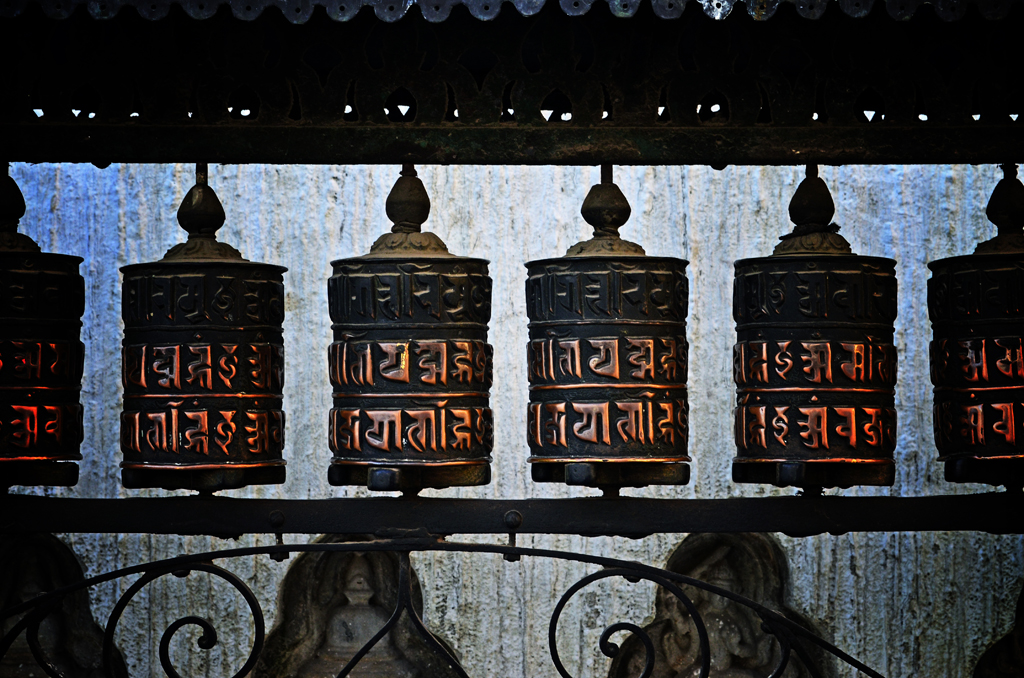
Prayer wheels around the stupa.
Prayer wheels and flags
Rows of brass prayer wheels circle the base of the stupa. Spin them clockwise with your right hand as you walk, matching the direction in which the mantra is written. Many pilgrims murmur Om Mani Padme Hum as they go. Strings of prayer flags run from the stupa to nearby poles and trees.

Prayer flags and a monkey in the temple grounds.
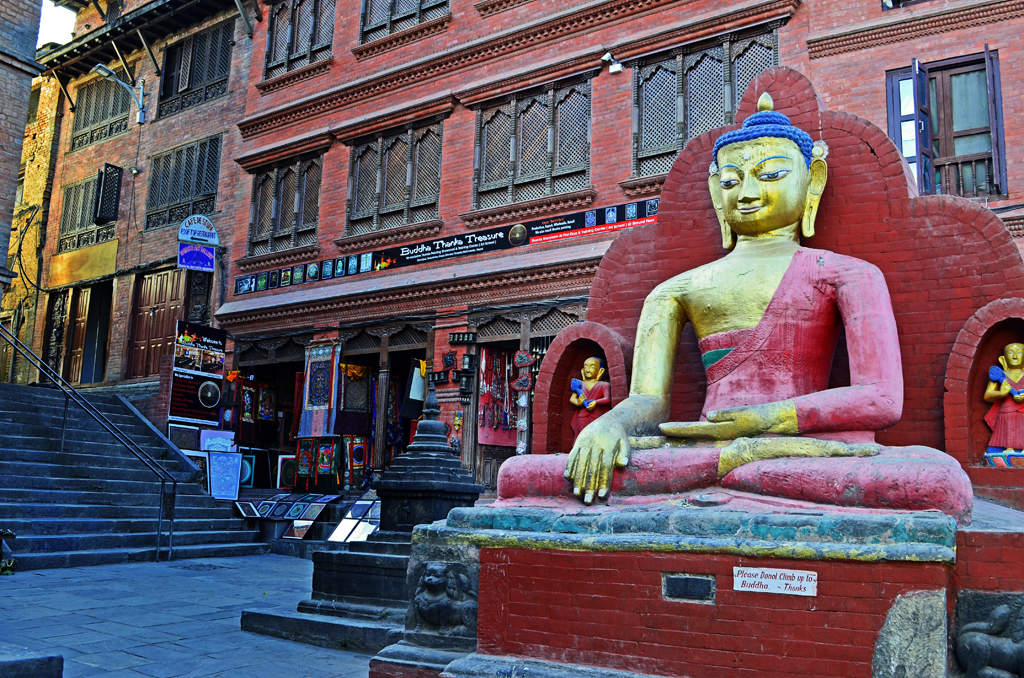
A golden Buddha statue at the temple.
Shrines and statues
Small temples, golden Buddha statues and carved stone figures stand around the stupa. Both Buddhists and Hindus worship here, which is why you may see offerings of rice, flowers and butter lamps next to each other. A shrine to Harati, the goddess of smallpox and child protection, stands nearby and draws many local families.
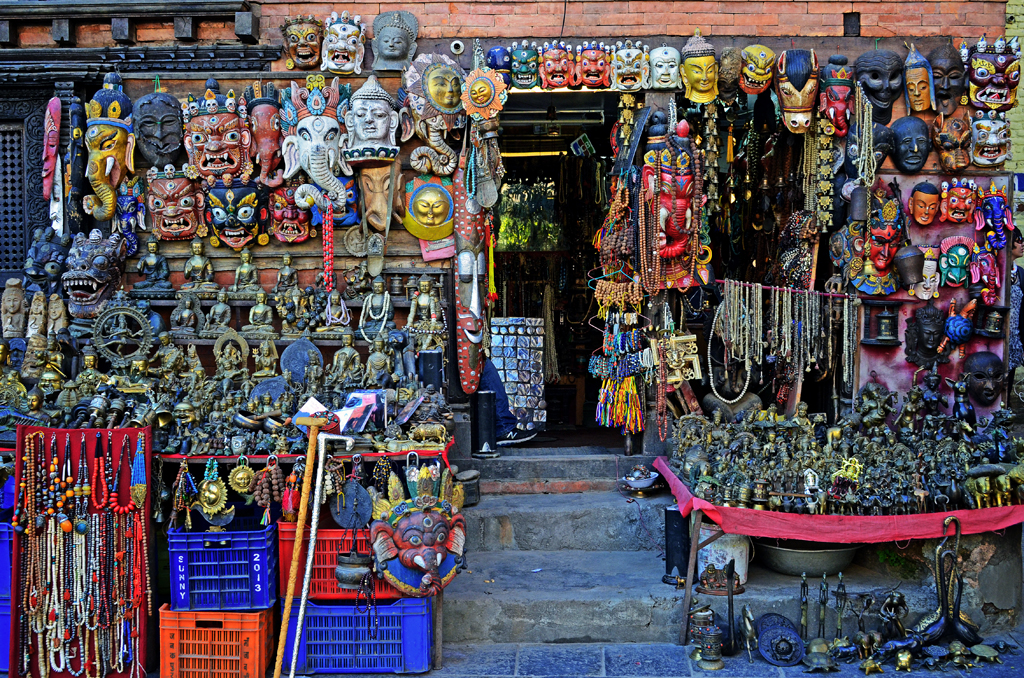
Handicrafts on sale at Swayambhunath.
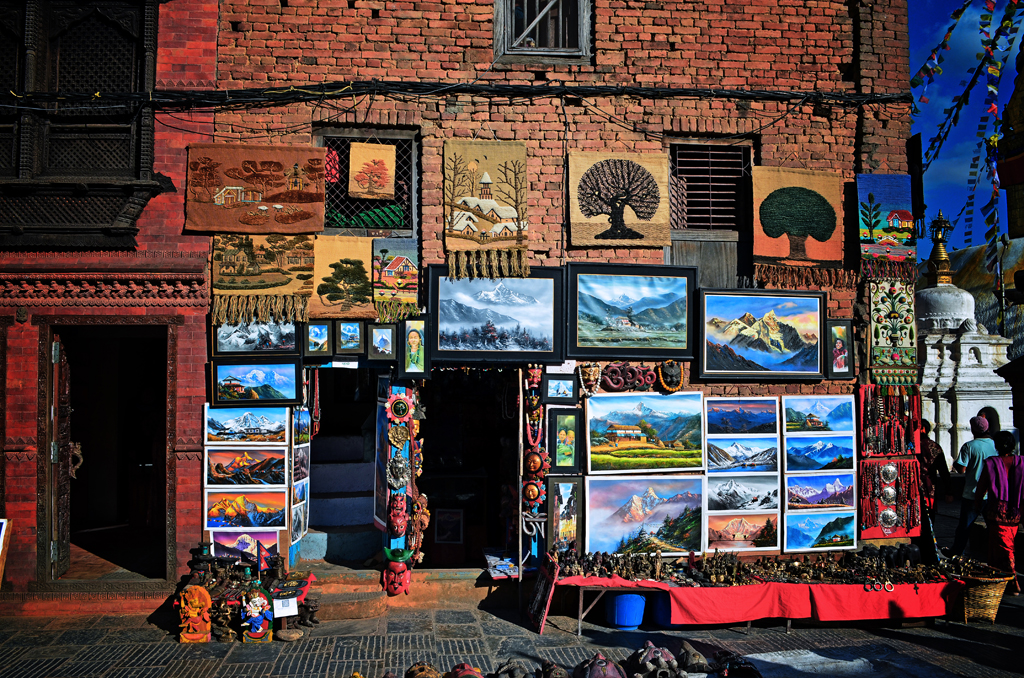
Paintings and artwork at Swayambhunath.
Shops and crafts
Small shops near the stupa sell thangka paintings, singing bowls, prayer flags and statues. Prices are not fixed, so compare a few shops and bargain politely. If you want a thangka, ask where it was painted, since many are made in workshops in the valley. See buying gear in Kathmandu if you also need trekking supplies.
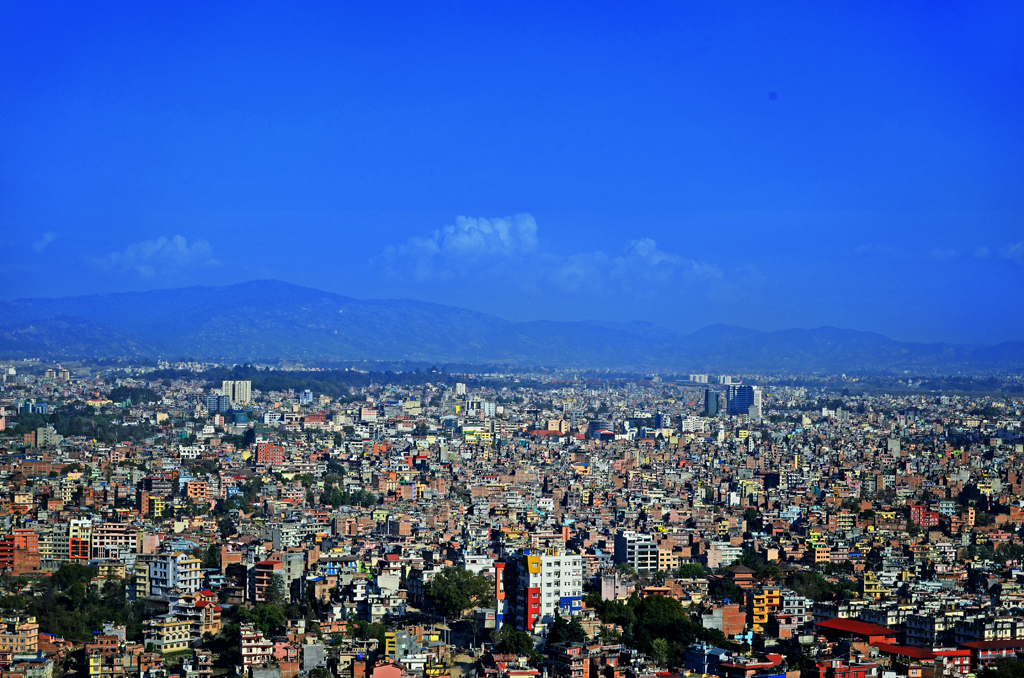
Kathmandu Valley from the hilltop.
The valley view
From the terrace you see the whole city spread across the valley floor. On clear mornings, particularly in October, November and March, you may glimpse the snow peaks beyond the hills. Bring a hat and water, because the sun is strong at midday.
The monkeys and the legend
Hundreds of rhesus monkeys live in the grounds and are regarded as sacred. A local legend says the Kathmandu Valley was once a lake, and that the bodhisattva Manjushri drained it by cutting a gorge, so the hill could rise as the site of the stupa. According to the story, the lice from his hair turned into the monkeys. Today they are bold. They steal food, bags and sunglasses, and they bite when frightened or cornered.
- Keep food, bottles and loose items out of sight.
- Do not feed, touch or stare at the monkeys, and do not run.
- If you are bitten or scratched, wash the wound well and get medical advice the same day, because rabies is a risk. Ask your hotel for a clinic.
Etiquette at the stupa
- Walk clockwise around the stupa and spin the wheels clockwise.
- Dress modestly, with shoulders and knees covered.
- Do not step over offerings, and ask before photographing monks or worshippers.
- Take rubbish with you, and keep your voice low in prayer areas.
Plan your visit
| Time of day | What to expect |
|---|---|
| Sunrise to 8 am | Cooler, quiet, with pilgrims and clearer views |
| Midday | Hot and crowded with tour groups |
| Late afternoon | Softer light and a good time for photographs |
| After dark | The stupa is lit, but the stairs are dim; go with company |
Swayambhunath fits well with other sights: see six day trips around Kathmandu and the best places to visit in Nepal. Before a trek, read what to do in Kathmandu before and after Everest Base Camp. Guides at the entrance may quote high prices, so agree a fee before you start or decline politely. If you want a guided day, see our Kathmandu day tour, which also covers Durbar Square, Boudhanath and Pashupatinath. We can customise it through the enquiry form.
FAQ
Why is Swayambhunath called the Monkey Temple? Monkeys live in its grounds and are treated as sacred, so visitors began calling it the Monkey Temple.
How many steps are there? Around 365 steps on the traditional eastern stairway.
How long does a visit take? One to two hours, longer if you shop or sit and watch the valley.
How far is it from Thamel? About 2 km, a 20 to 30 minute walk or 10 to 15 minutes by taxi.
Is there an entry fee? Foreign visitors buy a ticket at the top of the stairs. Check the current price.
Is it safe to walk there? Yes in daylight. Take care on the steps and keep valuables hidden.
Are the monkeys dangerous? They can bite and steal food. Keep your distance and do not feed them.
What is the best time to visit? Early morning, or late afternoon for photography.
Is Swayambhunath Buddhist or Hindu? Mainly Buddhist, and respected by Hindus too.
Was it damaged in the 2015 earthquake? Parts of the complex were damaged and have been repaired, so some areas may be under works.
Can I visit it before a trek? Yes. Many trekkers spend a morning here while in Kathmandu.
Which way do I walk around the stupa? Clockwise, and spin the prayer wheels clockwise too.
Plan your Nepal trip with Base Camp Hikes
See the 14-day Everest Base Camp trek. For a quote, message the team on WhatsApp or phone at +91 932 595 1234 (9 am to 7 pm IST), write to info@basecamphikes.com, or use the enquiry form.