 By
The Dudh Kunda lake trek takes you to a sacred “milk lake” below Mount Nambur in Solu, a few days from the Everest trail and a world away from its crowds. Here the reason to walk is not a summit or a record altitude. It is a place that local people hold holy, where devotees still come every August for ritual cleansing.
If you want a Himalayan trek with real culture, quiet trails and no queue of trekkers ahead of you, this is one of Nepal’s best-kept choices. Below you will find why the lake matters, how the route works, when to go and how to plan it safely.
Dudh Kunda at a glance
- Where: Solu (lower Solukhumbu), at the base of Mount Nambur, reached from the Junbesi and Ringmo side.
- Why it matters: a holy lake and mountain for Solu people, with an annual August pilgrimage.
- Access: a short flight from Kathmandu to Phaplu, or the walk-in from Jiri.
- Time: the Nepal Tourism Board gives a minimum of five days from Ringmo, plus an optional day at the lake. Add the walk-in and the flight days.
- Style: remote, quiet, with limited facilities. Plan it as a supported trek, not a lodge-to-lodge walk.
Last checked: 2 November 2026. Facts about the lake come from Nepal Tourism Board and Nepal government pages. Facilities, trail conditions and fees change, so confirm them for your dates.

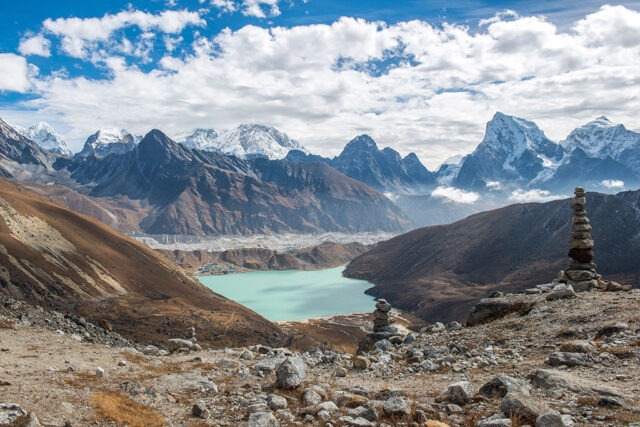
Prayer flags mark the trails of Solu and Khumbu. Photo from the wider Himalayan region, not the lake itself.
In this guide: Why it matters | Where it is | The route | Season | Where you stay | Permits | Safety | Compared | FAQ
Why Dudh Kunda matters
Most Himalayan trekking is built around a view. Dudh Kunda is built around a belief. According to the Nepal Tourism Board, people in Solu consider Mount Nambur holy and believe it is the home of the region’s protective deity. Devotees come to the lake each August for ritual cleansing, and for the rest of the year the area is almost free of visitors.
That combination is the reason to go. Here is what the lake offers that a standard Everest trek does not:
- A living pilgrimage. This is not a monument kept for visitors. People still walk here for ritual reasons, so you cross a landscape that is in active use.
- Solu culture. The route begins in Sherpa villages of lower Solukhumbu, with monasteries, apple orchards and family-run lodges, a very different feel from the busy Khumbu trail.
- Quiet. Few trekkers come, so the trail is calm and you meet more local people than other trekkers.
- A different Everest-region story. The lake is in the same wider region as Everest, yet it has nothing of the Base Camp crowd.
- Benefit to local communities. Visitors who stay in homestays and hire local guides and porters bring income to villages that see few tourists.
If you want to compare it with Nepal’s best-known holy lake trek, Gosainkunda in Langtang, see why the Langtang trek is worth doing. Dudh Kunda is quieter and more remote.
Where is Dudh Kunda?
Dudh Kunda lies in Solu, the lower part of Solukhumbu district. The lake sits at the base of Mount Nambur. The Nepal Tourism Board does not give an altitude for the lake. Figures of about 4,500 m are commonly quoted, but we could not confirm one from a government source, so treat the trek as a high-altitude walk and plan acclimatisation as for any trek above 4,000 m. For scale, the nearby viewpoint of Pikey Danda is 4,065 m and the village of Junbesi is 2,700 m, both per the Nepal Tourism Board.
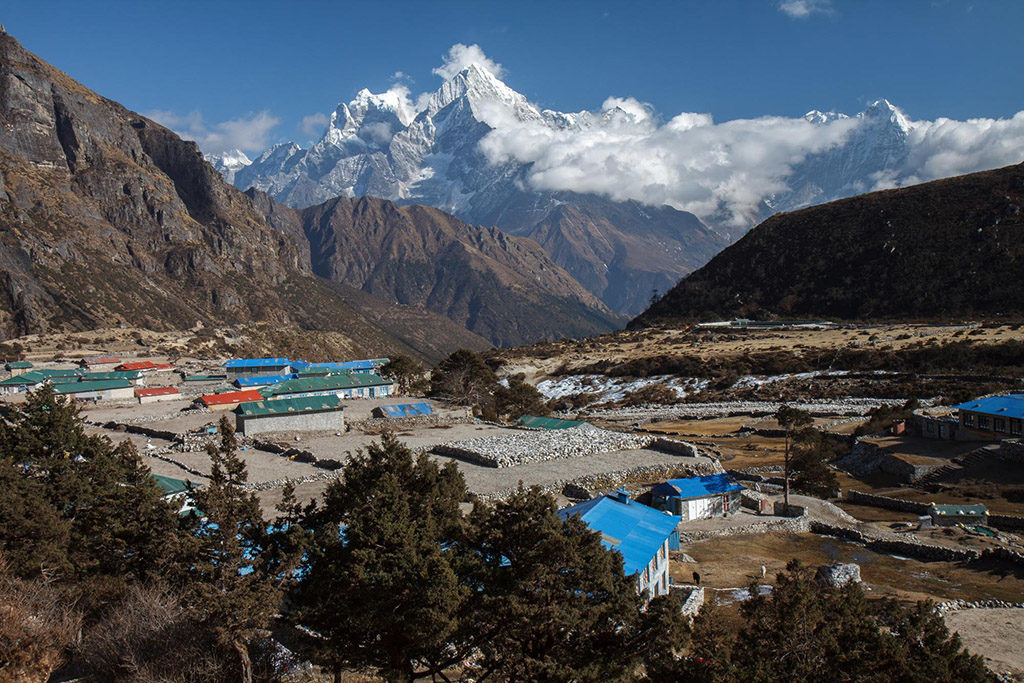
A Sherpa village in the wider Everest region. The villages of Solu look similar, with stone houses and terraced fields.
Phaplu has the nearest airstrip. Salleri, the district headquarters, is about 20 minutes on foot from Phaplu airport, according to the Nepal Tourism Board.
The Dudh Kunda trek route
The Nepal Tourism Board describes two ways in. The main trail starts at Ringmo, on the route between Junbesi and Tragsindho La. An alternative starts at Thupten Chholing, follows a remote forest and pasture ridge, and joins the main trail at Sarsarbeni. The board notes a local guide may be needed on the alternative because many guides do not know it. From Ringmo it gives a minimum of five days, plus an optional day to explore the lake.
| Part of the trip | What to expect | Reference |
|---|---|---|
| Getting to Solu | Fly Kathmandu to Phaplu (about half an hour), or walk in from Jiri (1,905 m) | Nepal Tourism Board; Jiri walk-in adds days |
| Phaplu to Junbesi | About 3.5 hours on foot from the airstrip; a pleasant Sherpa village at 2,700 m | Nepal Tourism Board |
| Junbesi area | Thuptenchholing Monastery, about an hour away, founded in the late 1960s | Nepal Tourism Board |
| Junbesi to Ringmo | Follows the Everest trail towards Tragsindho La | Nepal Tourism Board |
| Ringmo to the lake | Minimum of five days with an optional extra day at the lake | Nepal Tourism Board |
| Return | Back to Phaplu for a flight, or on to join the Everest trek | Nepal Tourism Board |
The Nepal Tourism Board also describes a Dudhkunda Cultural Trail that branches from Pikey via Thaksindu and passes Junbesi, Phaplu, Beni and Dudhkunda before returning to Salleri. It is a way to combine the lake with the Pikey viewpoint and the villages of Solu.
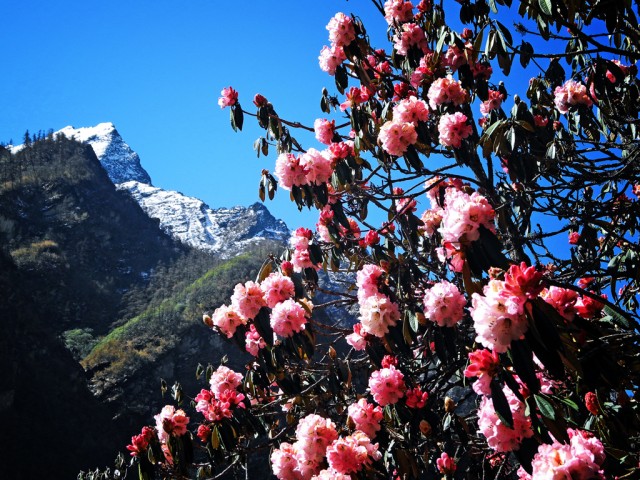
Rhododendron in bloom. Spring brings magnolia and rhododendron colour to the hills of Solu.
This is not a fixed itinerary with a published departure. We plan it as a custom trek: the exact days depend on your starting point (Phaplu or Jiri), your pace and whether you add Pikey. For a related route that follows the same Jiri trail, see our 22-day Jiri trek (Rs 120,000), and for how it compares with other Everest-area options read Everest Base Camp routes compared.
Best season for Dudh Kunda
The lake has two seasons: the pilgrimage and the trekking seasons.
| Time | What it is like | Our advice |
|---|---|---|
| August | The annual pilgrimage, when devotees come to the lake for ritual cleansing (Nepal Tourism Board). It is also the monsoon, so rain and leeches are likely. | Go for the culture only if you accept wet, muddy trails; speak to us first. |
| March to May | Spring: clearer skies and rhododendron and magnolia in bloom in Solu (Nepal Tourism Board on the blooms). | Good for views and flowers; expect cold nights near the lake. |
| October to November | Autumn: stable weather and crisp air. | Our usual recommendation for a quiet, clear-sky trek. |
| December to February | Cold, with snow possible at height. | Not recommended unless you are experienced. |
The seasonal advice in the last column is ours, based on general Himalayan conditions. For weather in the wider region see the Himalaya weather and climate guide. Another local event is the Pikey festival, held in July to honour the clan god Chyabo Pikey, according to the Nepal Tourism Board.
Where you stay
This is the part to plan carefully. An older Nepal Tourism Board description of the Solu treks says there are no tea houses on these routes, so trekkers must be fully self-sufficient. The board’s rural tourism guide, by contrast, says Sherpa families in Solu and Khumbu run teahouses and homestays, and describes comfortable family-run lodges in Junbesi. Both can be true: the villages around Junbesi have lodging, while the high ground near the lake is remote.
For that reason we plan Dudh Kunda as a supported trek, with a guide who knows the trail and arrangements for meals and shelter on the remote stretch, rather than assuming lodges at every stop. Ask us for the current plan for your dates.
Permits and entry
The Nepal Tourism Board pages we reviewed list no national park or conservation area permit for the Dudh Kunda trek. The Makalu Barun National Park permit mentioned in the same board page applies to a separate route, the Arun valley. Local rules can still apply, such as municipality registration, so we confirm what is required when we arrange your trek. Trekking in Nepal is also covered by the general rules in our permit and cost guide, which is written for the Everest region.
Safety and preparation
- Go slowly above 3,000 m. Build in rest days. See altitude sickness: symptoms and what to do.
- Remote means slower rescue. Phaplu airstrip is the nearest exit, so keep spare days and tell your guide about any symptom early.
- Insure properly. Your policy must cover trekking to at least 4,500 m, including helicopter evacuation. See trek insurance for Indian travellers.
- Train for long days. Hill walking with a loaded pack for several weeks helps most. See the training guide.
- Respect the lake. It is a sacred site. Dress modestly, do not swim, do not leave rubbish, and ask your guide before photographing rituals.
Dudh Kunda compared with other options
| Dudh Kunda | Everest Base Camp | Gosainkunda (Langtang) | |
|---|---|---|---|
| Main appeal | Sacred lake, culture, quiet | Everest views, famous destination | Holy lakes near Kathmandu |
| Trail traffic | Very low | High | Moderate, busy at festival time |
| Facilities | Limited near the lake | Lodges throughout | Lodges throughout |
| Planning | Custom, supported trek | Standard packages | Standard packages |
The traffic and facilities rows are our general assessment, not official figures.
FAQ
What is Dudh Kunda? A sacred lake in the Solu region of Nepal, at the base of Mount Nambur. Locals consider the mountain holy, and devotees visit the lake each August for ritual cleansing, according to the Nepal Tourism Board.
Where is Dudh Kunda located? In lower Solukhumbu, reached from the Junbesi and Ringmo side. The nearest airstrip is Phaplu.
Why is Dudh Kunda sacred? The Nepal Tourism Board says people in Solu believe Mount Nambur is the home of the region’s protective deity, and the lake is where devotees come for ritual cleansing.
How many days does the Dudh Kunda trek take? The Nepal Tourism Board gives a minimum of five days from Ringmo, plus an optional day at the lake. Add the days to reach Ringmo and the return, so plan for about a week and a half in total.
How high is Dudh Kunda lake? The Nepal Tourism Board gives no altitude. About 4,500 m is commonly quoted, but we could not confirm it from a government source, so plan as for a trek above 4,000 m.
When is the best time to go? October to November and March to May for clear weather. August is the pilgrimage and the monsoon.
Do I need a permit? The Nepal Tourism Board pages we reviewed list no national park permit for this trek. We confirm any local requirement when arranging it.
Are there tea houses on the trail? Villages such as Junbesi have family-run lodges, but the high ground near the lake is remote. Plan it as a supported trek.
Is Dudh Kunda suitable for a first Himalayan trek? It suits fit walkers who are comfortable with remote trails. Beginners should choose a lodge-based trek unless they travel with a guide and extra days.
Can I combine it with Pikey Peak? Yes. The Nepal Tourism Board describes a Dudhkunda Cultural Trail that links Pikey, Junbesi, Phaplu, Beni and Dudhkunda. Pikey Danda is 4,065 m.
Can I visit during the August pilgrimage? Yes, but it falls in the monsoon. Trails are wet and views are often hidden. Please respect the rituals and ask your guide before taking photographs.
How do I book the Dudh Kunda trek? Message us with your dates and group size. We arrange it as a custom trek and confirm the plan, permits and cost before you commit.
Plan a Dudh Kunda trek with Base Camp Hikes
For dates and a custom quote, message the team on WhatsApp or phone at +91 932 595 1234 (9 am to 7 pm IST), write to info@basecamphikes.com, or use the enquiry form.
Sources
- Nepal Tourism Board: Other treks around Solu (Dudh Kunda and Pikey)
- Nepal Tourism Board: Rural tourism guide (Solu homestays, Pikey, Junbesi)
- Nepal Tourism Board: Pilgrimage sites (Gosainkunda)
- Civil Aviation Authority of Nepal: Phaplu Civil Aviation Office