By
The Langtang trek is a short Himalayan trek of about 6 to 10 days that starts at Syabrubesi (about 1,400 m), a drive of around six to eight hours from Kathmandu. It offers big mountain views, comfortable teahouses, rhododendron forests, yak cheese and a monastery, with far fewer people than Everest or Annapurna. It suits first-time trekkers with a good fitness base, and anyone who wants a high-Himalaya trek without a flight to Lukla. This guide gives seven reasons to choose it, a comparison with the other classic treks, the best season and the answers to the questions trekkers ask most.
The Langtang trek at a glance
- Length: about 6 to 10 days. Our package is 10 days, with Gosaikunda added.
- Start: Syabrubesi, by road from Kathmandu. No flight needed.
- Highest point: Kyanjin Ri, about 4,773 m, for most trekkers.
- Best months: March to May and late September to November.
- Price: INR 65,000 per person on two sharing, as listed on the package page.
Last checked: 28 October 2026. Heights, drive times and prices are approximate and can change. Confirm dates, route and conditions with your operator before you book.
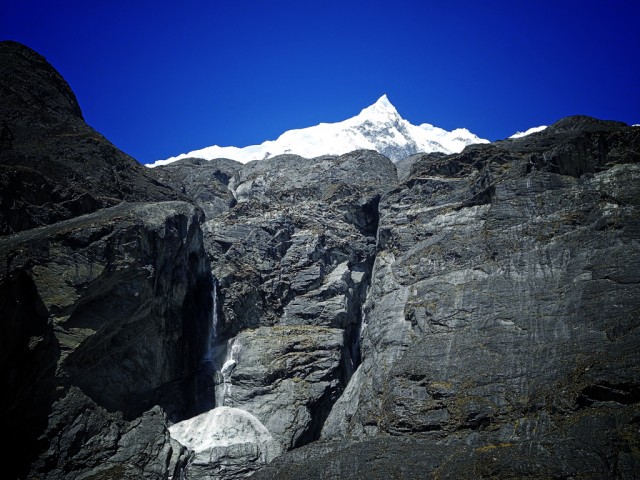
Waterfalls along the Langtang trail.
In this guide: 7 reasons | Route | Compare treks | Best time | Is it for you? | FAQ
7 reasons to choose the Langtang trek
1. Big mountain views
Langtang Lirung (7,227 m) is not an 8,000 m peak, but it is a huge mountain, and it comes into view after the steep climb to Ghoratabela (about 2,970 m), where the river canyon opens into a broad, glacier-carved valley. Naya Kanga (about 5,844 m) stands to the south, and as you go on to Kyanjin Gompa you see more of the Kangja Himal. From the upper valley, Langshisha Ri (about 6,400 m) comes into view. It is a wide-angle mountain walk, with fewer distractions than the better-known routes.
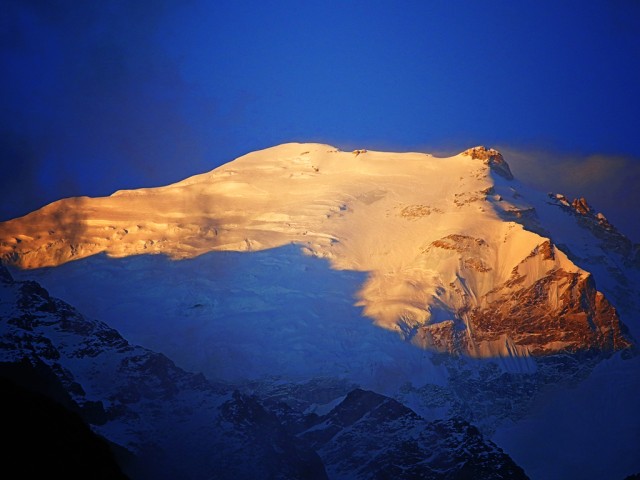
Langtang Lirung above the valley.
2. Friendly locals and comfortable teahouses
Lodges are spaced every few hours all the way up to Kyanjin Gompa, so you do not need to camp. Rooms are simple and clean, and blankets are usually available, though a sleeping bag is still a good idea in the cold months. The local people are welcoming, and a small gift for children, such as a pencil, is a kinder choice than sweets. Mobile coverage and internet are patchy above Syabrubesi, so tell your family beforehand and ask your lodge about calls. For more on where you will sleep and eat, see the Langtang teahouses guide.
3. Climbing Kyanjin Ri or Tsergo Ri
These two hills above Kyanjin Gompa are small by Himalayan standards but make challenging, rewarding day hikes. Kyanjin Ri (about 4,773 m) is the easier one, at around 3 to 5 hours return. Tsergo Ri (about 4,984 m) is a few hundred metres higher and takes most of the day. Both give wide views of Langtang Lirung, Yubra, Changbu and the glacier between them. Read the Kyanjin Ri guide for the details.
4. Local food worth trying
If you get tired of dal bhat, pasta and boiled potatoes, try the local specialities. Fresh yak curd is sold in most villages above Ghoratabela. Kyanjin Gompa has a small cheese factory where you can see how yak cheese is made and buy some to take home. Sea buckthorn juice, made from berries gathered in autumn, is a tangy drink often described as rich in vitamin C. On the road to Syabrubesi, a private vehicle can sometimes stop at a trout farm. Ask your guide, and remember to treat your drinking water.
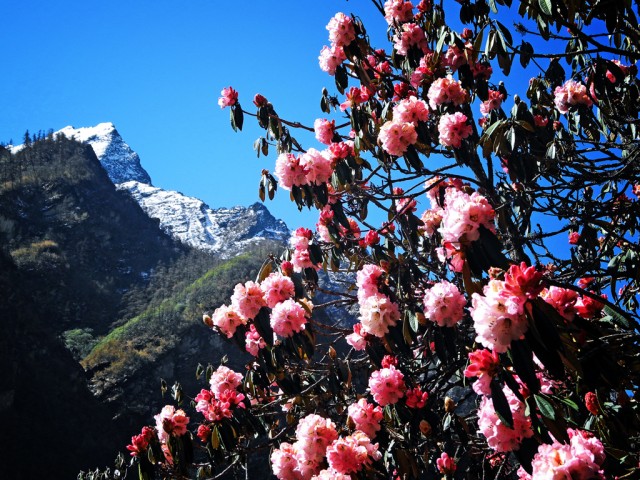
Rhododendron in bloom in April.
5. Rhododendron forests in bloom
The lower valley runs through oak and rhododendron forest. Rhododendrons start to flower in late March, and different species bloom through to July. The red-flowered Lali Gurans, Nepal’s national flower, blooms most heavily in April and May, and red blossom against snow-white peaks is a highlight of the spring season. If flowers matter to you, plan for April and early May.
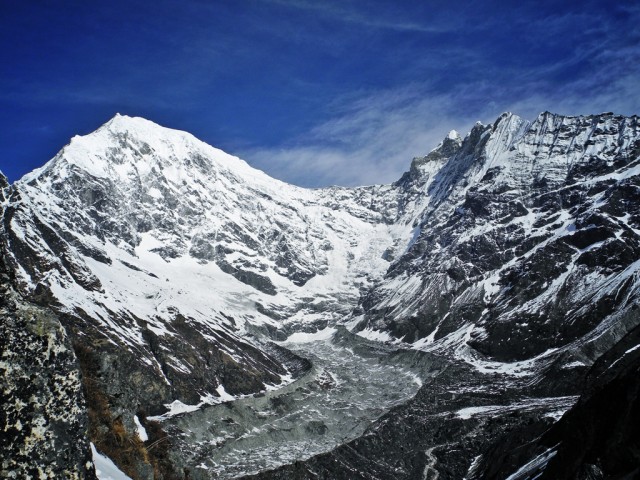
A peak in the upper Langtang region.
6. Day hikes around Kyanjin Gompa
Kyanjin Gompa is a good base for two or three nights. Besides Kyanjin Ri and Tsergo Ri, you can walk further up the valley to Numthang, with views of the end of the Langtang glacier and Langshisha Ri. Each day out improves acclimatisation and shows a different side of the valley. The upper Langtang day hikes guide compares the four best options.
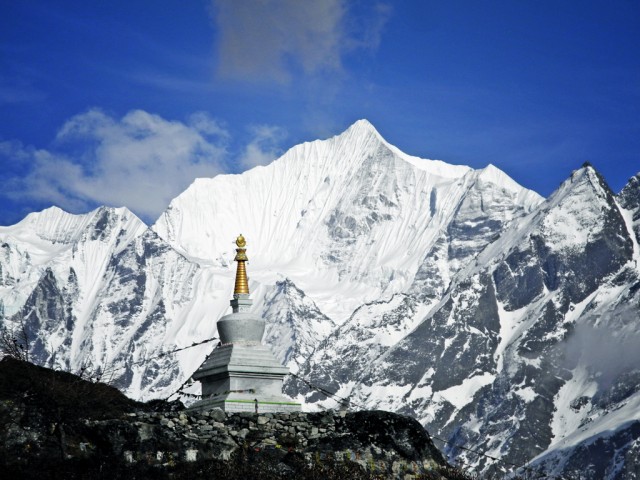
Langshisha Ri in the upper valley.
7. The monastery at Kyanjin Gompa
The old stone gompa sits just outside the main group of teahouses and draws on Tibetan Buddhism. It is several centuries old, and the interior is decorated with finely painted murals. Visit quietly, dress modestly, and leave a small donation to help with upkeep. Together with the cheese factory, it is a cultural highlight of the stay.
What is the route like?
The trek starts with a long, bumpy drive from Kathmandu to Syabrubesi, through terraced farmland and hill villages. From there the trail follows the Langtang Khola upstream through forest for the first days, climbs steeply to Ghoratabela, and then opens into the wide upper valley. It takes about two more days to reach Kyanjin Gompa, the last teahouse settlement, where most itineraries add one or two rest days. The valley was badly damaged in the 2015 earthquake and has since been rebuilt, and trekking has resumed. The route to follow is on the package page: Langtang and Gosaikunda, 10 days.
How does Langtang compare with Everest and Annapurna?
| Langtang | Everest Base Camp | Annapurna Base Camp | |
|---|---|---|---|
| Start | Syabrubesi, by road | Lukla, by flight | Near Pokhara, by road |
| Typical length | 6 to 10 days | 12 to 14 days | 7 to 10 days |
| Highest point | Kyanjin Ri, about 4,773 m | Kala Patthar, about 5,545 m | Annapurna Base Camp, about 4,130 m |
| Crowds | Quieter | Busiest | Busy |
| Flight risk | None | Lukla delays possible | None |
| Best for | Views without a flight or large crowds | The famous goal | A gentler first trek |
For comparison, read the Everest Base Camp guide and Everest vs Annapurna Base Camp.
When is the best time?
| Months | Conditions |
|---|---|
| March to May | Clear views, rhododendron bloom, warmer days. Busy in April |
| June to early September | Monsoon: rain, leeches in the lower valley, cloudy views |
| Late September to November | Best views, stable weather, cold nights up high |
| December to February | Cold, with snow on the upper valley. Quiet and clear on good days |
For the broader picture, read the month-by-month guide for the neighbouring Everest region.
Is the Langtang trek right for you?
| If you… | Then |
|---|---|
| Want a short trek close to Kathmandu | Langtang suits you |
| Want to avoid flights and big crowds | Langtang suits you |
| Want the highest, most famous goal | Choose the Everest Base Camp trek |
| Have never trekked at altitude | Langtang is a good start, but train first and go slowly |
| Want something gentler | Choose Poon Hill or Annapurna Base Camp |
Langtang reaches about 4,800 m, so altitude sickness is a real risk. Read the altitude sickness guide, follow the training plan, and check that your insurance covers trekking to that height.
FAQ
How long is the Langtang trek? About 6 to 10 days. Our package is 10 days, with Gosaikunda added.
How do I get to Langtang? By road from Kathmandu to Syabrubesi, a drive of around six to eight hours.
How high is the Langtang trek? Most trekkers reach Kyanjin Ri at about 4,773 m. Tsergo Ri is about 4,984 m.
Is the Langtang trek hard? It is moderate, with steady climbing and altitude. It is easier than Everest Base Camp and suits first-time trekkers with good fitness.
When is the best time for the Langtang trek? March to May and late September to November.
Do I need a guide for Langtang? A guide is recommended for safety, weather and route decisions, especially on the day hikes.
Is Langtang crowded? No. It sees far fewer trekkers than Everest or Annapurna.
Are there teahouses all the way? Yes. Lodges are spaced every few hours up to Kyanjin Gompa.
Is there internet in Langtang? Coverage is patchy above Syabrubesi. Ask your lodge about calls and wifi.
Is Langtang safe after the 2015 earthquake? The valley has been rebuilt and trekking has resumed. Check current conditions with your operator.
What food is special in Langtang? Yak curd, yak cheese and sea buckthorn juice, as well as the usual dal bhat.
How much does the Langtang trek cost? The package page lists INR 65,000 per person on two sharing for 10 days. Prices can change, so confirm before you book.
Plan the Langtang trek with Base Camp Hikes
Start with the 10-day Langtang and Gosaikunda trek. For dates and a quote, message the team on WhatsApp or phone at +91 932 595 1234 (9 am to 7 pm IST), write to info@basecamphikes.com, or use the enquiry form.
Sources
- Nepal Tourism Board: safety in the mountains