By
On a Himalayan trek you can stay safely hydrated by treating tap and stream water yourself or by buying boiled water at the teahouse. The four ways to treat water are boiling, a filter, chemical tablets and a UV pen. Boiling is the most reliable, tablets are the lightest, and many trekkers combine two methods. Aim to drink about 3 to 4 litres a day at altitude. This guide compares the methods, explains how to use each one properly in cold water, and covers the habits that keep you hydrated on the trail and at night.
The short answer
- Drink: about 3 to 4 litres a day above 3,000 m, and more if you take Diamox or sweat heavily.
- Safest: boiled water from the teahouse, or water you boil yourself for at least 3 minutes above 2,000 m.
- Lightest: chlorine dioxide tablets, with extra waiting time in cold water.
- Bring: two reusable bottles. Single-use plastic bottles are no longer sold in the Khumbu.
- Check: pale yellow urine is your best simple sign of good hydration.
Last checked: 28 October 2026. Product instructions and local rules change, so follow the label on your tablets, filter or UV pen, and ask your guide on the day.
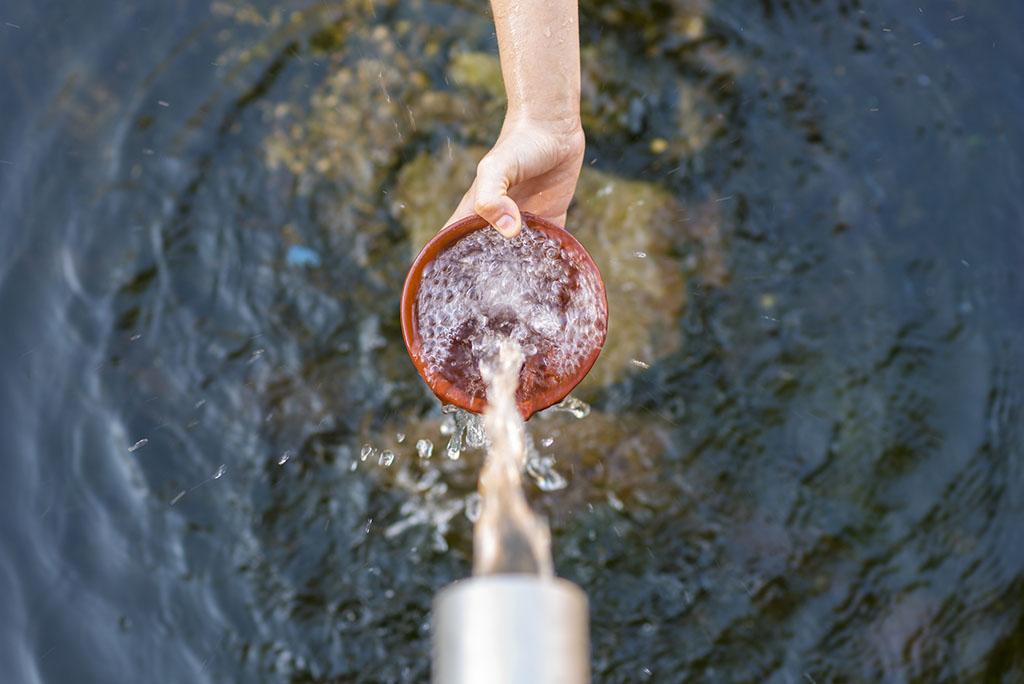
Fresh water from a village spout. Treat it before you drink it.
In this guide: Why hydrate | Methods compared | Boiling | Filters | Tablets | UV pen | Trail habits | Everest and Annapurna | FAQ
Why does hydration matter so much at altitude?
The air is dry and thin, and you breathe faster, so you lose water through your breath without noticing. Cold, wind and long walking days add to that. Dehydration also feels like altitude sickness, with headache, tiredness and nausea, so it is easy to confuse the two. Drinking enough does not prevent altitude sickness, but being dehydrated makes everything harder. A simple check is your urine: pale yellow is good, dark yellow means drink more. If a headache gets worse despite drinking, tell your guide and read the altitude sickness guide.
A common target is 3 to 4 litres a day. Spread it out: sip regularly while you walk, drink soup and tea at lodges, and drink a glass before bed. Do not force huge amounts at once.
How do the four methods compare?
| Method | How it works | Time | Removes | Watch out for |
|---|---|---|---|---|
| Boiling | Heat kills germs | 3 minutes at a rolling boil above 2,000 m | Bacteria, viruses, protozoa | Fuel and time. Teahouses charge for boiled water |
| Filter (hollow-fibre or straw) | Fine membrane traps germs | Immediate | Bacteria and protozoa. Most do not stop viruses | Can freeze and crack. Check the rating on your product |
| Chlorine dioxide tablets | Chemical disinfection | 30 minutes, longer in cold water. Up to 4 hours for some parasites | Bacteria, viruses, many protozoa | Cold water slows the reaction. Taste |
| UV pen | UV light damages germs’ DNA | About 90 seconds per litre | Bacteria, viruses, protozoa | Batteries in the cold. Cloudy water needs pre-filtering |
Whichever you choose, treat water from taps, hoses, springs and streams. The water often looks clean and cold, but looks tell you nothing about germs, especially below villages and yak pastures.
Boiling
Boiling is the most reliable method, and the US Centers for Disease Control and Prevention advise it for untreated water. Bring water to a full rolling boil and keep it boiling for 1 minute at low altitude. Above about 2,000 m, boil for 3 minutes, because water boils at a lower temperature as you climb. Most of the Himalayan trekking above Lukla is higher than that, so use the 3-minute rule.
On the trail, boiled water is what the teahouses serve, usually by the cup, flask or litre. Prices go up with altitude, because fuel has to be carried in. Ask the price before you order, and refill your bottles from the flask. Tap water in the village is free but not safe unless you treat it yourself.
Filters and filter straws
A reusable bottle with a built-in filter or a filter straw is light and easy. Most hollow-fibre filters remove bacteria and protozoa such as Giardia, which are the common causes of stomach problems. They generally do not remove viruses, so follow the product rating and add a chemical tablet or UV step if you want extra protection. Filters can crack if the water inside them freezes, so keep them in your jacket or sleeping bag at night. Do not rely on a filter with a pore size that is too coarse.
Tablets: chlorine dioxide, chlorine and iodine
Tablets are the lightest option and a good backup for any method. Chlorine dioxide tablets are generally the best choice for trekking, because they are effective against bacteria and viruses and, with enough time, many parasites. Cold water slows the reaction, so allow extra time and keep the bottle somewhere warm. If the water is cloudy, filter it or let it settle first, because dirt reduces the effect of the tablet. Follow the label for dose and waiting time.
Iodine tablets work less well on some parasites and leave a stronger taste, and they are not suitable for everyone, including people with thyroid conditions and pregnant women. If you have a health condition, check with your doctor before you rely on iodine. For a trek of a few weeks, chlorine dioxide is the simpler choice.
Taste: chemical treatment can leave an aftertaste. Electrolyte or flavour packets mask it and help replace salts lost through sweat. A common approach is to alternate one plain bottle with one flavoured one.
UV pen (Steripen)
A UV pen treats about a litre in around 90 seconds and has no taste, which is why many trekkers like it. It works best in clear water, so pre-filter cloudy water through a cloth or filter. The weak spot is the battery. Cold drains batteries quickly, so keep the pen and spare batteries warm against your body, and carry extra or a power bank. Charging along the trail usually costs money, and it takes time at lodges that run on solar power. Many trekkers carry a UV pen and tablets together, so a battery failure does not leave them stuck.
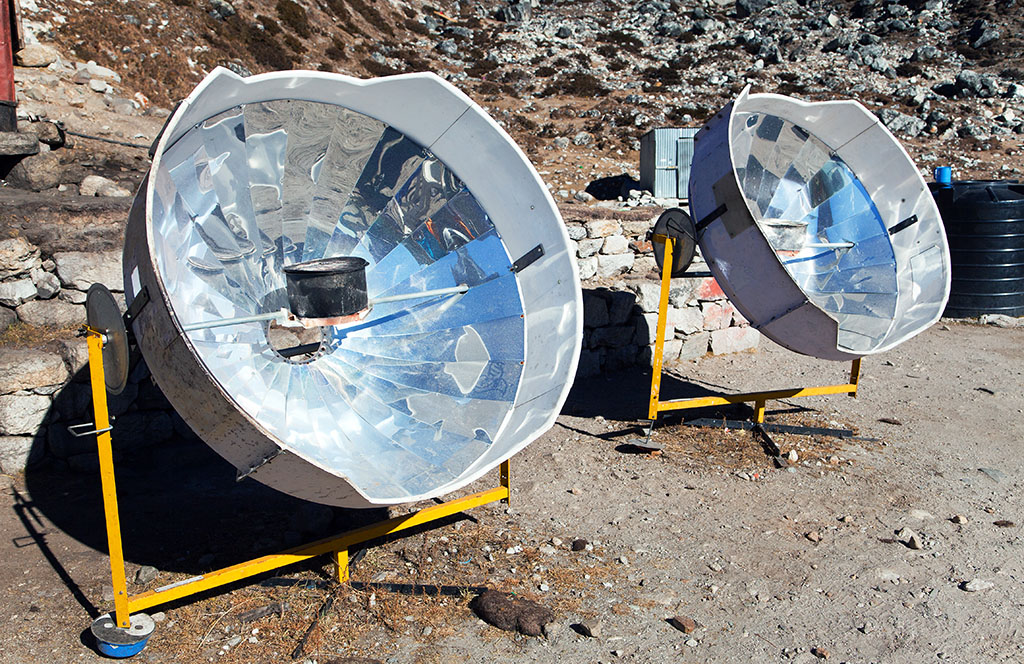
Water boiled using eco and solar methods, which reduces fuel use.
What trail habits keep you hydrated?
- Two bottles: treat one while you drink the other, then swap. This stops you running dry while a tablet works.
- Wide-mouth bottles: choose a bottle that tolerates boiling water. A tight lid helps if you use it as a hot-water bottle.
- Soup and tea: ordering plenty counts towards your fluid. Garlic soup is a Khumbu favourite and is traditionally believed to help with acclimatisation.
- Caffeine and Diamox: both make you urinate more, so drink a bit extra. Ask your doctor about Diamox before you go.
- Alcohol: avoid it on the way up, since it dehydrates and can disturb sleep and acclimatisation.
- Night-time: fill a bottle with boiled water, close it tightly, and put it in your sleeping bag to warm your feet. Wrap it in a sock to avoid burns.
- Refill points: water is usually available every two to three hours on the trail. Fill up at lodges and ask your guide about the next stop.
For the rest of your kit, see the packing checklist and the 32 trek tips.
How does water differ in the Everest and Annapurna regions?
| Region | What to expect |
|---|---|
| Everest (Khumbu) | Single-use plastic bottles are banned, so bring reusable bottles. Teahouses sell boiled water, and some villages have refill points. Treat any tap or stream water. |
| Annapurna | Plastic bottles are not sold along the main routes, and safe drinking-water stations are available in the busier areas. Check what is open when you go, and treat other water. |
Rules and facilities change, so confirm the current situation with your guide before you start. For the Annapurna side, read the Annapurna Circuit guide. For the Everest side, start with the Everest Base Camp guide and keep your insurance in order.
FAQ
How much water should I drink while trekking in Nepal? A common target is 3 to 4 litres a day at altitude. Sip steadily and check that your urine is pale yellow.
Is tap water safe to drink on the Everest trek? No. Taps and hoses give free water, but it is not safe unless you treat it yourself.
How long should I boil water above 2,000 m? Boil for at least 3 minutes at a rolling boil, because water boils at a lower temperature at altitude.
What is the best way to purify water on a trek? Boiling is the most reliable. Chlorine dioxide tablets are the lightest. Many trekkers combine a filter or UV pen with tablets.
Do water filters remove viruses? Most hollow-fibre filters remove bacteria and protozoa but not viruses. Check the product rating.
How long do chlorine dioxide tablets take to work? The label gives the time. About 30 minutes is typical, and cold water slows the reaction, so allow longer.
Can I use iodine tablets? They work, but taste is stronger and they are not suitable for everyone, including people with thyroid conditions and pregnant women. Ask your doctor.
Does a UV pen work in cold weather? Yes, but the batteries drain fast in the cold. Keep them warm and carry spares.
Can I buy bottled water on the Everest trek? Single-use plastic bottles are banned in the Khumbu, so bring reusable bottles and treat water.
Is the water safe in the Annapurna region? Safe drinking-water stations exist in busier areas, but treat water elsewhere.
Does coffee or tea dehydrate me at altitude? They make you urinate more, so drink a little extra. Soup and tea still count towards your fluid.
Can I put boiling water in my bottle? Only in a bottle rated for it. Close the lid tightly and wrap it in a sock if you use it in your sleeping bag.
Plan your trek with Base Camp Hikes
Start with the Everest Base Camp trek. For dates and a quote, message the team on WhatsApp or phone at +91 932 595 1234 (9 am to 7 pm IST), write to info@basecamphikes.com, or use the enquiry form.
Sources
- US Centers for Disease Control and Prevention: boil water advisory
- Nepal Tourism Board: safety in the mountains