By
The Himalayas have no single climate. The best time to visit depends on which side of the range you are on: the Nepal and Indian Himalayas are best in spring (March to May) and autumn (late September to November), while the dry north side, such as Ladakh, Mustang and Tibet, is best from June to September. The reason is the Indian summer monsoon, which soaks the southern slopes and mostly misses the rain shadow behind the high peaks. This guide explains how the monsoon works, then gives the best months region by region, with a Nepal month-by-month view.
Himalayan weather in one minute
- Nepal, Sikkim, Bhutan, Himachal, Uttarakhand: March to May and October to November.
- Ladakh, Lahaul and Spiti, Upper Mustang, Dolpo, Tibet: June to September, when the monsoon barely reaches them.
- Monsoon in Nepal: normally arrives about 13 June and withdraws about 2 October (Department of Hydrology and Meteorology).
- Winter: cold and clear, with deep snow on high passes.
- Rule of thumb: the farther east, the earlier and wetter the monsoon.
Last checked: 29 October 2026. Weather varies from year to year, so check a mountain forecast before you leave.
In this guide: How the monsoon works | Best time by region | Region notes | Nepal by month | Why the Himalayas shape the monsoon | FAQ
How the monsoon works
A monsoon is a wind system that reverses with the seasons. In summer the land heats faster than the ocean, warm air rises over South Asia, and moist air is pulled in from the Bay of Bengal and the Arabian Sea. In winter the land cools, the flow reverses, and dry air sinks over the mountains. The summer flow reaches the eastern Himalayas first and stays longest, so the east is wetter and its rains start earlier. The west gets the monsoon later and in smaller amounts. For Nepal, the Department of Hydrology and Meteorology gives a normal onset of 13 June and a normal withdrawal of 2 October.
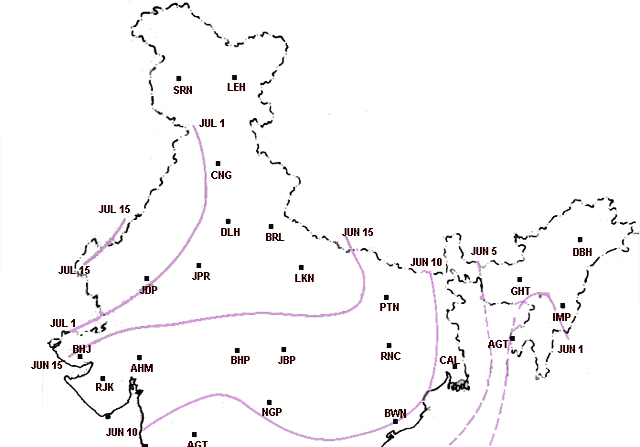
Average dates of monsoon onset across India. The rains arrive from the south and east.
Best time to visit the Himalayas by region
| Region | Best months | Why |
|---|---|---|
| Nepal (Everest, Annapurna, Langtang) | Mar to May, Oct to Nov | Stable, clear weather before and after the monsoon |
| Upper Mustang and Dolpo (Nepal) | Jun to Sep | Rain shadow, so they stay fairly dry in summer |
| Sikkim | Mar to May, Oct to Nov | Heavy monsoon from late May |
| Bhutan | Oct to mid Nov; Mar to Apr | Wet summers; autumn is clearest |
| Himachal Pradesh and Uttarakhand | Mar to May, Oct to Nov | Wettest from July to early September |
| Lahaul, Spiti and Ladakh | Jun to Sep | Cold desert behind the rain shadow |
| Kashmir | Mid Jun to Sep | Snow blocks high routes in winter |
| Tibet | Apr to early Oct | Dry in summer, cold in winter |
| Arunachal Pradesh | Apr, Oct | Very heavy rain from May to September |
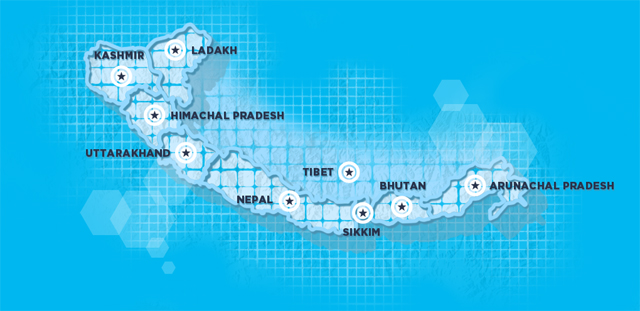
The Himalayan arc runs from Pakistan in the west to Arunachal Pradesh and Bhutan in the east.
Region notes
Nepal
Trekking seasons are spring and autumn. The Everest and Annapurna areas are high enough that winter snow is often light below the passes, so treks are possible from December to February with warm gear. The north side (Mustang, Dolpo, Nar Phu) lies in the rain shadow and is a sound choice if you must trek in July or August. See Everest Base Camp weather and the month-by-month season review.
Sikkim and Bhutan
These sit where moisture from the Bay of Bengal meets the mountains head on. The rains start by late May and are heavy. Spring brings rhododendron bloom and autumn gives the clearest views. High trails close once winter snow arrives.
Himachal Pradesh and Uttarakhand
The southern slopes take the monsoon from July to early September. Heavy snow arrives by late November and high routes open again around late March. Lahaul and Spiti, north of the main range, behave like Ladakh instead.
Ladakh and Kashmir
Ladakh is a cold desert behind the range. Summers are warm by day, winters are severe, and some high passes stay snowbound into early July. Kashmir gets only a light monsoon, but winter snow stops most trekking.
Tibet
Tibet lies in the rain shadow. Summers are dry, winters are cold with little snow, and April to early October is the usual visiting window.
Nepal month by month
| Months | Weather | Trekking |
|---|---|---|
| Dec to Feb | Cold, clear and dry; deep cold at altitude | Possible on lower routes; high passes may be closed |
| Mar to May | Warming, mostly clear; afternoon haze or cloud later | Prime season; rhododendrons bloom |
| Jun to Sep | Monsoon rain, cloud and leeches in the hills | Best in the rain shadow regions only |
| Oct to Nov | Clear, settled, cool at night | Peak season for most routes |
For a recent snapshot, read Everest trek conditions in October 2026. If you want to see the Everest region in the best window, see our 14-day Everest Base Camp trek, or the quieter Upper Mustang trek for a summer option.
Why the Himalayas shape the monsoon
The mountains and the monsoon act on each other. The range blocks warm, moist air from India from reaching the cold, dry air over Tibet, and the mixing at that boundary adds to the rain on the southern side. The high Tibetan Plateau also heats strongly in summer, which helps draw moist air northward. In winter the plateau cools and sends cold dense air outward, which shuts the monsoon off. Geologists link the long uplift of the range and plateau to a stronger monsoon over South Asia.
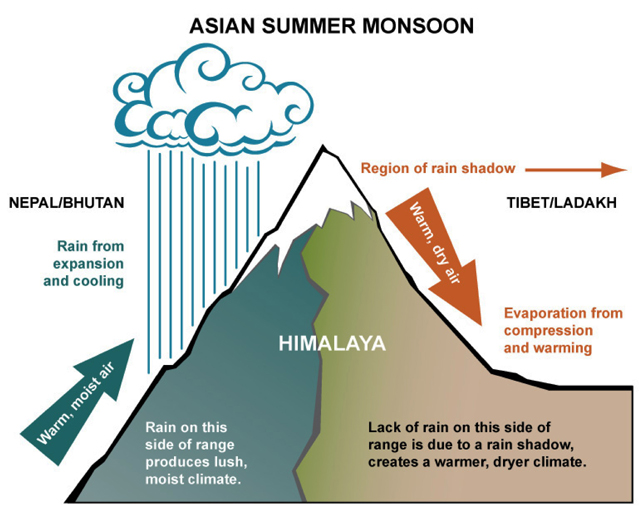
Cross section: moist air rises and rains out on the south slope, leaving a dry rain shadow on the north side.
FAQ
Why is the Himalayan climate so different from region to region? The monsoon falls hard on the southern and eastern slopes, while the north side sits in a rain shadow.
When does the monsoon reach Nepal? Normally around 13 June, and it withdraws around 2 October, according to the Department of Hydrology and Meteorology.
What is the best time for the Himalayas in general? March to May and October to November for the southern Himalayas; June to September for the dry north.
Can I trek in Nepal in July and August? Yes, in rain shadow areas such as Upper Mustang and Dolpo. Elsewhere expect rain, cloud and landslide risk.
Is winter trekking possible in Nepal? On lower routes, yes. Nights are cold, passes may be snowbound, and some lodges close.
Which Himalayan region gets the most rain? The eastern end, including Sikkim, Bhutan and Arunachal Pradesh.
Why is Ladakh dry? The main range blocks most monsoon moisture, leaving a cold desert.
When is the best view of Everest? Usually October to November and April to May, when skies are clearest.
Does the monsoon end on the same date every year? No. It varies, and some years it arrives or leaves late.
What is a rain shadow? The dry zone on the lee side of a mountain range, where air has already lost its moisture on the windward slope.
Which is better, spring or autumn? Autumn is steadier and clearer; spring is warmer with flowers but can be hazier.
Where can I check the forecast? Nepal publishes forecasts through the Department of Hydrology and Meteorology; India through the India Meteorological Department.
Plan your trek with Base Camp Hikes
Tell us your dates and we will suggest the right region for the season. Message the team on WhatsApp or phone at +91 932 595 1234 (9 am to 7 pm IST), write to info@basecamphikes.com, or use the enquiry form.