 By
Everest Base Camp is not only for young, fit adults. Families bring children, parents in their sixties and seventies take the walk, and a growing number of women arrive alone to join a group. The mountain does not change for any of them. The altitude rules are the same, and the trek is strenuous, so the question is not whether these travellers are allowed, but which plan makes it safe. This guide covers children, seniors and first-time solo women in one place: what the Nepal Tourism Board (NTB) and medical guidance say, what changes in the plan, and what to ask an operator before booking.
The short answer
- Altitude affects everyone alike. The CDC says children are as susceptible to altitude illness as adults, so no age group is immune and no age group is barred.
- Children: no official minimum age was found. Children under 18 must be accompanied by a parent or guardian. Decide with a paediatrician, and watch for symptoms the child may not be able to describe.
- Seniors: there is no upper age limit on the Base Camp Hikes trips for healthy, willing trekkers. Heart or lung conditions need a doctor who knows altitude before booking.
- Solo women: NTB advises not trekking alone, and says trekking with a guide from a registered agency is the best security. A group departure with a guide is the usual plan.
- For all three: keep the rest days, keep spare days at the end, and carry insurance with helicopter evacuation.
Last checked: 26 October 2026. Fees, rules and medical advice change, so confirm them before you travel.
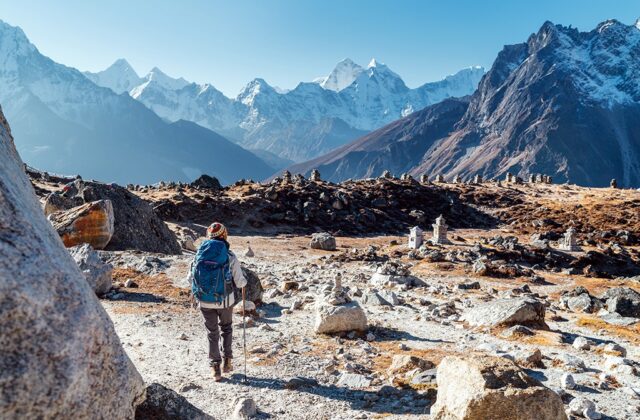
The trail is the same for everyone. The plan around it is what changes.
In this guide: Who can go | Altitude rules for all | Children | Seniors | Solo women | Choosing a plan | Insurance and medical forms | Questions to ask | Emergency contacts | FAQ
Who can go?
A quick view of each traveller type.
| Traveller | Main question | Main safeguard |
|---|---|---|
| Children | Can the child walk 6 to 9 hours a day for days, and report how they feel? | A paediatrician’s view, a slower plan and a parent or guardian on the trek |
| Seniors | Do heart, lung, blood pressure or joints limit the walk or the altitude? | A doctor familiar with altitude, honest medical disclosure and spare days |
| First-time solo women | Is the support around me safe and clear? | A registered agency, a guide and a group departure |
The Base Camp Hikes terms expect trekkers to be fit for walking of 6 to 9 hours a day, to disclose any condition, medication or past altitude problem before departure, and to sign a medical and fitness form. The guide can halt a trekker or send them down, and that decision is final. That applies to every traveller type below.
The altitude rules that apply to everyone
NTB’s mountain safety page sets the rules. Above 2,500 m, sleeping altitude should not rise by more than 300 to 500 m a day from the previous night, with a rest day after every 1,000 m gained. Unexplained illness above 2,500 m should be treated as possible altitude sickness until proven otherwise. Early signs are headache, loss of appetite, nausea, tiredness on little effort and dizziness. If symptoms get worse, with severe headache, vomiting, unsteady walking, confusion or breathlessness at rest, the advice is to descend, and to descend with a companion.
Sleeping altitudes on the standard 14-day schedule.
| Night | Sleeping altitude | Profile |
|---|---|---|
| Phakding | 2,652 m |
|
| Namche Bazaar (two nights) | 3,440 m |
|
| Deboche | 3,700 m |
|
| Dingboche (two nights) | 4,400 m |
|
| Lobuche | 4,900 m |
|
| Gorak Shep | 5,180 m |
|
Two nights each in Namche Bazaar and Dingboche are the built-in rest days. Anyone who needs a gentler pace should add days, not remove them. The acclimatisation guide and the altitude sickness guide explain the signs in detail.
Everest Base Camp with children
Is there a minimum age? No official minimum age was found on the NTB pages checked. The Base Camp Hikes site says children as young as seven have completed the trek, and that anyone under 18 must be accompanied by a parent or guardian. Treat those as facts, not a recommendation. Whether a child should go is a decision for the family and a paediatrician.
What medical guidance says. The US Centers for Disease Control and Prevention (CDC) says children are as susceptible to altitude illness as adults. Children who cannot yet talk may show loss of appetite, irritability and paleness instead of saying they feel unwell, so an adult has to watch for those signs. NTB lists children under 10 as free for Sagarmatha National Park entry.
What to look at before taking a child.
| Check | Why it matters |
|---|---|
| Can the child walk several hours a day, on consecutive days? | The standard schedule has 9 walking days of roughly 5 to 7 hours each |
| Can the child say clearly how they feel? | Young children may not report headache, nausea or dizziness |
| Is a parent or guardian on the trek? | Required for anyone under 18 |
| Does the child have a health condition or take regular medication? | Ask the paediatrician about altitude before booking |
| Is there time for extra rest days and spare days? | Children need more flexibility, and a delayed Lukla flight is hard on a tired child |
| Will the child eat the teahouse menu? | Loss of appetite is an early altitude sign, so know the child’s normal eating |
Practical points for families: set a stop rule in advance, so any parent can call a halt or a descent without argument. Keep days short where the schedule allows, carry snacks the child likes, and keep the child’s warm layers in the daypack, not the duffel that travels separately with the porter. Share the child’s age and any medical history with the operator at booking. The guide on trekking with children has more.
Everest Base Camp for seniors and older parents
The Base Camp Hikes site states there is no upper age limit for healthy, willing participants. Age on its own is a poor guide. The CDC says people over 50 have slightly less risk of altitude illness, while it names heart disease, chronic lung disease and sleep apnoea as conditions that need a talk with a physician familiar with high-altitude medicine, even when the condition is well controlled. It sorts some conditions as needing caution and a few, such as severe lung disease and decompensated heart failure, as contraindications.
Medical points to settle before booking.
| Point | What to do |
|---|---|
| Heart, lung, blood-pressure or sleep-apnoea history | See a doctor who knows altitude. Get the advice in writing. |
| Regular medication | Take it to the doctor visit and disclose it on the trek’s medical form |
| Past altitude problems | Tell the operator. Past response is a useful guide if the altitude and pace are similar. |
| Joints, knees, balance | Train on stairs and long walks with a loaded daypack, and ask the team about a porter and trekking poles |
| Preventive medicines for altitude | NTB’s page mentions a medicine option. Decide with your own doctor, not from a website. |
| Stamina on long days | The expected walking is 6 to 9 hours a day, so build up gradually. See the training guide. |
Options that help older trekkers: extra spare days at the end, a helicopter return instead of the three-day walk down (see the helicopter return guide), and a shorter, lower trek such as the 7-day Everest View trek for those who want the Khumbu without the full climb. Read the guide for trekking with parents and seniors and the horse option guide. A horse or a helicopter does not replace acclimatisation, so the sleeping-altitude rules still apply.

Namche Bazaar, the first big rest stop. Two nights here are part of every sensible schedule.
First-time solo woman on the trek
NTB says it is safe to walk around the city until late evening, advises against trekking alone, and states that “trekking with a guide from a registered agency is the best security.” NTB’s pages checked carry no safety advice written specifically for women, so the points below come from NTB’s general advice and from how the trek is run.
What supports a solo woman on the trek.
| Area | What applies |
|---|---|
| Registered agency and guide | NTB advises trekking with a guide from a registered agency. Base Camp Hikes guides are certified by the Trekking Agencies’ Association of Nepal (TAAN), hold wilderness first aid certification and check every guest’s oxygen level daily. |
| Group departure | A solo traveller can join a fixed group departure. A Solo Support Fee of Rs 1,500 per day applies only if you are the only person on a departure. |
| Rooms | A solo traveller has their own room in Kathmandu and shares on the trek, with a private room on request where available. Twin-share may be unavoidable at high places such as Lobuche and Gorak Shep. |
| Tourist Police | The hotline is 1144. There are Tourist Police posts at Lukla and, temporarily, Namche Bazar, and the unit works round the clock in the Kathmandu Valley and Pokhara. |
| Documents | Carry certified copies of your documents and keep the originals safe, as the Tourist Police advise. |
| Transport and money | Use authorised tourist vehicles and note the vehicle number. Use government-registered travel, trekking and lodging providers. |
Practical habits for a first solo trek: join a group departure, share your itinerary and the operator’s phone number with someone at home, keep the first-night briefing and ask the guide any question you have, and tell the guide early if anything feels wrong. Trust the descent rule on altitude as you would on any trek. The solo women safety guide and the solo, guided or group guide go further.
Choosing the right plan
Match the traveller to the plan.
| Situation | A sensible plan |
|---|---|
| Family with a child who walks well | The standard 14-day trek with two spare days, and a clear stop rule |
| Family unsure about the full trek | A shorter trek in the Khumbu, or a lower trek elsewhere, and try the longer one later |
| Fit senior with no heart or lung issue | The standard trek, extra spare days, and a helicopter return as an option |
| Senior with a medical condition | Doctor’s written clearance first. Choose a lower, shorter trek if advised. |
| First-time solo woman | A fixed group departure with a registered agency and a guide |
| Any traveller with a fixed return flight | Spare days at the end, because a Lukla delay can use them |
For the standard schedule, see the 14-day Everest Base Camp trek and the day-by-day itinerary. New to trekking? Start with the first-time trekker’s guide.
Insurance and medical forms
- Insurance is mandatory. The Base Camp Hikes terms require cover for trekking up to 6,000 m, emergency medical treatment and helicopter evacuation, for at least the trekking days. A copy of the policy goes to the team before arrival.
- NTB advises it too. It recommends comprehensive insurance that covers helicopter rescue and medical treatment, and says rescue is expensive.
- Cost of an evacuation. The terms say a helicopter evacuation may cost US$5,000 or more.
- Emergency evacuation is not delayed for payment. The terms say costs are settled afterwards.
- Medical disclosure form. It is signed before the trek. Be honest, because the guide’s decision uses it.
See the insurance and evacuation guide for the checklist.
Questions to ask an operator
- Is the guide licensed and trained in wilderness first aid, and is oxygen checked daily?
- What is the descent plan if a child, a parent or I must leave the trek?
- Are the schedule and rest days fixed, or can the pace be slowed?
- Is there a porter for my bag, and how many trekkers does each porter carry for?
- What is the rooming plan, and when might I have to share?
- Who is the licensed Nepal company that holds legal responsibility for the trek?
- What happens to the booking if I have to turn back?
Emergency contacts
Contacts listed by NTB. Save them before you leave.
| Who | Number |
|---|---|
| Tourist Police toll-free hotline | 1144 |
| Police assistance | 100 |
| Himalayan Rescue Association (Kathmandu) | +977 1 4440292 or 4440293 |
| Base Camp Hikes team | +91 932 595 1234 (9 am to 7 pm IST) |
The Himalayan Rescue Association (HRA) runs an aid post at Pheriche (4,250 m on NTB’s page) and, in spring and autumn, gives a daily altitude talk there at 3 pm. NTB also lists an HRA aid post at Everest Base Camp.
Common mistakes
- Treating age as the only question. Fitness, health and altitude response matter more.
- Cutting rest days to save money or time. The rules are the same for everyone.
- Not telling the operator about a medical condition or a child’s history.
- Booking a return flight for the first possible day. A Lukla delay is harder on children and seniors.
- Assuming a horse or helicopter makes altitude safe. Neither replaces acclimatisation.
- Trekking alone without a registered agency. NTB advises against it.
- Skipping insurance that covers evacuation.
FAQ
Can children trek to Everest Base Camp? There is no official minimum age on the NTB pages checked. The Base Camp Hikes site says children as young as seven have completed the trek, and anyone under 18 must be accompanied by a parent or guardian. Ask a paediatrician before booking.
Are children more at risk of altitude sickness than adults? The CDC says children are as susceptible as adults. Young children may show loss of appetite, irritability and paleness instead of describing symptoms, so adults must watch for them.
Do children pay for the Sagarmatha National Park entry? NTB lists children under 10 as free for Sagarmatha National Park entry.
Is there an upper age limit for Everest Base Camp? The Base Camp Hikes site says there is no upper age limit for healthy, willing participants. Medical conditions matter more than age.
Can a senior with heart or lung disease trek to Everest Base Camp? The CDC says travellers with such conditions should consult a physician familiar with high-altitude medicine before going, even if the condition is well controlled. Some conditions need caution and a few rule out high-altitude travel.
Can seniors take a helicopter back from Base Camp? A planned helicopter return is available on many itineraries and removes the three-day walk down. It does not change the way up, so the rest days still apply.
Is it safe for a woman to trek to Everest Base Camp alone? NTB advises not trekking alone and says trekking with a guide from a registered agency is the best security. A group departure with a guide is the usual plan for a solo woman.
Will I have to share a room as a solo woman? A solo traveller has their own room in Kathmandu. On the trek rooms are usually shared, and twin-share may be unavoidable at high places like Lobuche and Gorak Shep. A private room can be requested where available.
What is the Solo Support Fee? A fee of Rs 1,500 per day that applies if you are the only person on a fixed departure. There is no single supplement for joining a group.
Whom do I call in an emergency? The Tourist Police hotline is 1144 and police assistance is 100. The Himalayan Rescue Association can be reached on +977 1 4440292 or 4440293, and the Base Camp Hikes team on +91 932 595 1234.
What is the rule on climbing speed? NTB says sleeping altitude should not rise by more than 300 to 500 m a day above 2,500 m, with a rest day after every 1,000 m gained.
What if someone feels unwell at altitude? NTB’s rule is not to go higher, to rest and drink fluids, and to descend if symptoms worsen, with a companion. Severe headache, vomiting, unsteady walking, confusion or breathlessness at rest mean descend.
Is travel insurance required? Yes. The Base Camp Hikes terms require cover for trekking up to 6,000 m, emergency treatment and helicopter evacuation. NTB advises comprehensive cover too.
Is the trek very hard? It is strenuous, with 6 to 9 hours of walking a day, but it is not technical. Training matters, and the training guide explains how to build up.
Is there a shorter option for those who cannot do the full trek? The 7-day Everest View trek goes into the Khumbu without the full climb. Ask the team which plan suits your group.
Plan a trek that fits your group
To talk through a trek for a family, a parent or a solo woman, message the Base Camp Hikes team on WhatsApp or phone at +91 932 595 1234 (9 am to 7 pm IST), write to info@basecamphikes.com, or use the enquiry form. See the cost guide for Indian trekkers to plan the budget.
Sources
- Nepal Tourism Board: safety in the mountains
- Nepal Tourism Board: Tourist Police
- Nepal Tourism Board: how safe is Nepal
- Nepal Tourism Board: FAQ
- Nepal Tourism Board: park entry fees
- US Centers for Disease Control and Prevention: high-altitude travel and altitude illness
- Base Camp Hikes: terms and conditions