By
Kanchenjunga, the third highest mountain in the world, stands on the border of Nepal and India, and you can approach it from either side. The Nepal side is a long, remote expedition to two base camps, and the Sikkim side is a shorter, more accessible walk to Goecha La. This guide compares both routes by days, high point, permits, season and difficulty, so you can pick the one that fits your time and experience.
The short answer
- Mountain: Kanchenjunga, 8,586 m (28,169 ft), 128 km east of Everest, on the Nepal-Sikkim border.
- Nepal side: about three weeks, from Taplejung, to the north base camp at Pang Pema and the south base camp. Remote, with camping and a few simple lodges.
- India side: the Dzongri and Goecha La trek from Yuksom in Sikkim, a 45 km, seven-day walk with a high point of 4,570 m.
- Closest to the mountain: Nepal, where trekkers reach the foot of the north and south faces.
- Easiest to reach: India, where the trailhead is a road journey from Bagdogra.
Last checked: 26 October 2026. Permits, fees and trail conditions change, so confirm them for your dates.
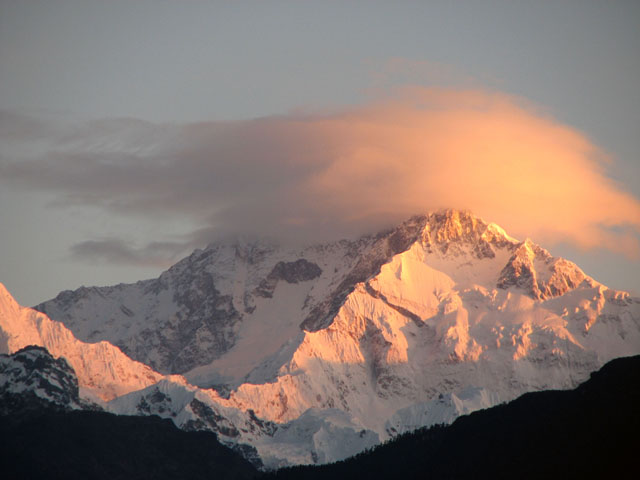
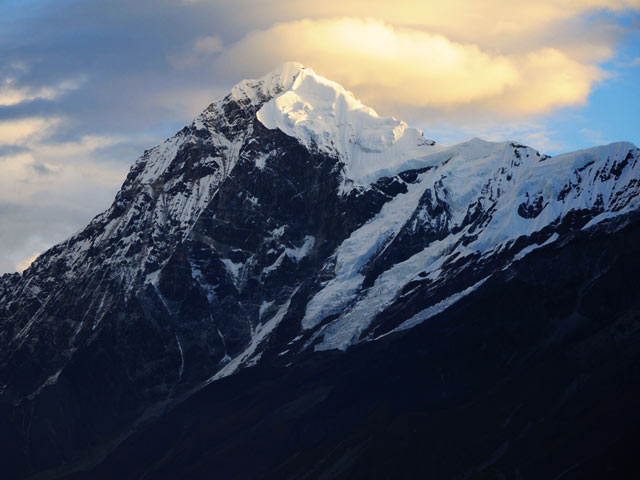
Clouds over Kanchenjunga, the third highest mountain in the world.
In this guide: Nepal vs India | The mountain | Nepal side | India side | Season | Permits | How to choose | FAQ
Nepal side vs India side
| Nepal side | India (Sikkim) side | |
|---|---|---|
| Start | Taplejung, reached by air via Biratnagar from Kathmandu | Yuksom, the gateway town, reached by road from Bagdogra airport or Siliguri |
| Route | Circuit to the south and north base camps, over a pass of about 4,805 m | Yuksom, Dzongri, Thangsing and Lamuni to Goecha La |
| Time | About three weeks | About seven days on the trail, with transfers extra |
| High point | Pang Pema, about 5,140 m, at the foot of the north face | Goecha La, 4,570 m |
| Lodging | Tea houses and camping, mostly camping | Trekking huts and campsites |
| Season | March to May and September to November (NTB) | Mid-March to mid-June and October to December |
| Crowds | Very few trekkers | Popular and well organised |
| Difficulty | Strenuous and remote, with long days over many ridges | Moderate to strenuous, with a high pass day |
| Best for | Experienced trekkers wanting a remote expedition | Trekkers with less time who want a Kanchenjunga view |
About the mountain
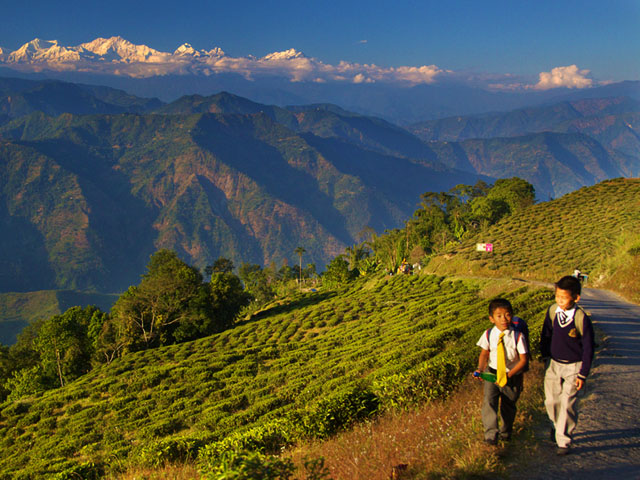
Kanchenjunga rises behind Darjeeling on a clear morning.
The Nepal Tourism Board (NTB) gives the height as 8,586 m and calls it the third highest mountain in the world, after Everest and K2. It is 128 km east of Everest, and its name means “The Five Treasures of the Great Snow”, after its five prominent peaks. It is sacred to the people of Sikkim. A British expedition led by Charles Evans made the first ascent in 1955, when George Band and Joe Brown reached the top on 25 May but stopped about five feet below the summit out of respect for that sanctity, a custom many climbers have kept.
The massif sits at the heart of a high range with many peaks above 7,000 m, including Jannu at 7,710 m, known for its steep north face, and Siniolchu at 6,888 m. As the easternmost of the 8,000 m peaks, it faces the full force of the monsoon from the Bay of Bengal, which feeds the great glaciers on its flanks, such as the Zemu, Talung, Yalung and Kangchen, and brings frequent avalanches.
Kanchenjunga from Nepal: the north and south base camps
| Start | Flight from Kathmandu to Taplejung via Biratnagar |
| Duration | About three weeks |
| Highlights | Oktang (south base camp) and Pang Pema (north base camp), about 5,140 m |
| Pass | Miring La, about 4,805 m, linking the two base camps |
| Lodging | Tea houses and camping, mostly camping |
| Park | Kanchenjunga Conservation Area, headquartered at Lelep |
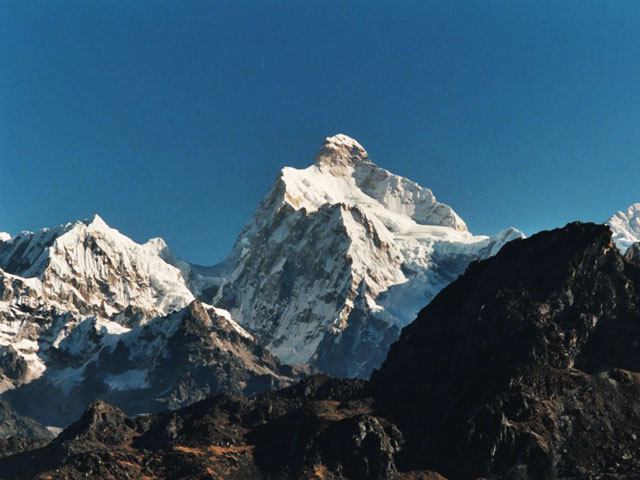
Jannu, seen from the Miring La pass.
The Nepal approach is long and remote. Trekkers fly to Taplejung and walk across a series of ridges, with a very large amount of climbing and descending overall, through a part of eastern Nepal that is among the least developed in the Himalaya. The route normally runs as a circuit to avoid backtracking, with the south base camp first and then the pass to Pang Pema, at the foot of the north face. Teahouses are few, so most trips are camping-style, with a full crew. The park is home to snow leopards, red pandas and Himalayan black bears, according to NTB, with about 250 bird species and 23 rhododendron species.
The people of the far east, including Limbu and Sherpa communities, keep strong local traditions, and the villages on the trail are a highlight of the trip. Read the Kanchenjunga trek.
Kanchenjunga from India: Dzongri and Goecha La
| Start | Yuksom, the gateway town of Khangchendzonga National Park |
| Length | About 45 km, a seven-day high-altitude trek |
| Route | Yuksom, Bakhim, Tsoka, Dzongri, Thangsing or Kokchurong, Lamuni, Goecha La |
| High point | Goecha La, 4,570 m |
| Park | Khangchendzonga National Park, 1,784 sq km, a UNESCO World Heritage Site |
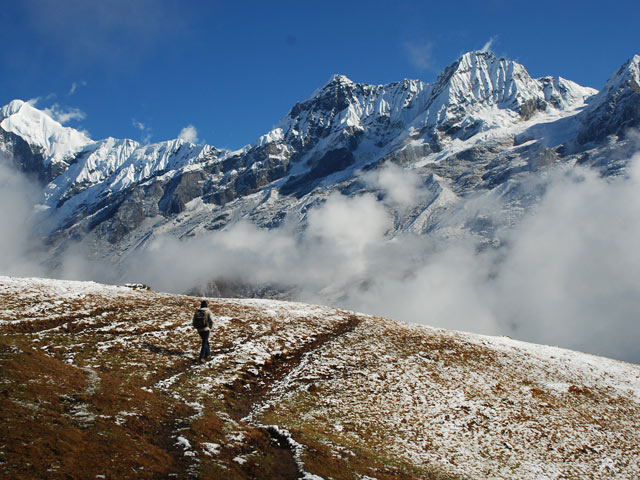
The view from Dzongri on the Goecha La trek.
The Sikkim government describes the Dzongri and Goecha La route as the most popular trek in the state. It starts at Yuksom, passes through oak and rhododendron forest, which blooms from April and May, and climbs through Tsoka and Dzongri to the high camps below the pass. Those short of time often stop at Dzongri, with views of Kanchenjunga and Mount Pandim.
Mount Pandim on the way to Goecha La.
The route passes Samiti Lake, a sacred lake, and the major huts and campsites along the way, including Tshoka, Dzongri and Thangsing, are equipped with oxygen cylinders and first-aid kits, according to the park’s forest department. Guides on the trail are trained in rescue and altitude sickness management.
Trekkers from Delhi or Kolkata normally fly to Bagdogra, near Siliguri, and drive to Yuksom, a journey of about five hours. Trekking to the Zemu Glacier and Green Lake, the northern approach to Kanchenjunga on the Indian side, needs a special permit cleared by central government authorities.
Best season
For Nepal, NTB lists March to May and September to November. For Sikkim, the state tourism department gives mid-March to mid-June and October to December for the Khangchendzonga trek. The monsoon starts in early June and runs to late September, and the east gets heavy rain, so the monsoon months are not recommended on either side. Spring brings rhododendron bloom and autumn the clearest views.
Permits and fees
| Side | Permit | Fee |
|---|---|---|
| Nepal | Kanchenjunga Conservation Area entry (NTB) | NPR 2,000 for foreigners and NPR 200 for SAARC nationals, per entry |
| Nepal | Restricted area trekking permit for the Taplejung wards (NTB) | US$20 per person per week for the first four weeks, then US$25 per week |
| India | Khangchendzonga National Park trek permits | Issued by the Sikkim authorities, with Indian trekkers applying through the Sikkim Home Department |
The team arranges permits for Nepal treks. Fees and rules change, so confirm them at booking.
How to choose
| If you have | Choose | Why |
|---|---|---|
| A week and want a Kanchenjunga view | India: Dzongri and Goecha La | Short, popular and well organised |
| Three weeks and want the base camps | Nepal: north and south base camps | Remote, close to the faces and almost empty |
| Very little time | Darjeeling viewpoints | Kanchenjunga from a distance, no trek needed |
| An easy first Himalayan trek | Neither: try Poon Hill or the Everest Base Camp trek | Both Kanchenjunga routes are demanding |
Read about the eight 8,000 m peaks of Nepal, and the full list of peaks in Nepal.
FAQ
Where is Kanchenjunga? On the border between Nepal and the Indian state of Sikkim, 128 km east of Everest.
How high is Kanchenjunga? 8,586 m (28,169 ft), the third highest mountain in the world.
Can I trek to Kanchenjunga from both countries? Yes. The Nepal side has the north and south base camps, and the India side has the Dzongri and Goecha La trek.
Which side is easier? The Sikkim side. It is shorter, with a seven-day trail and a high point of 4,570 m.
Which side gets closer to the mountain? Nepal, where Pang Pema lies at the foot of the north face.
How long is the Nepal trek? About three weeks, starting from Taplejung.
Are there teahouses on the Nepal side? NTB lists tea houses and camping, but facilities are limited, and most trips are camping-style.
When is the best time? March to May and September to November in Nepal, and mid-March to mid-June and October to December in Sikkim.
Why is Kanchenjunga sacred? It is a holy mountain for the people of Sikkim, and many climbers stop just short of the summit in respect.
What does Kanchenjunga mean? “The Five Treasures of the Great Snow”, after its five peaks.
Who first climbed it? A British expedition led by Charles Evans, with George Band and Joe Brown on top in 1955.
Do I need permits? Yes, on both sides. The team arranges them for Nepal treks.
Trek Kanchenjunga from Nepal
For dates and a quote, see the Kanchenjunga trek, or message the team on WhatsApp or phone at +91 932 595 1234 (9 am to 7 pm IST), write to info@basecamphikes.com, or use the enquiry form.
Sources
- Nepal Tourism Board: Kanchenjunga
- Nepal Tourism Board: Kanchenjunga Conservation Area
- Nepal Tourism Board: trekking permit
- Government of Sikkim: adventure tourism
- Government of Sikkim: Forest and Environment Department, Dzongri
- Government of Sikkim: Khangchendzonga National Park rescue training
Image credits: Amol Hatwar, Daniel Peckham, Lephotoagogo, Oliphant, Ben Larpent, Vincent Dugast (Flickr).