By
Nepal holds eight of the ten highest mountains on Earth: Everest, Kanchenjunga, Lhotse, Makalu, Cho Oyu, Dhaulagiri I, Manaslu and Annapurna I. Only K2 and Nanga Parbat, in Pakistan, break the run. This guide profiles each of the eight, with height, first ascent, name meaning and the trek that gets you closest, using figures from the Nepal Tourism Board (NTB).
The short answer
- The eight: Everest 8,848 m, Kanchenjunga 8,586 m, Lhotse 8,516 m, Makalu 8,463 m, Cho Oyu 8,201 m, Dhaulagiri I 8,167 m, Manaslu 8,163 m and Annapurna I 8,091 m.
- Borders: several of them sit on the Nepal border, shared with India or Tibet.
- First ascents: all eight were first climbed in just ten years, between 1950 and 1960.
- Seeing them: trekkers can reach the foot of every one without climbing.
Last checked: 26 October 2026. Heights are as published by NTB, and national surveys can give slightly different figures.

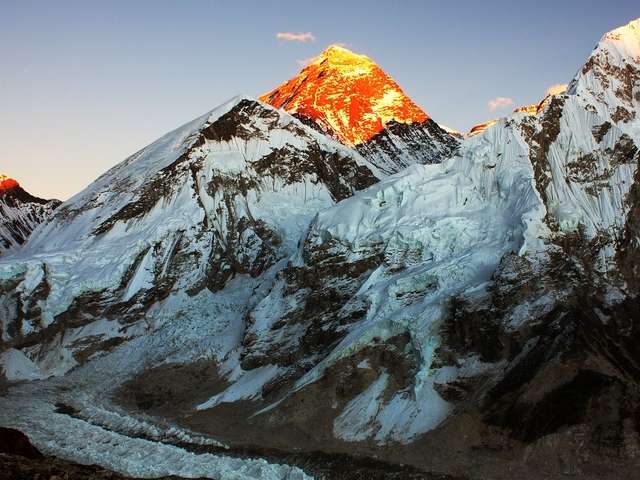
Everest at first light from Kala Patthar.
In this guide: The eight at a glance | Everest | Kanchenjunga | Lhotse | Makalu | Cho Oyu | Dhaulagiri | Manaslu | Annapurna I | How to see them | FAQ
Nepal’s eight 8,000 m peaks at a glance
| Peak | Height | World rank | First ascent | Team |
|---|---|---|---|---|
| Mount Everest | 8,848 m / 29,029 ft | 1st | 1953 | Tenzing Norgay and Edmund Hillary |
| Kanchenjunga | 8,586 m / 28,169 ft | 3rd | 1955 | British expedition led by Charles Evans |
| Lhotse | 8,516 m / 27,940 ft | 4th | 1956 | Swiss climbers Ernst Reiss and Fritz Luchsinger |
| Makalu | 8,463 m / 27,766 ft | 5th | 1955 | French expedition led by Jean Franco |
| Cho Oyu | 8,201 m / 26,906 ft | 6th | 1954 | Herbert Tichy, Joseph Jöchler and Pasang Dawa Lama |
| Dhaulagiri I | 8,167 m / 26,795 ft | 7th | 1960 | Swiss expedition |
| Manaslu | 8,163 m / 26,781 ft | 8th | 1956 | Japanese expedition |
| Annapurna I | 8,091 m / 26,545 ft | 10th | 1950 | French team led by Maurice Herzog |
Heights in feet are converted from the metre figures. Read the full list of peaks in Nepal for the 27 official trekking peaks as well.
The eight, by height
| Mount Everest | 8,848 m |
|
| Kanchenjunga | 8,586 m |
|
| Lhotse | 8,516 m |
|
| Makalu | 8,463 m |
|
| Cho Oyu | 8,201 m |
|
| Dhaulagiri I | 8,167 m |
|
| Manaslu | 8,163 m |
|
| Annapurna I | 8,091 m |
|
Mount Everest (8,848 m)
| Height | 8,848 m / 29,029 ft, the highest mountain in the world |
| First ascent | 1953, by Tenzing Norgay and Edmund Hillary |
| Location | Sagarmatha National Park, on the Nepal-Tibet border |
| Closest trek | Everest Base Camp, with Kala Patthar at 5,545 m |
Everest needs little introduction, and NTB places it inside Sagarmatha National Park, a UNESCO World Heritage site since 1979. Tenzing Norgay and Edmund Hillary were first to the top in 1953. Today the mountain draws thousands of climbers and many more trekkers, but the summit itself is still an expedition on the scale of months. Trekkers can reach Base Camp at 5,364 m and Kala Patthar at 5,545 m without climbing. See the 14-day Everest Base Camp trek itinerary.
Kanchenjunga (8,586 m)
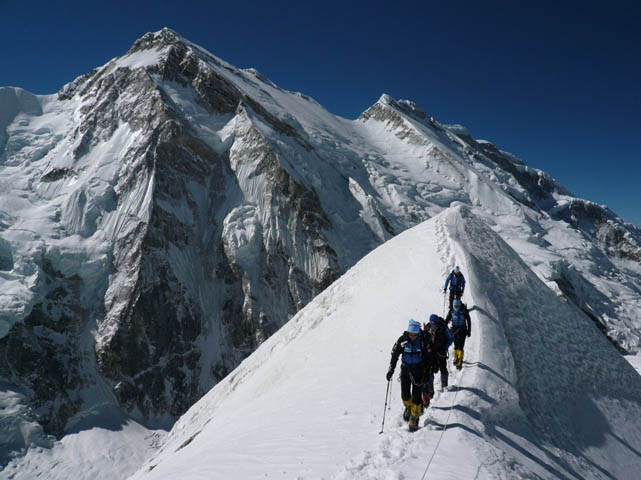
Kanchenjunga, whose name means the Five Treasures of the Great Snow.
| Height | 8,586 m / 28,169 ft, 3rd highest |
| First ascent | 1955, British expedition led by Charles Evans |
| Location | On the Nepal-India (Sikkim) border, 128 km east of Everest |
| Closest trek | Kanchenjunga base camp trek |
The name means “The Five Treasures of the Great Snow”, after the mountain’s five prominent peaks. NTB records that George Band and Joe Brown reached the top on 25 May 1955 but stopped about five vertical feet below the summit, out of respect for its sacred status to the people of Sikkim, a custom many climbers have kept since. It is the most remote of the eight to trek to. See the Kanchenjunga trek.
Lhotse (8,516 m)
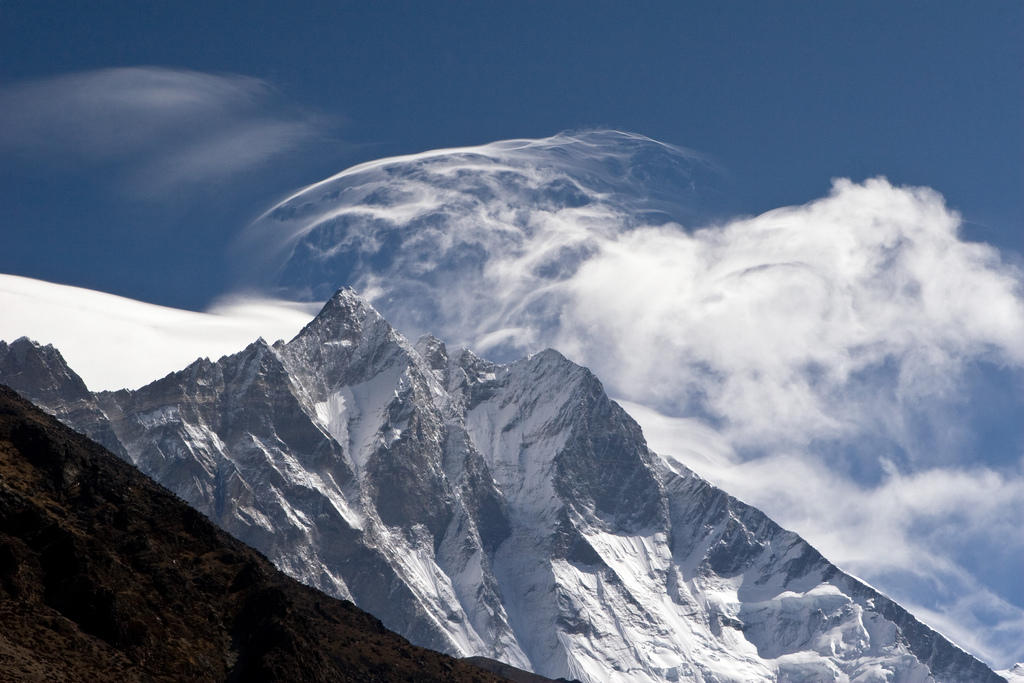
Lhotse, joined to Everest by the South Col.
| Height | 8,516 m / 27,940 ft, 4th highest |
| First ascent | 18 May 1956, by Swiss climbers Ernst Reiss and Fritz Luchsinger |
| Location | Everest area, connected to Everest by the South Col |
| Closest trek | Everest Base Camp trek |
Lhotse stands beside Everest, and the two share the South Col between them. “Lhotse” means “South Peak” in Tibetan. It towers over the Everest Base Camp trail, so every trekker to Base Camp sees it, most clearly from Kala Patthar and Gorak Shep.
Makalu (8,463 m)
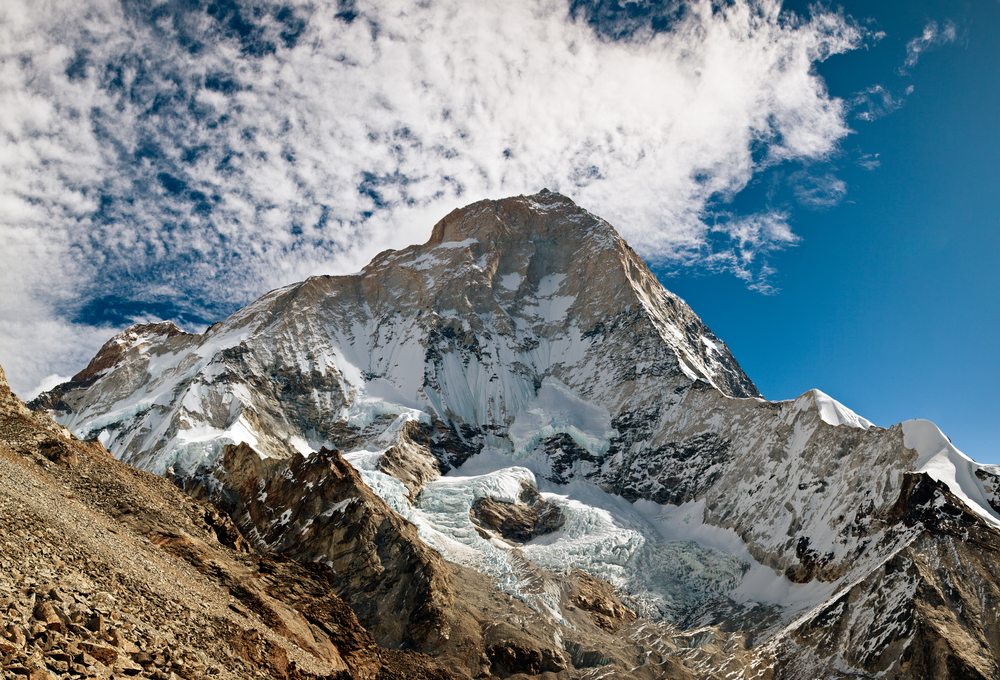
Makalu, a steep pyramid in the Makalu Barun National Park.
| Height | 8,463 m / 27,766 ft, 5th highest |
| First ascent | 15 May 1955, by Lionel Terray and Jean Couzy of a French expedition led by Jean Franco |
| Location | About 20 km east of Everest, in Makalu Barun National Park |
| Closest trek | Makalu base camp trek |
Makalu is a sharp, steep-sided peak with Tibet to its north. The French team stood on top ten days before the Kanchenjunga summit, in a remarkable season for Himalayan climbing. The trek to its base camp is remote and lies inside a national park. See the Makalu base camp trek.
Cho Oyu (8,201 m)
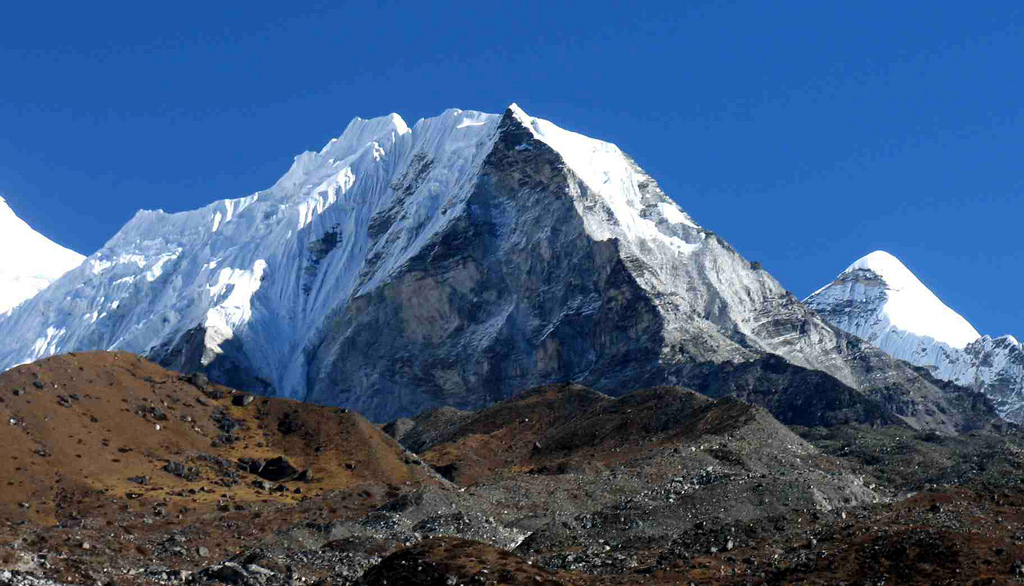
Cho Oyu, the Turquoise Goddess.
| Height | 8,201 m / 26,906 ft, 6th highest |
| First ascent | 19 October 1954, by Herbert Tichy, Joseph Jöchler and Pasang Dawa Lama, by the northwest ridge |
| Location | About 20 km west of Everest, on the China-Nepal border |
| Closest trek | Gokyo Lakes trek |
The name means “Turquoise Goddess” in Tibetan. The Gokyo valley gives trekkers a close look at its wall from the Nepal side. See the Gokyo Lakes trek and the Everest Base Camp vs Gokyo comparison.
Dhaulagiri I (8,167 m)
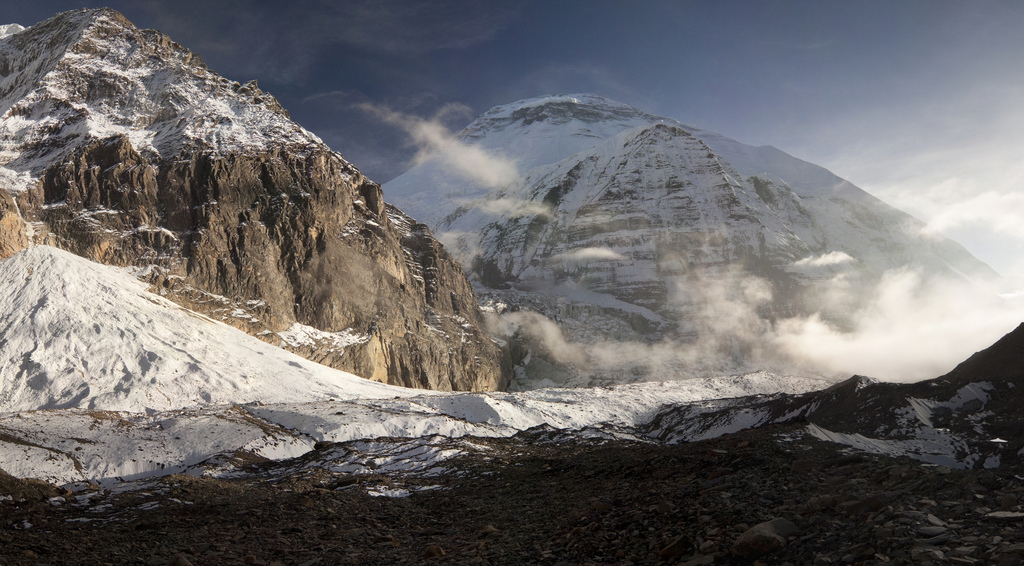
Dhaulagiri, the White Mountain.
| Height | 8,167 m / 26,795 ft, 7th highest |
| First ascent | 13 May 1960, by a Swiss expedition: Kurt Diemberger, Nawang Dorjee Sherpa, Ernst Forrer, Albin Schelbert, Peter Diener and Nima Dorjee Sherpa |
| Location | Northwest of Pokhara, in the Dhaulagiri Himal |
| Closest trek | Annapurna Circuit, and Poon Hill for the views |
Foreign climbers called it “The White Mountain”, and NTB calls it the highest mountain wholly inside one country. Nawang Dorjee Sherpa was the first Nepali to climb it. The best-known walking views are from Poon Hill and from the Kali Gandaki valley on the Annapurna Circuit. See the 18-day Annapurna Circuit.
Manaslu (8,163 m)
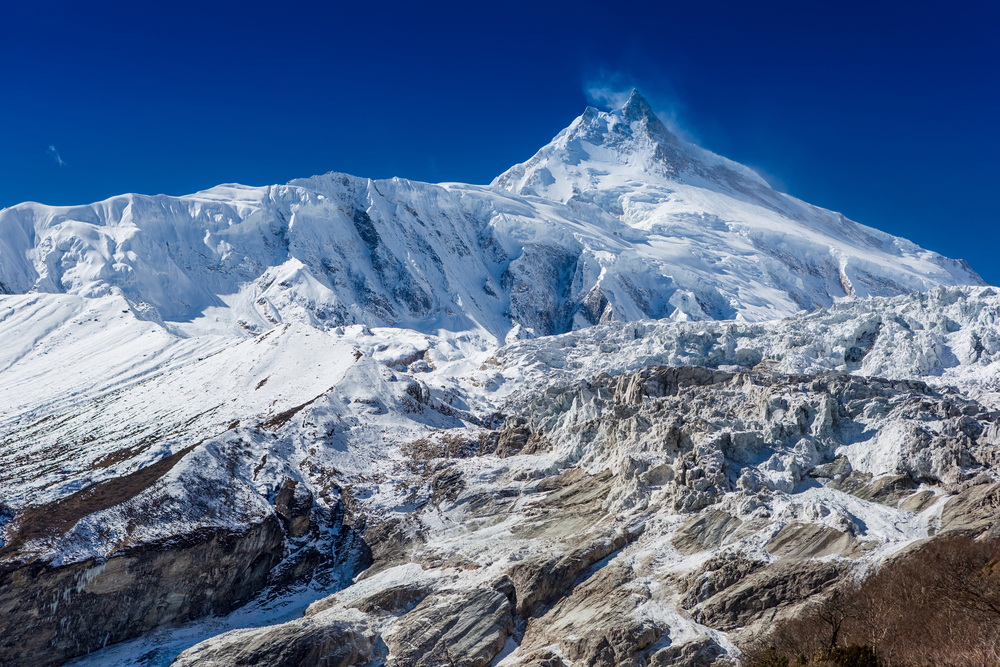
Manaslu, the Mountain of the Spirit.
| Height | 8,163 m / 26,781 ft, 8th highest |
| First ascent | 9 May 1956, by Imanishi and Gyaltsen of the third Japanese expedition, and Kato and Higeta two days later |
| Location | On the border of Gorkha and Manang districts, 64 km east of Annapurna |
| Closest trek | Manaslu Circuit |
The name comes from the Sanskrit “Manasa”, meaning “Mountain of the Spirit”. NTB calls the 1956 climb the first first ascent of an 8,000 m peak by Asian climbers. The Manaslu Circuit follows the old salt-trade route along the Budhi Gandaki around the massif. See Manaslu Circuit preparation.
Annapurna I (8,091 m)
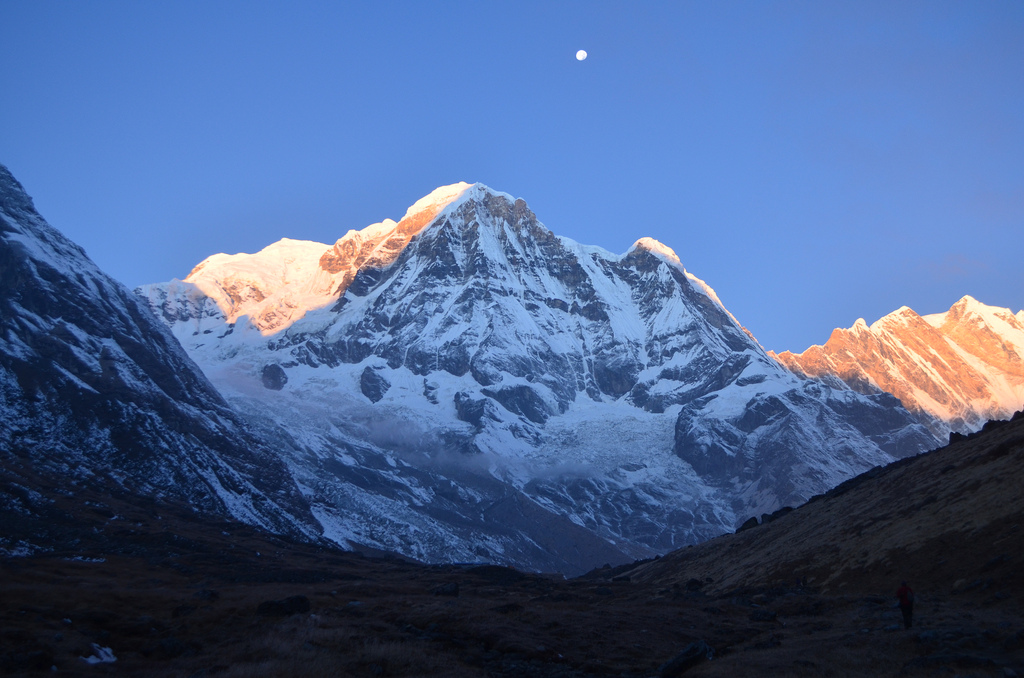
Annapurna I, the first 8,000 m peak ever climbed.
| Height | 8,091 m / 26,545 ft, 10th highest |
| First ascent | 1950, by Maurice Herzog and Louis Lachenal of a French team |
| Location | The 55 km Annapurna range, east of the Kali Gandaki gorge |
| Closest trek | Annapurna Base Camp and the Annapurna Circuit |
The name is Sanskrit for “full of grains”, often read as “Goddess of Harvests”. It was the first 8,000 m peak ever climbed, three years before Everest. NTB records that the Kali Gandaki gorge separates it from Dhaulagiri I, 34 km to the west. Read about the 10-day Annapurna Base Camp trek and the Annapurna Circuit.
How to see the eight without climbing
| Trek | Peaks you see up close | Typical fit |
|---|---|---|
| Everest Base Camp | Everest and Lhotse | Most popular, 14 days |
| Gokyo Lakes | Cho Oyu, with Everest in view | Quieter alternative to Base Camp |
| Makalu base camp | Makalu | Remote and demanding |
| Kanchenjunga base camp | Kanchenjunga | Very remote, long |
| Manaslu Circuit | Manaslu | Restricted area, guide required |
| Annapurna Circuit | Annapurna I and Dhaulagiri I | Classic circuit with a high pass |
| Annapurna Base Camp | Annapurna I | About 10 days |
Climbing any of the eight is a different level of commitment, with permits, fixed ropes and weeks at high camps. Read technical vs non-technical peaks in Nepal to see where to begin.
FAQ
How many 8,000 m peaks are in Nepal? Eight: Everest, Kanchenjunga, Lhotse, Makalu, Cho Oyu, Dhaulagiri I, Manaslu and Annapurna I. Several of them share the border with India or Tibet.
Does Nepal have 8 of the world’s 10 highest mountains? Yes. The other two, K2 and Nanga Parbat, are in Pakistan.
What is the highest mountain in Nepal? Mount Everest, at 8,848 m.
Which was the first 8,000 m peak climbed? Annapurna I, in 1950, by a French team led by Maurice Herzog.
Who first climbed Everest? Tenzing Norgay and Edmund Hillary, in 1953.
What is the third highest mountain? Kanchenjunga, at 8,586 m, on the Nepal-India border.
Which 8,000 m peak is the closest to Everest? Lhotse, joined to Everest by the South Col. Makalu is about 20 km east and Cho Oyu about 20 km west.
Can I see an 8,000 m peak without climbing? Yes. Treks such as Everest Base Camp, Annapurna Base Camp and the Manaslu Circuit bring you to the foot of one or more.
Which 8,000 m peak is on a major trek? Manaslu has its own circuit trek. Everest, Lhotse, Annapurna I and Dhaulagiri I are all visible from popular treks.
What does Dhaulagiri mean? Foreign climbers called it “The White Mountain”. NTB does not give an etymology.
What does Annapurna mean? It is Sanskrit for “full of grains”, usually read as “Goddess of Harvests”.
What does Manaslu mean? It comes from the Sanskrit “Manasa”, meaning “Mountain of the Spirit”.
Plan a trek to the giants
For dates and a quote, see the 14-day Everest Base Camp trek, the Annapurna Circuit or the Manaslu Circuit, or message the team on WhatsApp or phone at +91 932 595 1234 (9 am to 7 pm IST), write to info@basecamphikes.com, or use the enquiry form.
Sources
- Nepal Tourism Board: Everest
- Nepal Tourism Board: Kanchenjunga
- Nepal Tourism Board: Lhotse
- Nepal Tourism Board: Makalu
- Nepal Tourism Board: Cho Oyu
- Nepal Tourism Board: Dhaulagiri
- Nepal Tourism Board: Manaslu
- Nepal Tourism Board: Annapurna
- Nepal Tourism Board: Diamond Jubilee of the first ascent of Everest
Image credits: Ferran Latorre, Philip Hassell, 4bakancs, Kiwi San, Barry Gahan (Flickr).