By
The best way to train for Everest Base Camp is a 12-week plan built on three things: regular aerobic sessions, a weekly long hike that grows to 5 or 6 hours, and leg strength for the long descents. The trek is not technical, but it asks for about 120 km of walking over 12 days of trekking, with several nights above 4,000 m. This guide gives a week-by-week plan, a gym and home option, a self-test, and the gear and habits that make the trek easier.
The short answer
- Start: 12 weeks before departure, or earlier if you are not active now.
- Weekly mix: three or four aerobic sessions, two short strength sessions and one long hike.
- Target: walk 5 to 6 hours comfortably with a loaded daypack, two days in a row.
- Pack weight: train with about 5 kg, a realistic daypack weight. Porters carry the main duffel.
- Limit of fitness: being fit helps you enjoy the trek, but it does not prevent altitude sickness. Pace and rest days matter as much.
Last checked: 28 October 2026. This is general fitness guidance, not medical advice. See your doctor before starting an intensive plan or if you have a health condition.
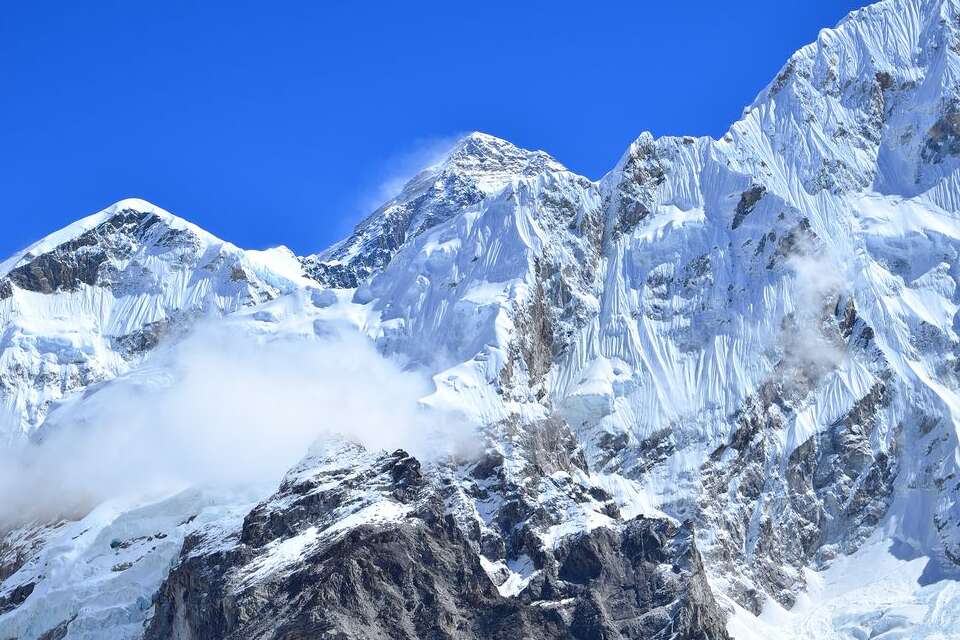
The view from Kala Patthar, the high point of the trek and the reason for the training.
In this guide: What the trek demands | Fitness self-test | 12-week plan | Practice hikes | Gym and home option | Strength | Downhill | Gear | Altitude | Last week | FAQ
What does the Everest Base Camp trek ask of your body?
The route climbs slowly, with two rest days for acclimatisation. The hard part is repetition: five to eight hours of walking on many days in a row, at altitude, with cold nights. The table shows the standard 14-day itinerary.
| Day | Route | Top altitude | Walking time |
|---|---|---|---|
| 2 | Lukla to Phakding | 2,652 m | 3 to 4 hrs |
| 3 | Phakding to Namche Bazaar | 3,440 m | 5 to 6 hrs |
| 4 | Rest day at Namche | 3,440 m | Optional 2 hr walk |
| 5 | Namche to Deboche | 3,700 m | About 6 hrs |
| 6 | Deboche to Dingboche | 4,400 m | About 6 hrs |
| 7 | Rest day at Dingboche | 4,400 m | Optional walks |
| 8 | Dingboche to Lobuche | 4,900 m | 6 to 7 hrs |
| 9 | Lobuche to Gorakshep and Base Camp | 5,364 m | 6 to 8 hrs |
| 10 | Kala Patthar, then down to Pheriche | 5,545 m | 5 to 6 hrs |
| 11 | Pheriche to Namche Bazaar | 3,440 m | 7 to 8 hrs |
| 12 | Namche to Lukla | 2,800 m | 6 to 7 hrs |
Three things stand out. The longest days are on the way back, when legs are tired. Day 9 to Base Camp is long and slow at 5,000 m. And the descents are steep and long, which is why leg strength matters. Read the difficulty guide for more on what makes the trek hard.
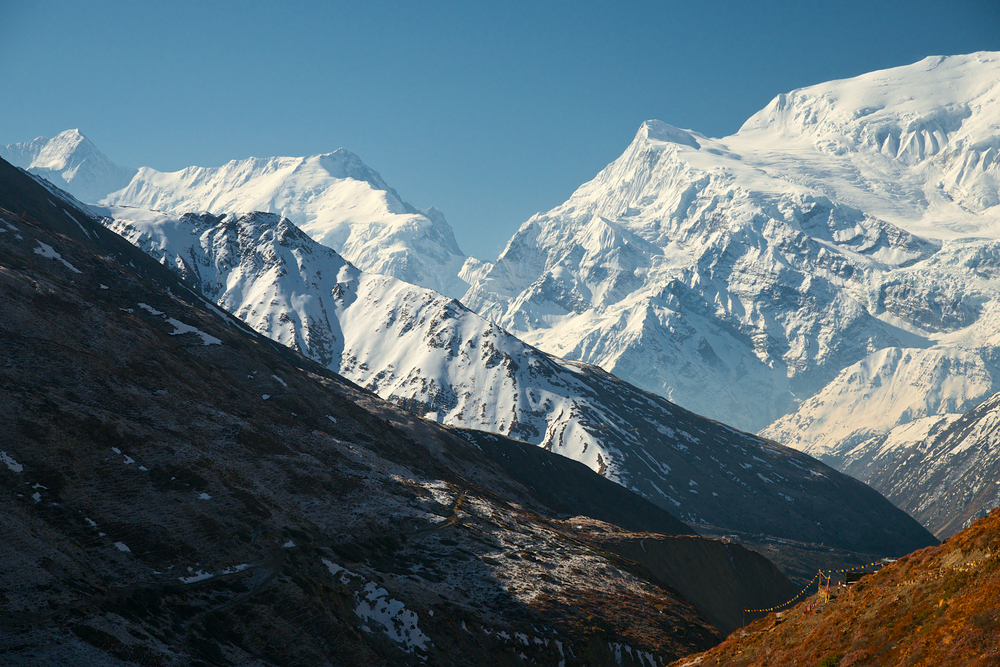
Open high trails like this are common above 4,000 m, where the air is thinner and the pace slows.
How fit do you need to be? A simple self-test
Try these before you plan. If most feel comfortable, you have a base to build on. If not, start earlier and build slowly.
| Test | You are ready if | If not |
|---|---|---|
| Walk 3 hours on mixed ground with a 5 kg pack | You can talk in sentences and finish without sore feet | Start with 8 weeks of walking and add the plan after |
| Climb stairs for 10 minutes without stopping | You are breathing hard but can keep going | Add stair work two times a week from the start |
| Walk for 3 to 4 hours on two days in a row | The second day feels tired but fine | Make back-to-back days your main focus |
| Do 15 slow squats and 10 step-ups on each leg | Your legs feel worked but steady | Begin the strength sessions in week 1 |
If you cannot yet walk several hours on consecutive days with a light pack, begin at least two months ahead. See also the training guide for the trek.
What is the best 12-week training plan for Everest Base Camp?
This plan assumes a moderate starting level. Adjust it for your age, health and current fitness. Each week has three or four aerobic sessions, two strength sessions and one long hike.
| Weeks | Aerobic sessions (3 to 4 a week) | Long hike (weekly) | Pack weight | Focus |
|---|---|---|---|---|
| 1 to 4 | 45 to 60 min brisk walk, cycle or swim | 2 to 3 hrs, easy terrain | None to 3 kg | Build the habit and a base |
| 5 to 8 | 45 to 60 min with hills, stairs or treadmill incline | 3 to 4 hrs, hilly ground | 3 to 5 kg | Add hills and strength |
| 9 to 11 | 60 min, include one hard hill session | 5 to 6 hrs, plus a second long walk the next day | 5 to 6 kg | Back-to-back days, boots and gear tested |
| 12 | Short easy walks, light stretching | Rest or a short walk | – | Taper and rest |
The plan is deliberately slow. The trek itself rises slowly, so training should rise slowly as well. Rushing training in the last few weeks adds injury risk without much benefit.
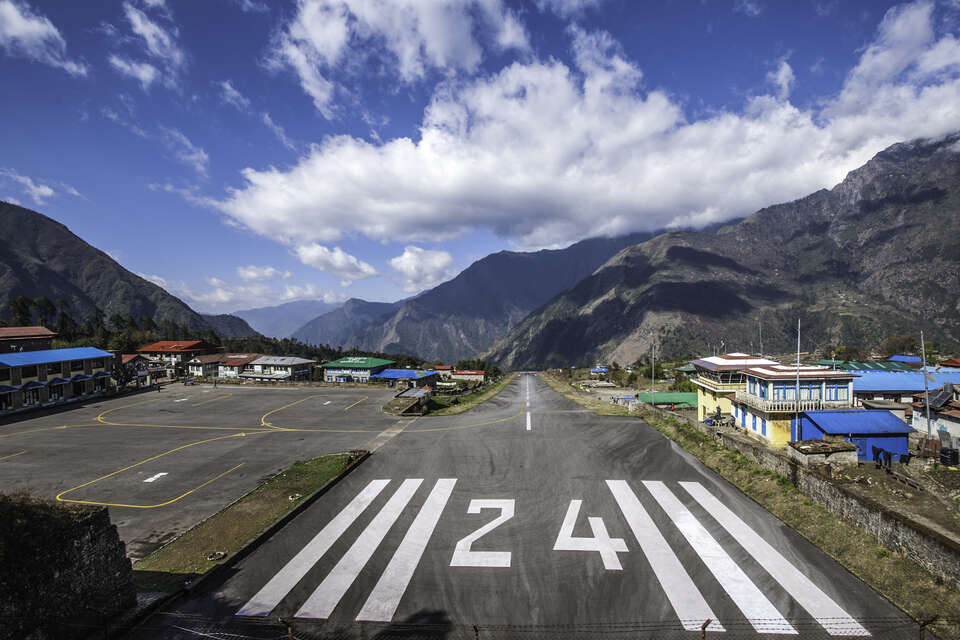
Lukla, where the walking begins. The first days are gentle, so build your base before you arrive.
How should you do practice hikes?
A weekly long walk is the single most useful session. Choose uneven ground when you can, wear the boots and pack you will use in Nepal, and walk at a pace where you could still hold a conversation. Add duration before distance, because the trek is about time on your feet.
- Build from 2 to 3 hours up to 5 or 6 hours with minimal rests.
- In the last month, add a second long walk on the following day.
- Increase pack weight slowly to 5 or 6 kg.
- Practise eating and drinking on the move, as you will on the trail.
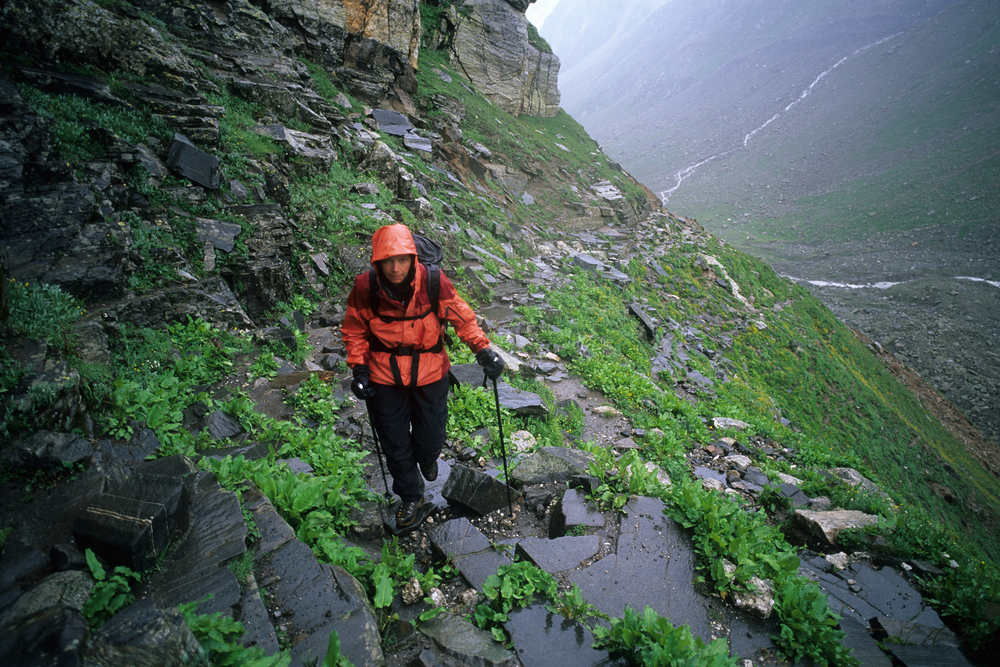
A long walk on uneven mountain ground is the closest practice for the trail.
Training for Everest Base Camp in a flat city or at the gym
Many trekkers, especially those who live in flat cities, have no hills nearby. The same fitness can be built with a treadmill, stairs and a loaded pack. One weekly session can look like this:
| Block | What to do | Time |
|---|---|---|
| Warm-up | Easy walk, no incline | 10 min |
| Incline walk | Treadmill on a steady incline at a brisk walking pace | 40 to 45 min |
| Stairs | Climb stairs or use a stair machine at a steady pace | 10 min |
| Recovery | Flat walk to settle your breathing | 5 min |
| Repeat | Repeat the incline and stairs blocks two or three times as you get stronger |
If you live in a high-rise, stair climbing with a loaded pack is excellent practice. A weekend walk up a local hill, fort or temple steps also works. Mix in cycling, swimming or jogging on the other days so your breathing system gets regular work.
Which strength exercises help most?
Two short sessions a week are enough. Focus on the muscles that handle climbing and, most of all, descending.
| Exercise | What it trains | Suggested start |
|---|---|---|
| Squats | Thighs and hips | 3 sets of 12 |
| Step-ups on a bench or stair | Climbing strength | 3 sets of 10 each leg |
| Walking lunges | Balance and legs | 3 sets of 10 each leg |
| Calf raises | Long climbs | 3 sets of 15 |
| Planks | Core, for carrying a pack | 3 holds of 30 to 45 seconds |
| Step-downs | Control on descents | 3 sets of 8 each leg |
Add reps or time slowly. Stop any exercise that causes sharp pain and stretch afterwards.
How do you train for the descents?
The way back, from Pheriche to Namche Bazaar and on to Lukla, includes long downhill sections that tire the knees and thighs more than the climbs do. Practise walking downhill with short, controlled steps, a slightly bent knee and trekking poles. Step-downs and slow squats build the control that protects your knees.
What gear should you use in training?
- Boots: wear them on every long walk until they feel comfortable. They should have about a finger’s width of space beyond your toes.
- Socks: test the exact socks you will wear on the trek.
- Pack: use the daypack you will take, and learn how to adjust it. Keep it near 5 kg, a realistic daypack weight on the trail.
- Poles: practise with them on hills and descents.
See the full Everest Base Camp packing checklist and buying gear in Kathmandu.
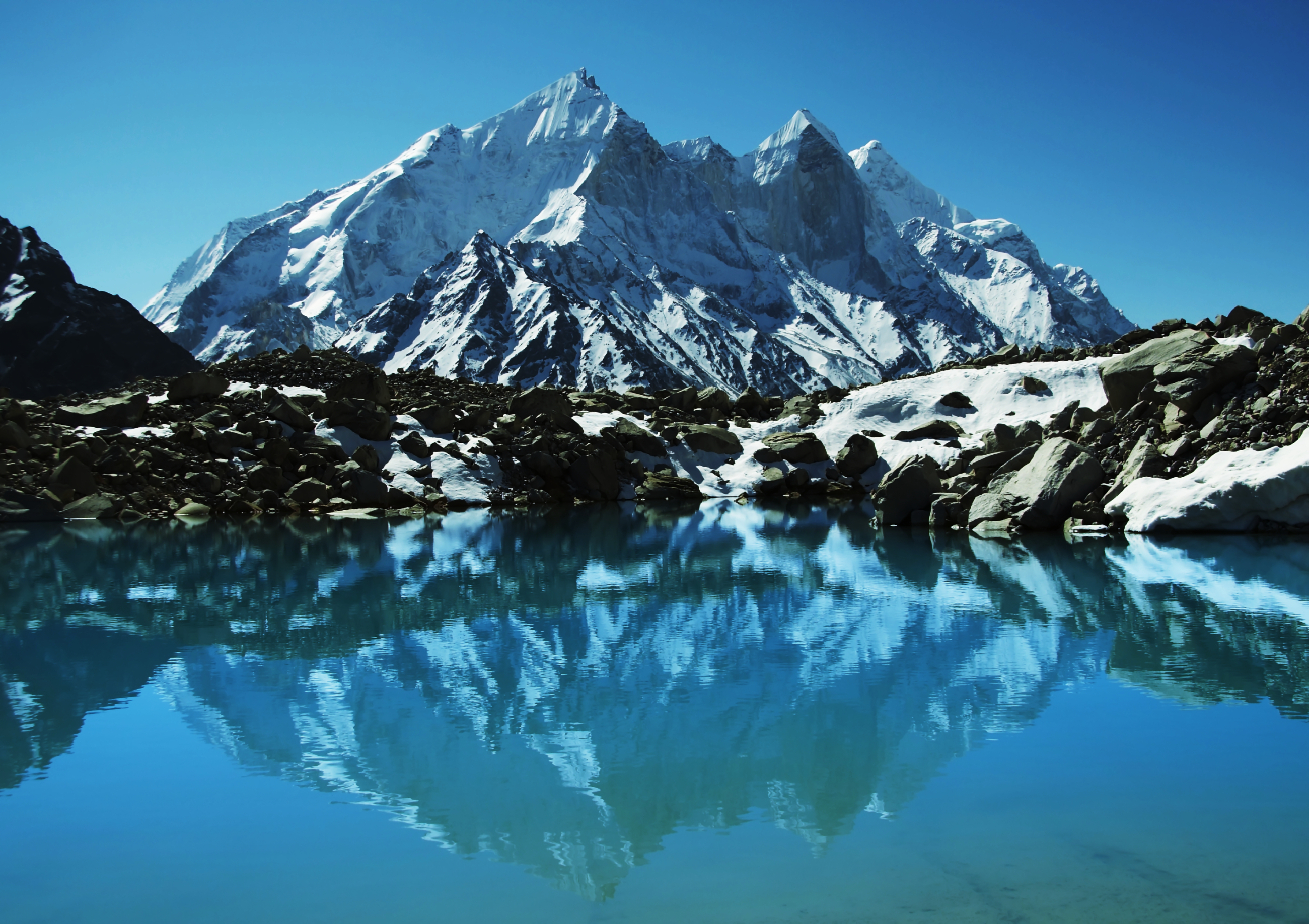
Himalayan peaks like these are the reward for the training.
Does fitness protect you from altitude sickness?
No. Fitness helps you walk comfortably, but how you respond to altitude varies from person to person, and fit people can still be affected. The team’s guides check oxygen levels and symptoms every day, and the itinerary includes two rest days. Keep the pace slow, drink steadily, eat regularly, and report headache, nausea or poor sleep early. Read the altitude sickness guide and the acclimatisation days guide.
Nutrition, sleep and stretching
- Food: eat regular meals with enough protein and carbohydrate as your training grows.
- Water: drink steadily through the day, in training and on the trail.
- Sleep: aim for 7 to 8 hours, because recovery is part of training.
- Stretching: add 5 to 10 minutes of easy stretching after long walks, and a short warm-up before. On the trek, a few minutes each evening helps sleep.
- Medicines and supplements: discuss anything new with your doctor well before travel, and do not start anything new in the last week.
What should you do in the last week?
- Cut training volume sharply and keep walks short and easy.
- Check your boots, pack, layers and medicines, and weigh both bags.
- Arrange a general medical check and confirm insurance, covering trekking to 5,545 m and helicopter evacuation.
- Sleep well and arrive in Kathmandu rested.
How do you prepare mentally?
Expect slow days, cold mornings and simple food. Break the trek into daily goals, and remember that the pace is steady rather than fast. Many first-time trekkers find that the walk is easier than they feared and the weather and sleep are harder. Read the first-time trekker’s guide and the complete trek guide.
Shorter treks need less training
If Everest Base Camp feels like too much, a shorter and lower trek needs less preparation. See the Annapurna Base Camp guide and the Poon Hill guide. For older trekkers, read Everest Base Camp with parents and seniors.
FAQ
How long should I train for Everest Base Camp? At least 8 to 12 weeks. Start earlier if you are not active now.
How fit do I need to be? You do not need to be an athlete. You should be able to walk several hours on consecutive days with a light pack.
How many days a week should I train? Five or six days: three or four aerobic sessions, two short strength sessions and one long hike, with at least one rest day.
How much weight should I carry in training? Build up to about 5 or 6 kg, a realistic daypack weight. Porters carry the main duffel.
Can I train at the gym instead of hiking? Yes. Incline walking, stair work and strength exercises build most of the fitness. A weekly long walk on uneven ground is still the best addition.
What if I live in a flat city? Use stairs, a treadmill incline and a weekly long walk. A loaded pack on stairs is useful practice.
Do I need to run? No. Brisk walking, cycling and swimming also build the aerobic base.
Does training prevent altitude sickness? No. Fitness helps endurance, but altitude response varies. Pace, rest days and early reporting of symptoms matter more.
How far do trekkers walk each day? About 8 to 16 km a day, in 3 to 8 hours, depending on the day.
Which days are hardest? Day 9 to Base Camp, with a long walk at 5,000 m, and the descent days back to Namche and Lukla.
Should I use trekking poles? They help on descents and steep sections. Practise with them in training.
When should I rest before the trek? Taper in the last week, with short easy walks and no hard sessions.
Is it safe for older trekkers? Many older trekkers complete it with a slow pace and good preparation. See a doctor first and read the seniors guide.
What should I eat while training? Regular meals with enough protein and carbohydrate, and plenty of water.
Can I do the trek without training? It is not recommended. Even a few weeks of walking and stair work make the trek more comfortable.
Trek Everest Base Camp with Base Camp Hikes
For dates and a quote, see the 14-day Everest Base Camp trek, or message the team on WhatsApp or phone at +91 932 595 1234 (9 am to 7 pm IST), write to info@basecamphikes.com, or use the enquiry form.
Sources
- Nepal Tourism Board: safety in the mountains