By
The 32 tips below make the Everest Base Camp trek easier, cheaper and safer. The five that matter most: train for 12 weeks, keep spare days at the end for flight delays, walk slowly with a guide who watches your health, pack for cold nights, and carry cash. The rest are practical details from the trail, grouped by when you need them: before you book, around the Lukla flight, on the trail and in the lodges.
The five tips that matter most
- Train for about 12 weeks, with long hikes on back-to-back days (tip 1).
- Keep one or two spare days at the end of the trip (tip 10).
- Go slowly and report every headache to your guide (tips 16 and 17).
- Pack a warm sleeping bag and layers for freezing nights (tip 22).
- Carry enough Nepali rupees in cash for the whole trek (tip 27).
Last checked: 28 October 2026. Prices, flight routes and services on the trail change from season to season, so confirm current details with your operator.
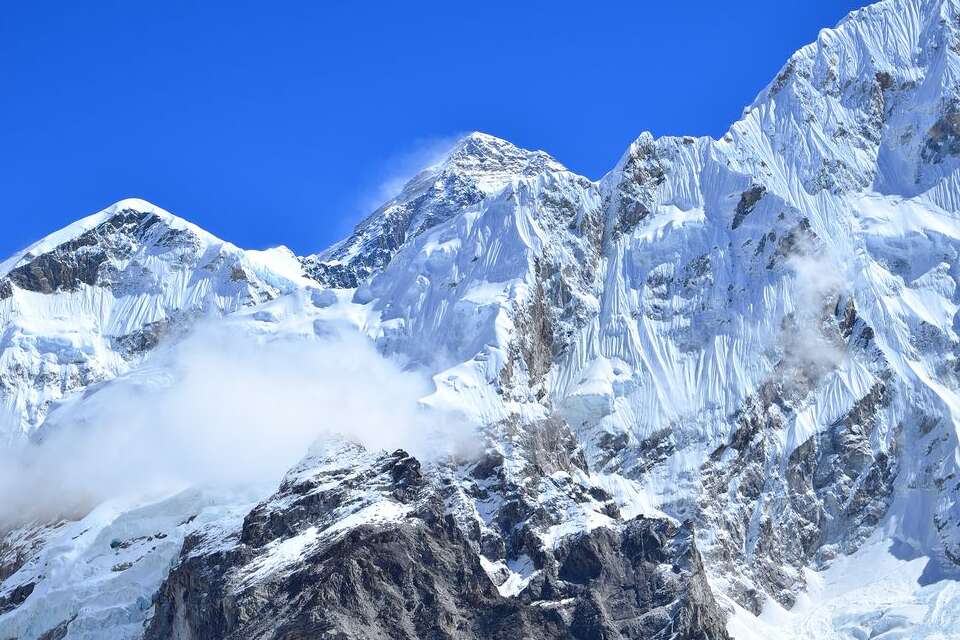
The view from Kala Patthar, about 5,545 m. Good preparation makes the long days worth it.
In this guide: Before you book | Lukla flights | On the trail | Daypack | Lodges and comfort | Route choices | FAQ
Before you book (tips 1 to 9)
1. Train for about 12 weeks
You do not need to be an athlete, but you do need to walk for hours on consecutive days. Build up weekly long hikes, add stair or hill work, and practise with your boots and daypack. The 12-week training plan sets this out week by week.
2. Choose your month on purpose
October and November give the clearest views, April has flowers and warmer days, and winter is quiet and cold. Each month trades crowds, cold and flight risk differently. The month-by-month guide helps you pick.
3. Book early for October and April
Flights and rooms in Namche, Tengboche, Dingboche and Lobuche fill first in the busiest weeks. If your dates are fixed to peak season, lock in transport and lodging before anything else.
4. Know what the trek costs, and what it does not include
Compare the price of the package against what is included: meals, lodging, guide, porter, permits, transfers and flights. Personal extras such as hot showers, charging, snacks and tips come on top. See the Everest Base Camp trek cost from India for the full picture.
5. Use a licensed local operator
A local operator handles permits, flights, lodging and emergencies, and can make quick decisions when weather changes plans. Check who handles problems on the trail, and read the company’s booking terms before paying. See the terms and conditions of the operator you choose.
6. Buy insurance that covers the whole trek
Check that the policy covers trekking up to at least 5,600 m, names helicopter evacuation with a limit, and does not exclude altitude sickness. Read the Everest Base Camp trek insurance guide and the provider notes before you buy.
7. Buy or rent gear in Kathmandu, carefully
Kathmandu has many gear shops, and prices are often well below what you would pay at home. Quality varies, so check zips, seams and insulation before you pay, and do not buy anything you have not tried on. See how to buy gear in Kathmandu and the packing checklist.
8. Break in your boots before you leave
New boots are the most common cause of trail blisters. Wear them for a few weeks, on real trails and not only on pavement, and test them with the exact socks you will wear. They should have about a finger’s width of space beyond your toes.
9. Compare flights to Nepal early
The international flight is one of the biggest costs. Compare dates and airlines early, and read how to find a cheaper flight to Nepal. Do not choose a flight so cheap that it leaves you no spare days.
Around the Lukla flight (tips 10 to 14)
10. Keep spare days at the end, not the start
The Lukla flight depends on weather in Kathmandu and in Lukla. If it is delayed, you can lose a day or two. Put extra days after the trek and before your flight home, not before the trek, so a delay does not cost you your international flight.
11. Expect flight delays and carry something to do
Weather and visibility change quickly in the mountains, and waits of a few hours are common. Carry a book, snacks and a charged phone, and keep your guide close at the airport. Longer delays are easier with an operator who can arrange rooms and rebook seats.
12. Know about the Ramechhap flights in peak season
In busy weeks, many Lukla flights run from Ramechhap, not Kathmandu, which means an early road transfer of around four to five hours. It changes your morning, not your trekking days. Read the Lukla vs Ramechhap guide.
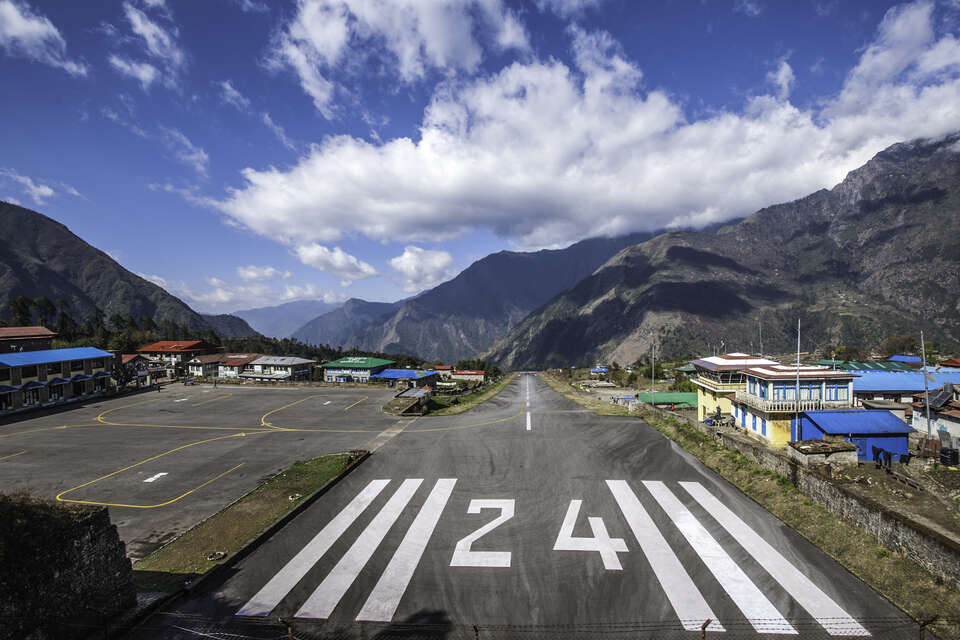
Lukla airstrip, where most Base Camp treks begin. Flight timing is the least predictable part of the trip.
13. Stay within the baggage limits
Domestic flights to Lukla have strict weight limits. The usual guidance is about 10 kg for the main bag and about 5 kg of hand baggage, but confirm with your operator before you pack. Leave non-trek items in a Kathmandu hotel. Porters carry the main bag on the trail, so every extra kilo adds to their load.
14. Know the helicopter backup
If flights stop, shared helicopters can sometimes carry trekkers when fixed-wing flights are cancelled, at an extra cost. Ask your operator how it works. A helicopter return can also shorten the trek.
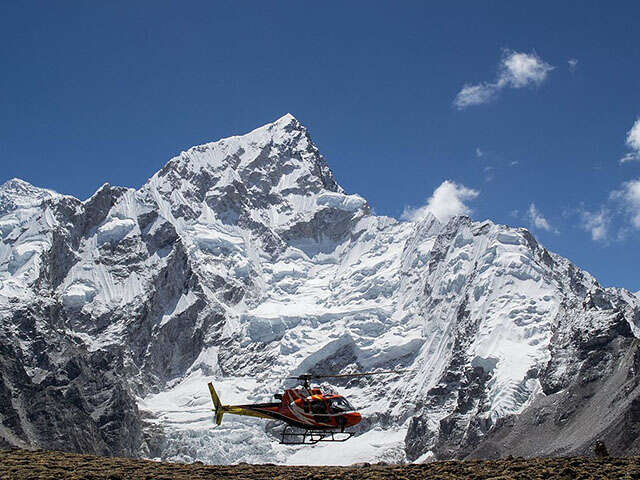
A helicopter leaving the Base Camp area. Medical flights depend on the insurer and doctors.
On the trail (tips 15 to 24)
15. Consider the Phortse trail on the way up
The Phortse variation climbs from Lukla through quieter villages before joining the classic trail, and it avoids some of the crowding between Namche and Tengboche. It adds no extra days on the standard schedule. Tengboche Monastery is usually visited on the way down. See the 14-day Everest Base Camp trek.

The Phortse side trail passes through quieter villages like this one.
16. Walk slowly, and use the rest days
The trek is not a race. Walking slowly keeps your heart rate down and helps your body adjust. Use the acclimatisation days as planned, and read the acclimatisation days guide.
17. Report every headache to your guide
A mild headache is common, but it is also an early sign of altitude trouble. Tell your guide, drink water, rest and do not go higher if it worsens. Headache with nausea, poor balance or breathlessness at rest means stop and descend. Read the altitude sickness guide.
18. Start early and keep afternoons easy
Mornings are usually clearer and calmer than afternoons, when cloud and wind build. Start walking early, reach the lodge in good time, and use the afternoon for rest and short walks.
19. Use trekking poles on descents
Poles take load off the knees on long downhill sections and add balance on icy patches. Practise with them in training, and set them shorter for climbing and longer for descending.
20. Drink steadily and treat your water
Carry a bottle and keep it topped up. Bottled water gets more expensive higher up, and it adds plastic to the mountain. Purification tablets or a filter let you refill from safe sources, which your guide can point out. Ask your guide which taps and pipes are safe.
21. Eat enough, and keep it simple
Eat regular meals even if your appetite drops with altitude. Dal bhat is a filling local meal with refills, and vegetarian dishes are often the safest choice at higher lodges. Carbohydrates and soup are easy to digest at altitude.
22. Pack for cold nights and sudden weather
Days at lower altitude can feel warm, and nights are cold above Namche. Carry a warm sleeping bag, thermal layers, a hat and gloves, and keep a rain shell in your daypack even on bright mornings. Pack list: Everest Base Camp packing checklist.
23. Protect your skin and eyes
The sun is much stronger at altitude, and snow reflects it. Use sunscreen and lip balm several times a day, wear a hat, and carry good sunglasses. If you wear glasses, bring prescription sunglasses or clip-ons.
24. Take a head torch with fresh batteries
You will use it in lodges when the power is low and on early starts, especially on the Kala Patthar morning. Carry spare batteries and keep them warm.
Lodges and comfort (tips 25 to 30)
25. Keep your daypack light
The porters carry the main bag, and you carry the daypack. Take only what you need during the day: water, layers, rain gear, sun protection, snacks, camera, valuables and medicines. A heavy daypack tires you quickly at altitude.
26. Keep batteries warm and plan charging
Cold drains batteries fast. Keep phones, cameras and power banks inside your jacket or sleeping bag. Charging at lodges often costs extra and gets more expensive higher up, so carry a power bank.
27. Carry enough cash
Plan to carry enough Nepali rupees for the whole trek. Cash machines are only in the main villages and are not always reliable, and cards are not accepted at most trail lodges. Keep small notes for tea, snacks, charging and showers.
28. Treat the lodges well, and respect porters and staff
The lodges are family-run in a remote place. Follow house rules, keep voices low at night, and treat staff and porters with courtesy. Tips are customary at the end of the trek, and your operator can suggest amounts. Carry your own litter out where you can.
29. Expect basic bathrooms and carry hygiene supplies
Toilets may be simple, with manual flushing, and sinks may be outside in the cold. Carry hand sanitiser, wet wipes and tissues, and keep a small roll in your daypack. Showers are available at some lodges for a fee, but most trekkers prefer wipes on cold days.
30. Sleep better with earplugs and your own pillowcase
Walls are thin and snoring carries. Earplugs help. A personal pillowcase is a small comfort and a hygiene step, and a sleeping bag liner adds warmth. Evenings are long and the internet is slow, so a book or a pack of cards fills the time well.
Route choices (tips 31 and 32)
31. Add Gokyo if you have extra days
Gokyo Lakes is a quieter valley with turquoise lakes and a wide view of Everest from Gokyo Ri. It adds a few days. See the Everest Base Camp and Gokyo Lakes trek, the Gokyo and Renjo La Pass trek and the Gokyo guide.
32. Match the route to your time
With more time, the Three Passes trek adds high passes and wider views. With less time, an Everest helicopter trek shortens the return, and the 7-day Everest View trek gives mountain views without going to Base Camp.

Everest and Gokyo Lake from Renjo La Pass, a popular extension.
What goes in the daypack?
| Item | Why |
|---|---|
| Water bottle and purification tablets or filter | Safe drinking water between lodges |
| Rain shell and warm layer | Weather changes quickly |
| Sunscreen, lip balm, sunglasses, hat | Strong sun at altitude |
| Snacks | Energy and morale on long days |
| Personal medicines and blister tape | Immediate care without waiting for the lodge |
| Camera, phone, power bank | Warm and ready |
| Head torch | Early starts and dark lodges |
| Cash, passport copy and insurance card | Quick access |
FAQ
What are the most important Everest Base Camp trek tips? Train for 12 weeks, keep spare days at the end, walk slowly and report symptoms, pack for cold nights, and carry cash.
How fit do I need to be? You should be able to walk several hours on consecutive days with a light pack. See the training plan for a 12-week build-up.
When is the best time to go? October and November for clear views, April for flowers and warmer weather. See the month-by-month guide.
How many spare days should I plan? One or two after the trek and before your international flight, in every season.
Why are some flights from Ramechhap? In peak weeks, flights are moved to Ramechhap to ease traffic at Kathmandu. It means an early road transfer.
How much luggage can I take to Lukla? Guidance is about 10 kg for the main bag and about 5 kg of hand baggage. Confirm with your operator.
Should I carry cash? Yes. Carry enough Nepali rupees for the whole trek. Cash machines on the trail are limited and not always working.
Can I charge my phone on the trail? Yes, at most lodges, usually for a fee that rises with altitude. A power bank helps.
Is the water safe? Use purification tablets or a filter, and ask your guide which sources are safe.
What should I eat? Regular meals with carbohydrates and soup. Dal bhat is filling and vegetarian dishes are usually the safest higher up.
Do I need a sleeping bag? Yes. Nights are freezing at altitude. Bring or hire one rated for the season.
Should I use trekking poles? They help on long descents and icy patches.
What if I get a headache? Tell your guide, rest and drink water. Do not go higher if it gets worse, and descend if other symptoms appear.
Should I tip porters and guides? Tips are customary at the end of the trek. Ask your operator for suggested amounts.
Is insurance necessary? Treat it as essential. It must cover trekking to at least 5,600 m and helicopter evacuation.
Can I add Gokyo or take a different route? Yes. Gokyo adds a few days, and other routes suit different schedules. See the route tips above.
Trek Everest Base Camp with Base Camp Hikes
For dates and a quote, see the 14-day Everest Base Camp trek, or message the team on WhatsApp or phone at +91 932 595 1234 (9 am to 7 pm IST), write to info@basecamphikes.com, or use the enquiry form.
Sources
- Nepal Tourism Board: safety in the mountains