By
The Three Passes trek is a 20-day loop through the Everest region that crosses three Himalayan passes above 5,300 m: Kongma La, Cho La and Renjo La. It also takes in Everest Base Camp, Kala Patthar, the Gokyo Lakes and Gokyo Ri, so it covers more of the Khumbu than any other route. It is harder than the classic Base Camp trek and quieter for much of the way. This guide gives seven reasons to do it, the route, the three passes compared, the best season, the training you need and the questions trekkers ask most.
The Three Passes trek at a glance
- Length: 20 days from Kathmandu, with acclimatisation days built in.
- Passes: Kongma La (about 5,535 m), Cho La (about 5,420 m) and Renjo La (about 5,360 m).
- Viewpoints: Kala Patthar (about 5,545 m) and Gokyo Ri (about 5,357 m).
- Best months: March to May and late September to November.
- Price: INR 120,000 per person on two sharing, as listed on the package page.
- Who it suits: fit trekkers with a good training base who want the whole Khumbu in one trip.
Last checked: 28 October 2026. Pass heights are rounded and vary by source. Prices and conditions change, so confirm dates, route and snow conditions with your operator before you book.
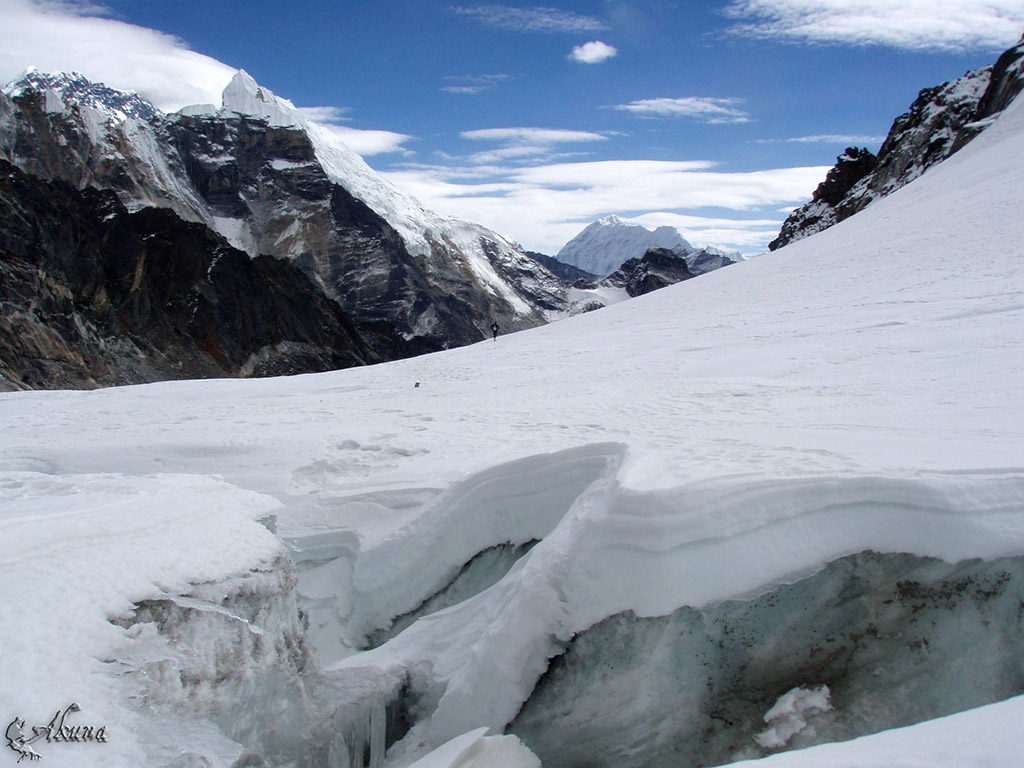
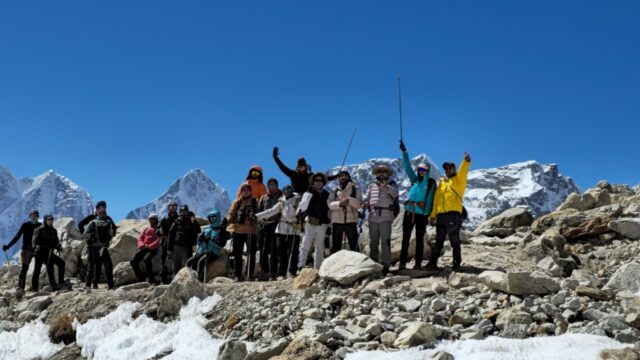
Cho La pass in snow, the middle crossing of the Three Passes trek.
In this guide: 7 reasons | The three passes | Route | Difficulty and training | Best time | Safety and gear | Is it for you? | FAQ
7 reasons to trek the Three Passes
1. It is a hard trek with a big payoff
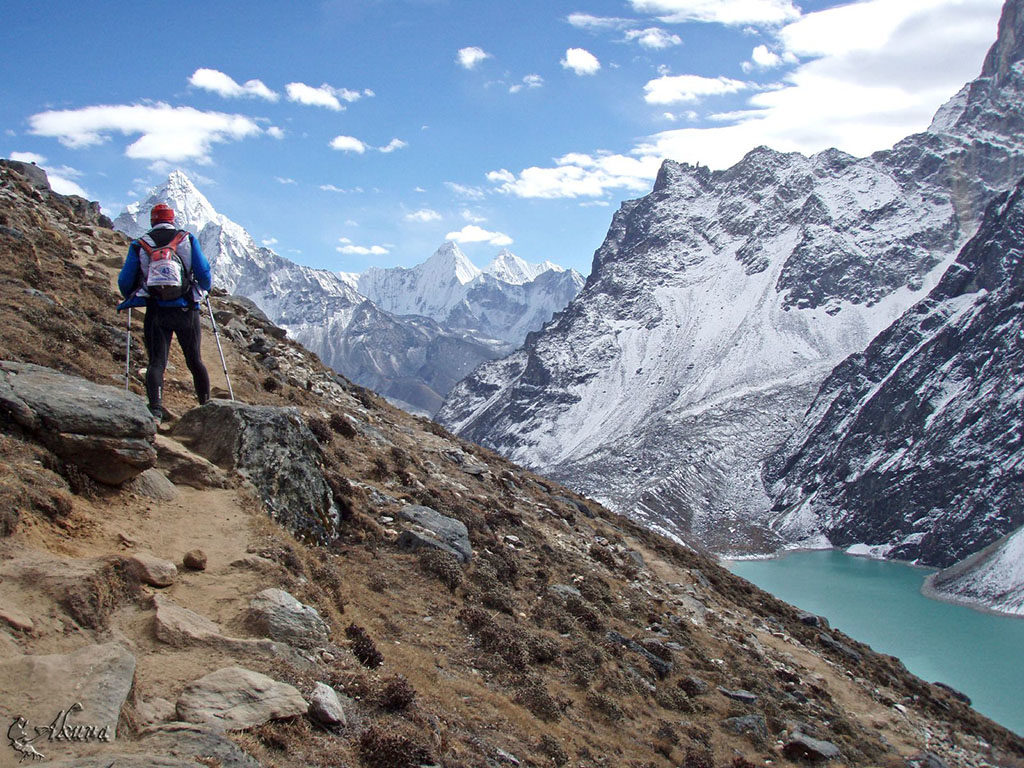
The route is harder than the classic Everest Base Camp trek, and not only because it is longer. It crosses three high passes, each above 5,300 m, and most days involve about five to eight hours of walking at altitude. The built-in rest days help, but you still need real fitness, patience and a willingness to keep going when the weather turns. The reward is that you see the Khumbu from every side: the Base Camp valley, the Gokyo valley and the high stone country in between. If you meet the fitness bar, the trek delivers more than any other route in the region.
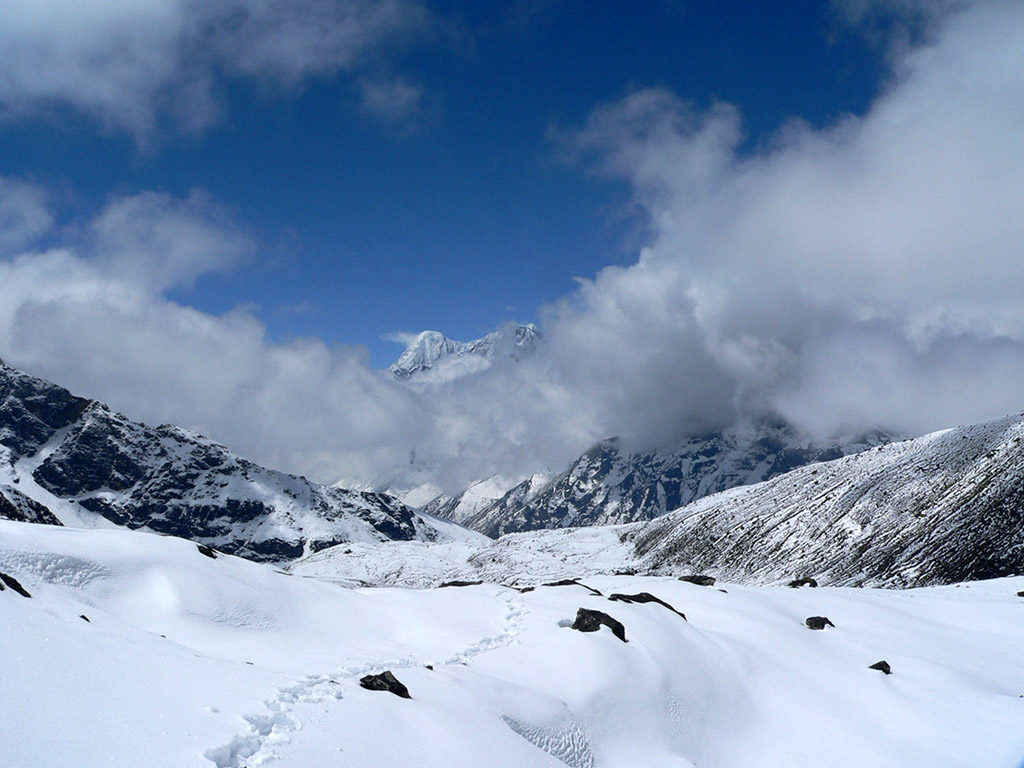
On the trail up to Renjo La.
2. Quieter trails
The Base Camp trail is one of the busiest in the Himalaya in spring and autumn. The Three Passes route shares it only for part of the way. After the high crossings you drop into the Gokyo valley, and the descent through Thame and Namche is far quieter. Because the trek is long and demanding, fewer people attempt it, and some sections can pass for hours without another group. That gives you more time with the landscape and easier lodge bookings on the quiet stretches.
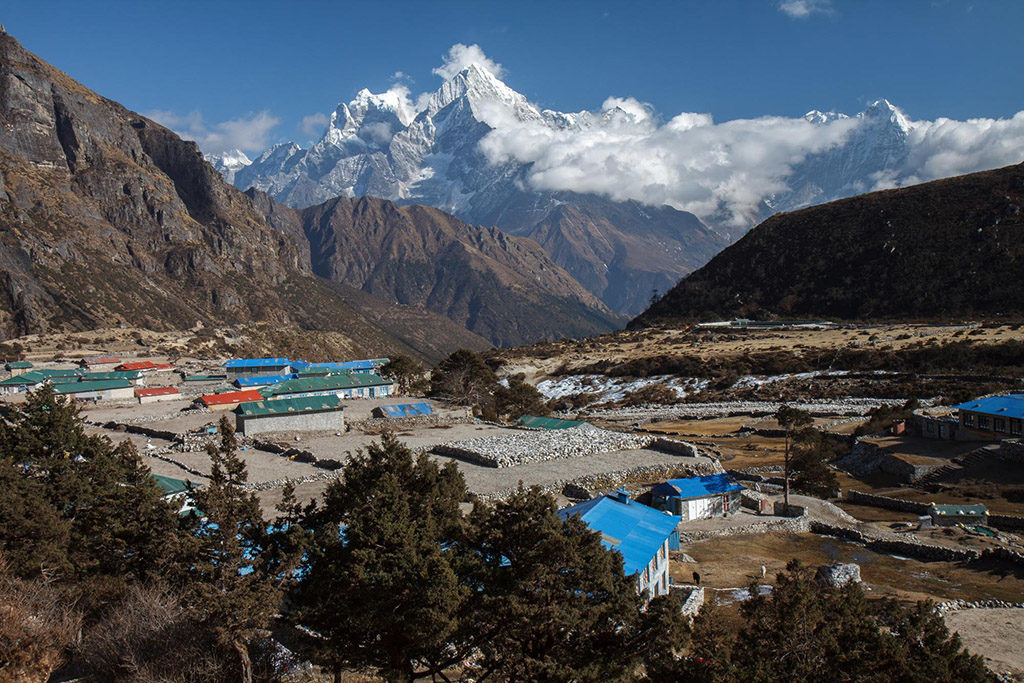
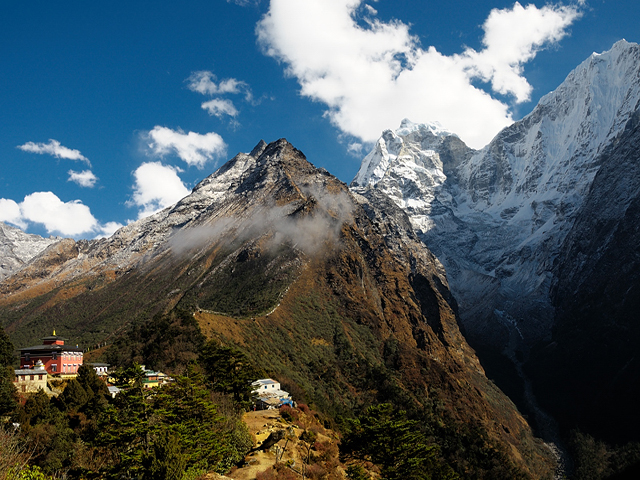
The Sherpa village of Thame, near the end of the loop.
3. The Sherpa village of Thame
Thame is a small, traditional Sherpa village in a side valley that few trekkers visit. It is known as the home village of some of Everest’s most experienced Sherpa climbers, and its hillside monastery is among the older ones in the Khumbu. The monastery holds a Mani Rimdu festival, with dates that follow the Tibetan calendar, so ask your operator whether your dates overlap. The village was badly hit in the 2015 earthquake and has since been rebuilt. Walking through its stone lanes and prayer-wheel walls near the end of the trek is a cultural high point that the Base Camp route does not offer.
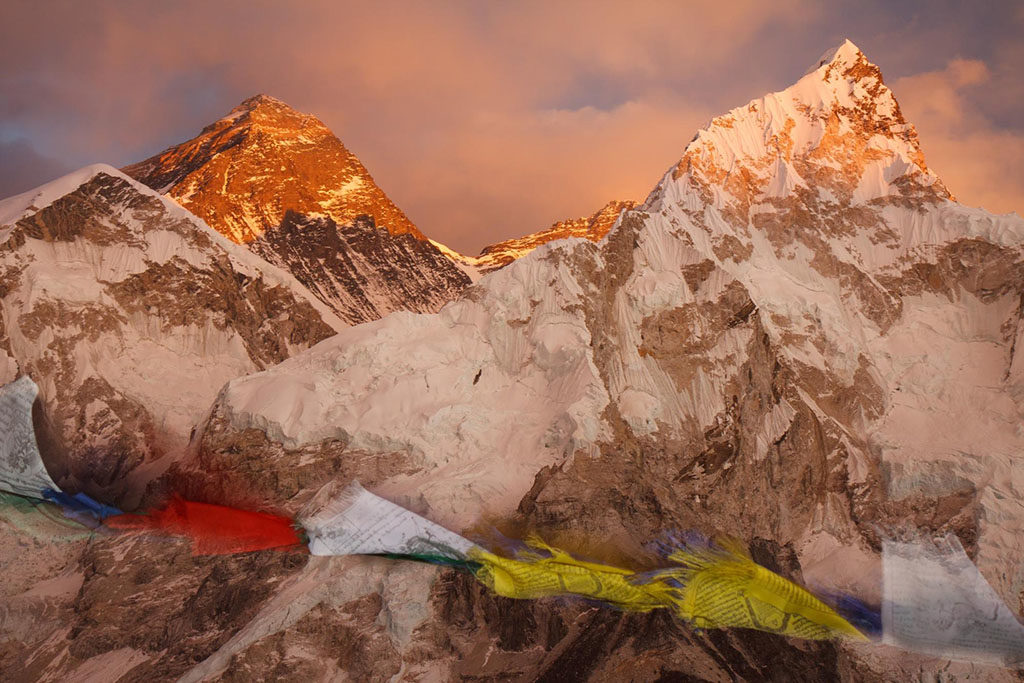
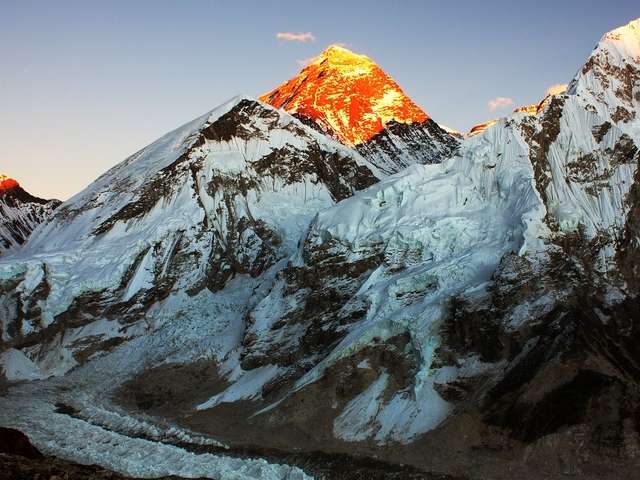
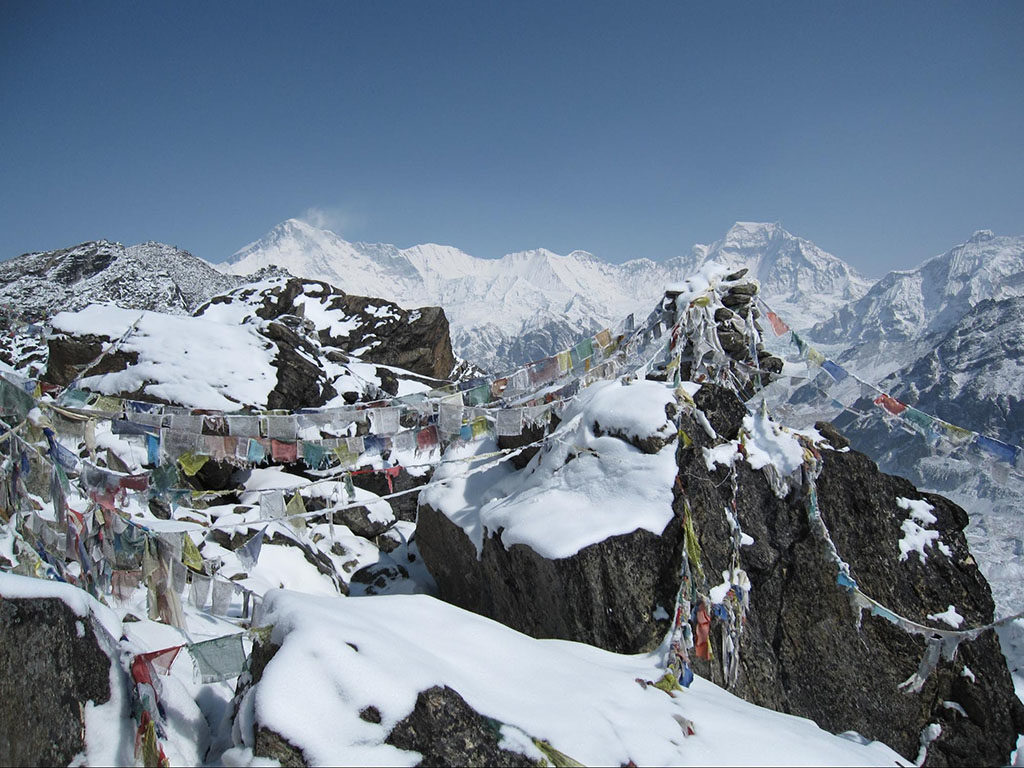
Everest and Nuptse from Kala Patthar.
4. Two summit viewpoints: Kala Patthar and Gokyo Ri
On this trek you stand on both of the Khumbu’s great trekking viewpoints. Kala Patthar (about 5,545 m) is the high point of the Base Camp trek and the best place to see Everest, which is hidden behind Nuptse from Base Camp itself. Gokyo Ri (about 5,357 m) is quieter and gives a wide panorama over the Gokyo valley, with Everest, Lhotse, Makalu and Cho Oyu in view, and the Ngozumpa glacier below. Kala Patthar is closer to Everest, while Gokyo Ri is wider and calmer. Doing both on one trip means you do not have to choose.
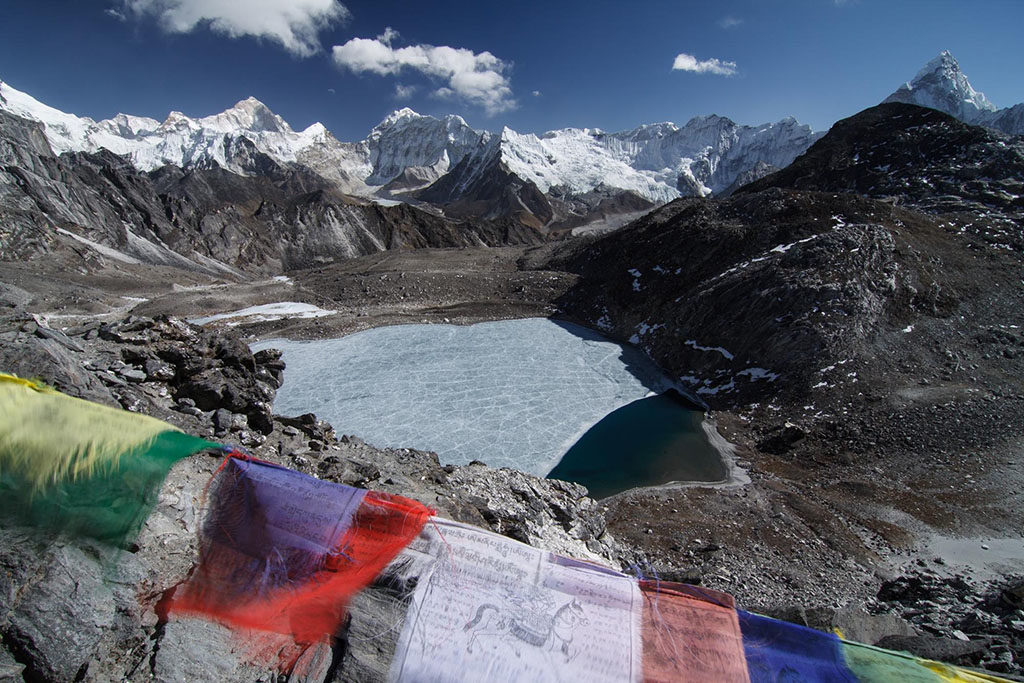
A Gokyo lake in the high country beyond Cho La.
5. The scenery changes every few days
Few treks cover so many landscapes. You start in rhododendron and pine forest, climb above the tree line into yak pastures, cross glacial moraine and rock, and walk beside turquoise lakes. The Gokyo Lakes are a chain of high glacial lakes, with the village of Gokyo on the shore of the third lake. The colours are strongest in clear autumn light. On the way you pass monasteries, mani walls and Sherpa villages, so the culture is as varied as the mountains. For a closer look at the lakes, read the Gokyo Lakes guide.
The view from Gokyo Ri over the lakes and the glacier.
6. It is a circuit, not an out-and-back
On the classic Base Camp trek you walk up and down the same valley. The Three Passes route is a loop, so most of the ground is new every day. A common version of the loop goes anticlockwise: up the Khumbu valley, over Kongma La to Lobuche and Base Camp, then Kala Patthar, Cho La, Gokyo, Renjo La, Thame and back to Namche. Going Base Camp first gives a gradual altitude profile, and the scenery tends to build as you go. Either direction is possible, and your operator should explain why they chose theirs.
A frozen lake near Kongma La.
7. The Ngozumpa glacier
Most trekkers know the Khumbu glacier below Everest. The Ngozumpa glacier in the Gokyo valley is bigger. It is commonly described as the longest glacier in Nepal, at about 36 km, and it drains the slopes of Cho Oyu. Much of its lower section is covered by rock debris, with ice beneath, and meltwater lakes have formed on its surface in recent years. You walk beside and across parts of it on the way to Gokyo, which gives a sense of scale that photographs do not.
How do the three passes compare?
Heights are rounded and vary by source. Conditions change by season and by year.
| Pass | Height | Where it is on the loop | What to expect |
|---|---|---|---|
| Kongma La | About 5,535 m | Between the Chhukung side and Lobuche | The highest of the three. A long, steep day over scree and moraine, with big views of Nuptse and Lhotse |
| Cho La | About 5,420 m | Between Dzongla and Gokyo | A glacier section where snow and ice make the footing hard. Most often delayed or closed by snow |
| Renjo La | About 5,360 m | Between Gokyo and the Thame side | A long climb on stone steps, rewarded by a wide view back over the Gokyo lakes |
The two summits are Kala Patthar (about 5,545 m) and Gokyo Ri (about 5,357 m). If you only want one pass, the shorter Everest Base Camp and Gokyo options include Cho La or Renjo La and are easier on time and legs.
What is the route?
The day-by-day plan is on the package page, but the loop usually runs like this:
| Stage | Typical places | Note |
|---|---|---|
| Fly to the mountains | Kathmandu, Lukla (flights may leave from Ramechhap in the busy season) | See the Lukla vs Ramechhap guide |
| Warm-up | Phakding, Namche Bazaar, Tengboche, Dingboche or Chhukung | Rest and acclimatisation days are built in |
| First pass | Kongma La to Lobuche | Longest pass day for many groups |
| Base Camp and Kala Patthar | Gorak Shep, Everest Base Camp, Kala Patthar | High point of the trek |
| Second pass | Dzongla, Cho La, Dragnag, Gokyo | Check snow and ice conditions |
| Gokyo | Lakes and Gokyo Ri | Rest or climb for the panorama |
| Third pass | Renjo La, Lungden, Thame | Quiet end to the loop |
| Return | Namche Bazaar, Lukla, Kathmandu | Allow buffer days for flights |
Package page: Three Passes and Everest Base Camp, 20 days.
How hard is the Three Passes trek, and how should you train?
It is one of the hardest teahouse treks in Nepal. You walk at high altitude for most of the 20 days, with long pass days that can last eight hours or more, and nights that are cold at the highest lodges. The risks are altitude sickness, cold, fatigue and snow on the passes, so training and acclimatisation matter more than on the classic trek.
| Area | What to do |
|---|---|
| Endurance | Build up to long hikes of five to eight hours with a loaded day pack, several weeks in a row |
| Legs and knees | Stair climbing, hill walking and squats help on long descents such as Renjo La and Cho La |
| Cardio | Cycling, swimming or running three or four days a week |
| Boots | Break them in on real hikes before you travel |
| Taper | Stay active but ease off in the final week so you arrive fresh |
The 12-week training plan adapts well to this trek. Read the altitude sickness guide before you go, and the 32 trek tips for practical advice.
When is the best time for the Three Passes?
Spring (March to May) and autumn (late September to November) give the clearest weather and the most stable conditions on the passes. Heavy snow in winter can close or delay the high crossings, especially Cho La. The monsoon months from June to early September bring rain, cloud and flight delays, and are not recommended. If your dates fall in early March or late November, ask your operator how they handle pass conditions.
| Months | Conditions | Suitability |
|---|---|---|
| March to May | Clearer skies, warmer days, some snow in March | Good, busy in April |
| June to early September | Monsoon: rain, cloud, flight delays | Not recommended |
| Late September to November | Stable weather, best views | Best, busiest in October |
| December to February | Cold, snow on passes | Passes may be closed |
For the full picture, read the month-by-month guide.
What about safety and gear?
- Guide and plan: go with a guide who checks pass conditions each morning and is ready to change the plan.
- Footwear: sturdy, broken-in boots. Microspikes and trekking poles help on icy sections, especially Cho La.
- Clothing: warm layers, a windproof shell, a good sleeping bag and gloves. See the packing checklist.
- Altitude: climb slowly, drink plenty and report headaches early. Do not ascend with worsening symptoms.
- Insurance: your policy must cover trekking to the highest point on your route and helicopter evacuation. Check the altitude limit and read the insurance guide.
- Flights: keep spare days at the end for Lukla delays.
Is the Three Passes trek right for you?
| If you… | Then |
|---|---|
| Want the famous Base Camp in the shortest time | Choose the 14-day Everest Base Camp trek |
| Want Base Camp plus the lakes | Choose the 17-day Base Camp and Gokyo Lakes trek |
| Want quiet trails and one pass | Choose the 14-day Gokyo and Renjo La trek |
| Are fit, have three weeks and want the whole Khumbu | Choose the 20-day Three Passes trek |
| Have not trekked at altitude before | Start with Base Camp or Poon Hill and build up |
For a trek you can plan around, read the Everest Base Camp guide and the cost guide for Indian trekkers.
FAQ
What is the Three Passes trek? A 20-day loop in the Everest region that crosses Kongma La, Cho La and Renjo La and visits Everest Base Camp, Kala Patthar, the Gokyo Lakes and Gokyo Ri.
How hard is the Three Passes trek? It is one of the hardest teahouse treks in Nepal, because of the length, three high passes and long pass days. Training and acclimatisation are essential.
How long is the Three Passes trek? The package is 20 days from Kathmandu, with rest and acclimatisation days built in.
How high are the three passes? Kongma La is about 5,535 m, Cho La about 5,420 m and Renjo La about 5,360 m. Heights vary slightly by source.
What is the best time to do the Three Passes? March to May and late September to November. Winter snow can close the passes, and the monsoon is not recommended.
Is the Three Passes trek better than Everest Base Camp? It is longer, harder and quieter, and it covers more of the Khumbu. Base Camp is shorter and better for a first high-altitude trek.
Which direction is better? Many operators go Base Camp first for a gradual altitude profile and an easier pass direction. Either direction works if the plan is sound.
Do I need a guide for the Three Passes? A guide is strongly recommended, because the passes can be snowy and the route needs decisions about conditions each day.
Do I need special gear for Cho La? Microspikes and trekking poles are useful on icy sections. Your operator will advise based on the season.
How much does the Three Passes trek cost? The package page lists INR 120,000 per person on two sharing for the 20-day trek. Prices can change, so confirm before you book.
Is the Ngozumpa glacier the longest in Nepal? It is commonly described as the longest glacier in Nepal, at about 36 km.
Can I do just one pass? Yes. The Gokyo and Renjo La trek crosses one pass, and the Base Camp and Gokyo trek crosses Cho La.
Plan the Three Passes with Base Camp Hikes
For dates and a quote, message the team on WhatsApp or phone at +91 932 595 1234 (9 am to 7 pm IST), write to info@basecamphikes.com, or use the enquiry form.
Sources
- Nepal Tourism Board: safety in the mountains