By
The most beautiful peaks of the Himalayas are, in our view, Machapuchare, Ama Dablam, Pumori, Dhaulagiri, Kanchenjunga, Kailash, Shivling, Thalay Sagar, Nanda Devi, Trishul, Neelkanth, Nun and Kun, Langshisa Ri and Mount Everest. Seven of the 14 can be seen from trekking trails in Nepal. The rest lie in India or Tibet. This guide gives the height, country and the easiest way to see each one, so you can plan a trek around the view you want.
The 14 peaks at a glance
- Highest: Mount Everest, 8,848.86 m (the figure Nepal and China announced in 2020).
- Easiest to see on a trek: Machapuchare, Dhaulagiri, Ama Dablam, Pumori and Everest, all on Nepal’s popular trails.
- Never climbed or closed to climbers: Machapuchare and Nanda Devi.
- Sacred to millions: Kailash, Shivling, Machapuchare and Neelkanth.
- Best first choice: the 14-day Everest Base Camp trek, which shows three of the 14.
Last checked: 29 October 2026. Heights are standard rounded figures and differ slightly between sources. Access rules for India and Tibet change often, so confirm them before you book.
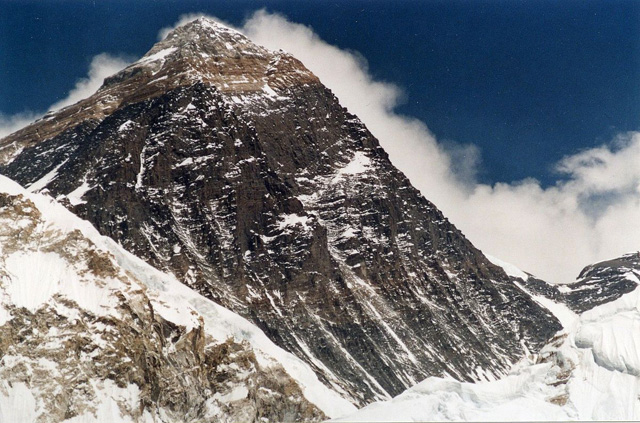
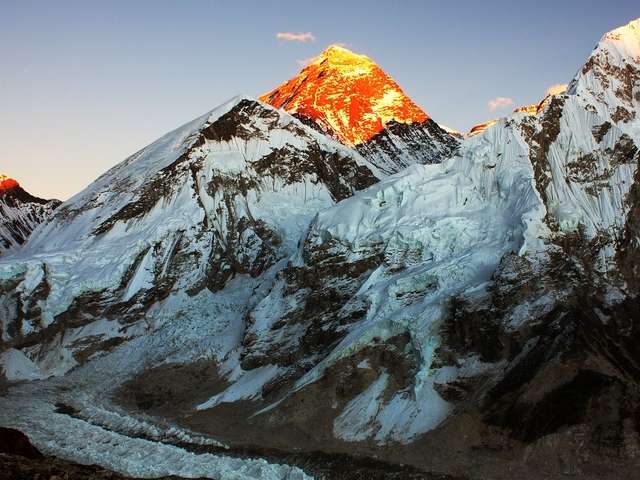
Mount Everest from Kala Patthar.
In this guide: All 14 compared | Nepal | Kanchenjunga | Tibet | India | Plan your view | FAQ
The 14 most beautiful Himalayan peaks compared
| Peak | Height | Country | Easiest way to see it |
|---|---|---|---|
| Machapuchare | 6,993 m | Nepal | Annapurna Base Camp, Poon Hill, Mardi Himal |
| Dhaulagiri | 8,167 m | Nepal | Poon Hill; French Pass trek |
| Ama Dablam | 6,812 m | Nepal | Everest Base Camp trek |
| Pumori | 7,161 m | Nepal | Kala Patthar on the Everest Base Camp trek |
| Langshisa Ri | 6,427 m | Nepal | Upper Langtang Valley beyond Kyanjin Gompa |
| Mount Everest | 8,848.86 m | Nepal / Tibet | Kala Patthar, Everest Base Camp trek |
| Kanchenjunga | 8,586 m | Nepal / India | Kanchenjunga Base Camp (Nepal); Goecha La (Sikkim) |
| Kailash | 6,638 m | Tibet | Kailash Mansarovar Yatra |
| Shivling | 6,543 m | India | Gangotri and Tapovan trek |
| Thalay Sagar | 6,904 m | India | Gangotri and Kedar Tal area |
| Nanda Devi | 7,816 m | India | Distant views only; the sanctuary is restricted |
| Trishul | 7,120 m | India | Kumaon and Garhwal treks |
| Neelkanth | 6,596 m | India | Badrinath |
| Nun and Kun | 7,135 m and 7,077 m | India | Suru Valley, Ladakh |
Beautiful peaks you can see on Nepal treks
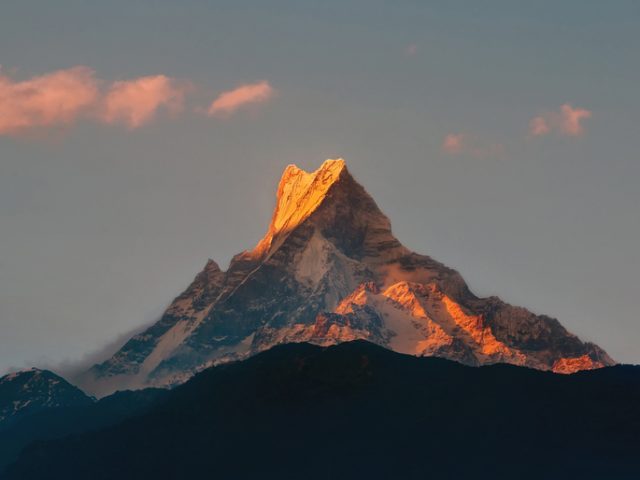
Sunset over Machapuchare.
1. Machapuchare, 6,993 m: the Fish Tail
Machapuchare means fish tail in Nepali, named for its twin summit, and it is the first great peak many trekkers meet in the Annapurna region. The summit is closed to climbers and the mountain is regarded as sacred to Shiva. A British team in 1957 turned back short of the top, and nobody is officially recorded on the summit. It is also visible from Pokhara on clear days. See it on: Annapurna Base Camp, Poon Hill or Mardi Himal. Compare them in trekking options in the Annapurna region.
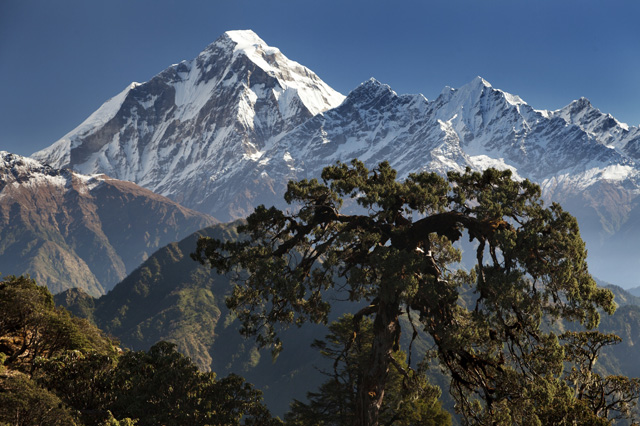
Dhaulagiri from the Annapurna region.
2. Dhaulagiri, 8,167 m: the white mountain
Dhaulagiri is the seventh highest mountain on earth, and its Sanskrit name means dazzling white. It sits across the Kali Gandaki gorge from Annapurna I, a valley often described as one of the deepest in the world. Poon Hill gives the easiest view, early in the morning. Experienced trekkers can walk around its southern side on a long route over French Pass. See it on: Ghorepani Poon Hill. For the other big peaks of the country, read Nepal’s 8,000 m peaks.
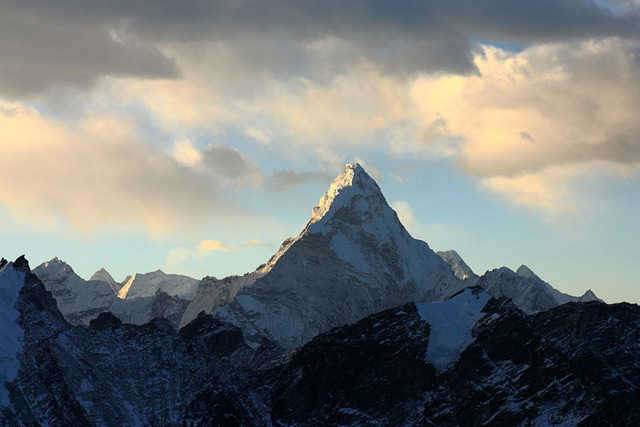
Ama Dablam from Kala Patthar.
3. Ama Dablam, 6,812 m: mother’s necklace
Ama Dablam is the shape you remember from Everest Base Camp photographs. The name refers to the long ridge arms, which look like a mother holding her child, and to the hanging glacier, the dablam, which resembles a pendant. It is often called the Matterhorn of the Himalayas. It first comes into view after you leave Namche Bazaar and stays with you for days. See it on: Everest Base Camp, or take a day hike from Namche Bazaar for a closer look.
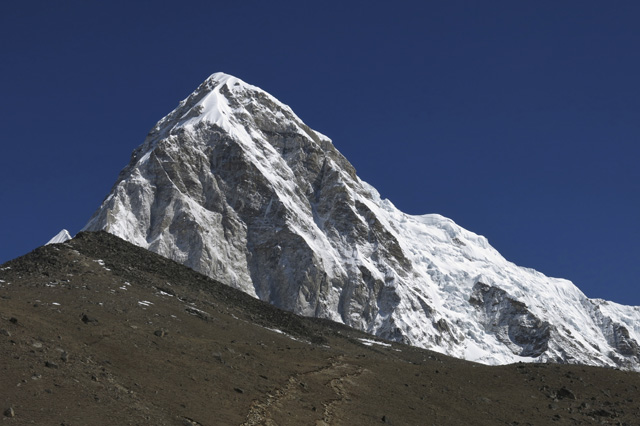
Pumori in the Khumbu.
4. Pumori, 7,161 m: the daughter mountain
Pumori stands only about 8 km west of Everest and forms the backdrop to Kala Patthar, the usual high point of the Base Camp trek at 5,545 m. Its name is usually translated as daughter or unmarried girl mountain. The avalanche that hit Everest Base Camp after the April 2015 earthquake came off the slopes near Pumori. Climbers use it as a training peak for the 8,000 m giants. See it on: Everest Base Camp. See 15 must-click Everest Base Camp photos for where to stand.
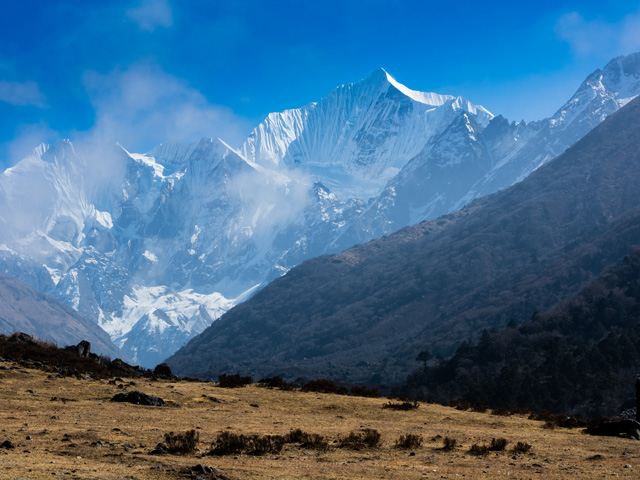
Langshisa Ri above the upper Langtang Valley.
5. Langshisa Ri, 6,427 m: the Langtang wall
Langshisa Ri rises almost straight up from the head of the Langtang Valley, so it looks bigger than its height suggests. Most trekkers see it with one extra day above Kyanjin Gompa. It is still a serious climb. See it on: the Langtang trek, and read day hikes in the upper Langtang Valley or Kyanjin Ri.
The summit pyramid of Everest from Kala Patthar.
6. Mount Everest, 8,848.86 m: the highest of all
Everest is the highest mountain in the world, at 8,848.86 m, as announced jointly by Nepal and China in 2020. On the trek it stays half hidden behind Nuptse and Lhotse. The classic view comes from Kala Patthar, a short walk from Gorak Shep, where the dark triangle of the summit rises above the ridge. Read the highest mountains of Nepal and 50 Everest facts. See it on: the 14-day Everest Base Camp trek.
Kanchenjunga, shared by Nepal and India
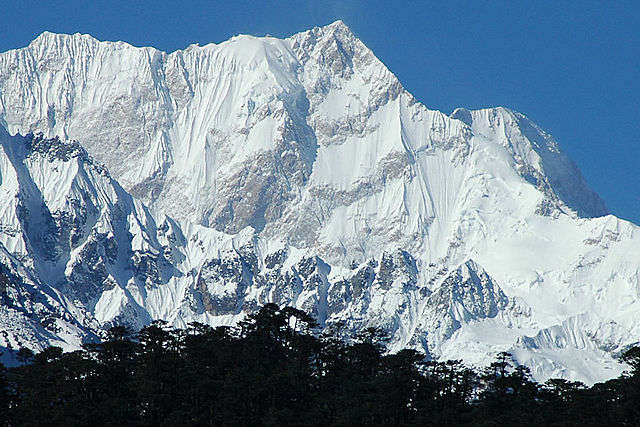
Kanchenjunga, the third highest mountain in the world.
7. Kanchenjunga, 8,586 m: five treasures of snow
Kanchenjunga is the third highest mountain in the world and the highest in India. Its summit lies on the Nepal and Sikkim border, so you can approach it from either side. In Sikkim, the Goecha La route gives a shorter, closer view. In Nepal, a long trek reaches the north and south base camps. We cover the choice in Approaching Kanchenjunga: Nepal or India?. See it on: the Kanchenjunga trek in Nepal or the Goecha La trek in Sikkim.
Kailash in Tibet
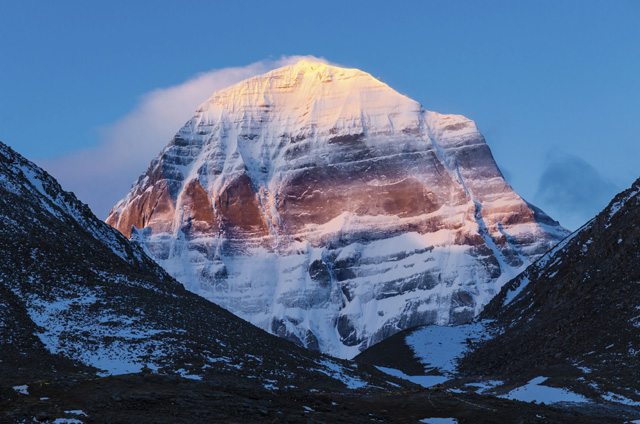
The north face of Mount Kailash.
8. Kailash, 6,638 m: the sacred mountain
Kailash is holy to Hindus, Buddhists, Jains and followers of Bon. Hindus believe it is the home of Shiva. It is not climbed. Pilgrims instead walk the circuit around its base, which most people complete in about three days. Several of Asia’s great rivers rise in the area around it. See it on: the Kailash Mansarovar Yatra. The season runs roughly from late spring to early autumn, so book early.
Beautiful peaks of the Indian Himalayas
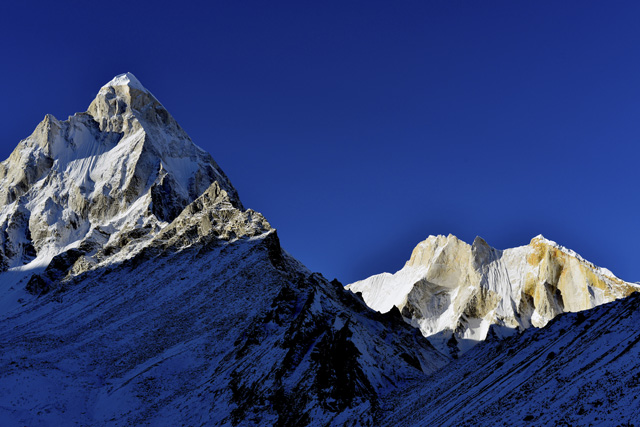
Shivling and Meru in the Gangotri area.
9. Shivling, 6,543 m: Shiva’s symbol
Shivling stands above the Tapovan meadow in the Gangotri region of Garhwal. It is named for the shape of the lingam, and its steep rock faces attract strong climbers. It was first climbed in 1974. Most visitors see it from Tapovan, a high meadow reached on foot from Gangotri. See it on: the Source of the Ganges trek.
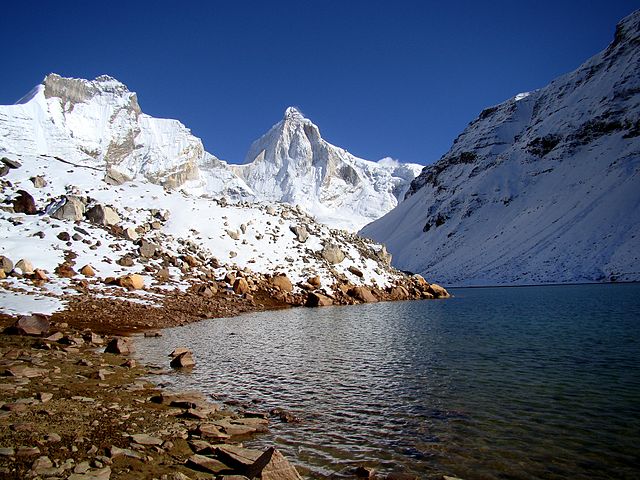
Thalay Sagar above Kedar Tal.
10. Thalay Sagar, 6,904 m: the vertical one
Thalay Sagar is a tall, steep pyramid of rock and ice near Kedar Tal in Garhwal. Its steep faces kept it unclimbed until 1979. Trekkers see it from Gangotri-side trails and the Kedar Tal area. See it on: the same Gangotri trek as Shivling.
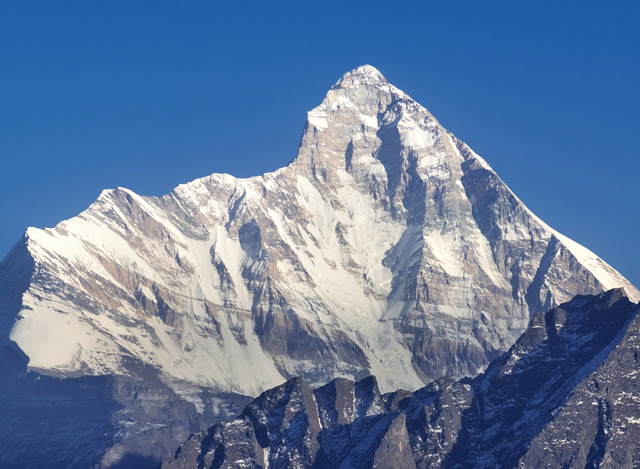
Nanda Devi in Uttarakhand.
11. Nanda Devi, 7,816 m: the bliss-giving goddess
Nanda Devi is the highest mountain lying wholly inside India, and the goddess of the same name is deeply revered across Uttarakhand. The inner sanctuary has been closed to mountaineering since 1983 to protect its ecology. Access rules change, so check current notices from the Indian authorities. Treat it as a mountain to admire from a distance.
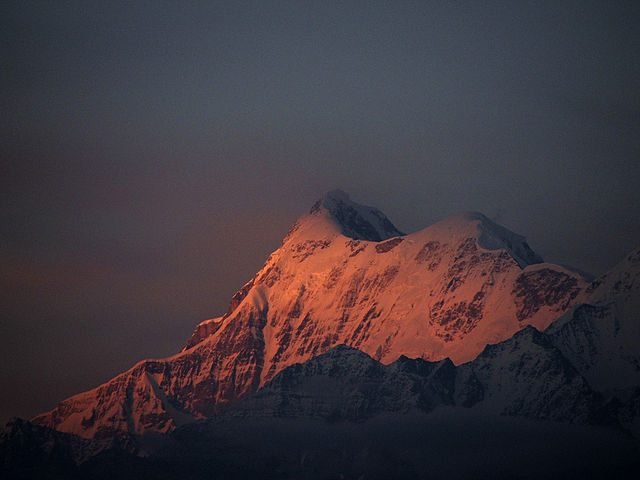
Sunrise on Trishul.
12. Trishul, 7,120 m: the trident
Trishul takes its name from the three summits that together look like Shiva’s trident. Tom Longstaff made the first ascent in 1907, and it was the first 7,000 m peak ever climbed. It remains a popular 7,000 m peak in India for experienced climbers. It lies in Uttarakhand and can be seen from treks in Kumaon and Garhwal.
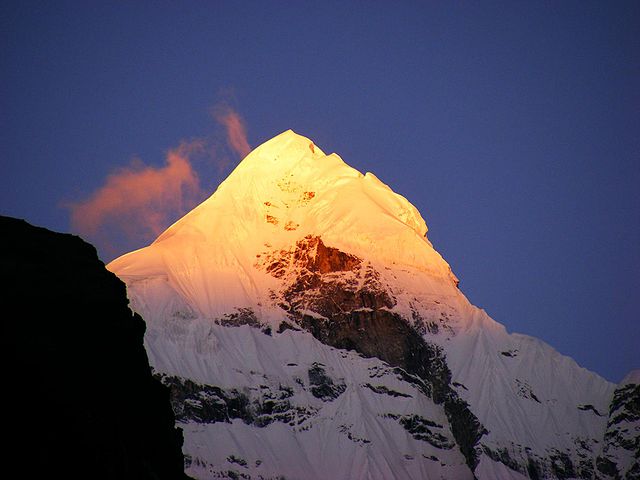
Neelkanth above Badrinath.
13. Neelkanth, 6,596 m: guardian of Badrinath
Neelkanth rises above Badrinath in Uttarakhand, one of Hinduism’s most important pilgrimage towns. It is a sharp, symmetrical pyramid, often compared with a smaller Matterhorn. It is easy to see: you can reach Badrinath by road, and the view is there from the temple area on clear mornings. The Satopanth and Bhagirath Kharak glaciers lie close by.
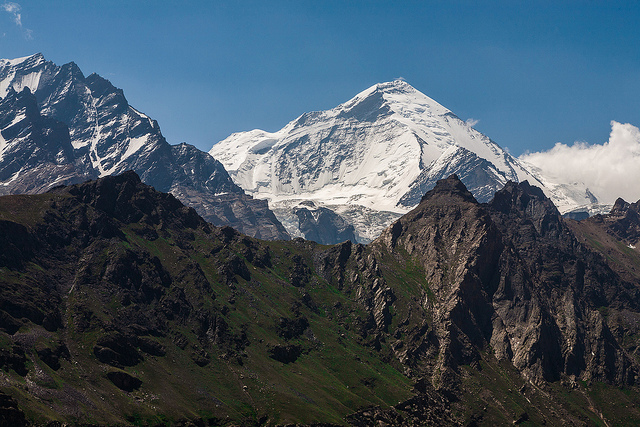
The twin peaks of Nun and Kun.
14. Nun and Kun, 7,135 m and 7,077 m: the Zanskar giants
Nun and Kun are the highest peaks of the Zanskar range, rising from the Suru Valley in Ladakh. Nun is the higher. Many climbers choose them as a first 7,000 m expedition, which takes around four weeks. The Suru Valley road gives views of both peaks without a climb.
How to plan the view
| If you want… | Choose | Peaks you see |
|---|---|---|
| The most famous views | Everest Base Camp, 14 days | Everest, Ama Dablam, Pumori |
| A shorter Annapurna trek | Poon Hill, 9 days | Dhaulagiri, Machapuchare |
| Sunrise over the Annapurnas | Annapurna Base Camp, 14 days | Machapuchare, Annapurna I |
| A quieter trek | Langtang, 10 days | Langshisa Ri |
| A remote 8,000 m giant | Kanchenjunga, 28 days | Kanchenjunga |
Our month-by-month guide to the Everest region explains when skies are clearest, and the packing checklist covers what to carry. Read altitude sickness before any trek above 3,000 m.
FAQ
What is the most beautiful peak in the Himalayas? It is a matter of taste. Ama Dablam, Machapuchare and Kanchenjunga are the usual favourites.
Which Himalayan peaks can I see on a trek? In Nepal: Machapuchare, Dhaulagiri, Ama Dablam, Pumori, Langshisa Ri and Everest.
Which is the highest peak in the Himalayas? Mount Everest, at 8,848.86 m.
Which peak is easiest to see from a trek? Machapuchare on the Annapurna treks, and Ama Dablam on the way to Everest Base Camp.
Can I climb Machapuchare? No. Its summit is closed to climbers and the mountain is regarded as sacred.
Can I climb Kailash? No. Pilgrims walk around the mountain but do not climb it.
Where can I see Kanchenjunga? From Sikkim on the Goecha La trek, or from the north and south base camps in Nepal.
Can I visit Nanda Devi? The inner sanctuary is closed to mountaineering. Check current notices from the Indian authorities for access.
What is the best time to see these peaks? October and November, and March to May, usually give the clearest skies in Nepal.
How many of these peaks are in Nepal? Six, counting Everest, which Nepal shares with Tibet. Kanchenjunga is shared with India, Kailash is in Tibet and the other six are in India.
Which trek shows the most of these 14 peaks? The Everest Base Camp trek shows Ama Dablam, Pumori and Everest from the same trail.
Do I need a permit? Yes for most routes. Permit rules depend on the area, so check the Nepal Tourism Board or ask your operator.
See the Himalayas with Base Camp Hikes
Start with the 14-day Everest Base Camp trek, or compare all our trek options. For a quote, message the team on WhatsApp or phone at +91 932 595 1234 (9 am to 7 pm IST), write to info@basecamphikes.com, or use the enquiry form.
Photo credits: Langshisa Ri, Keith Nurney; Nun and Kun, Sandeepa Chetan.